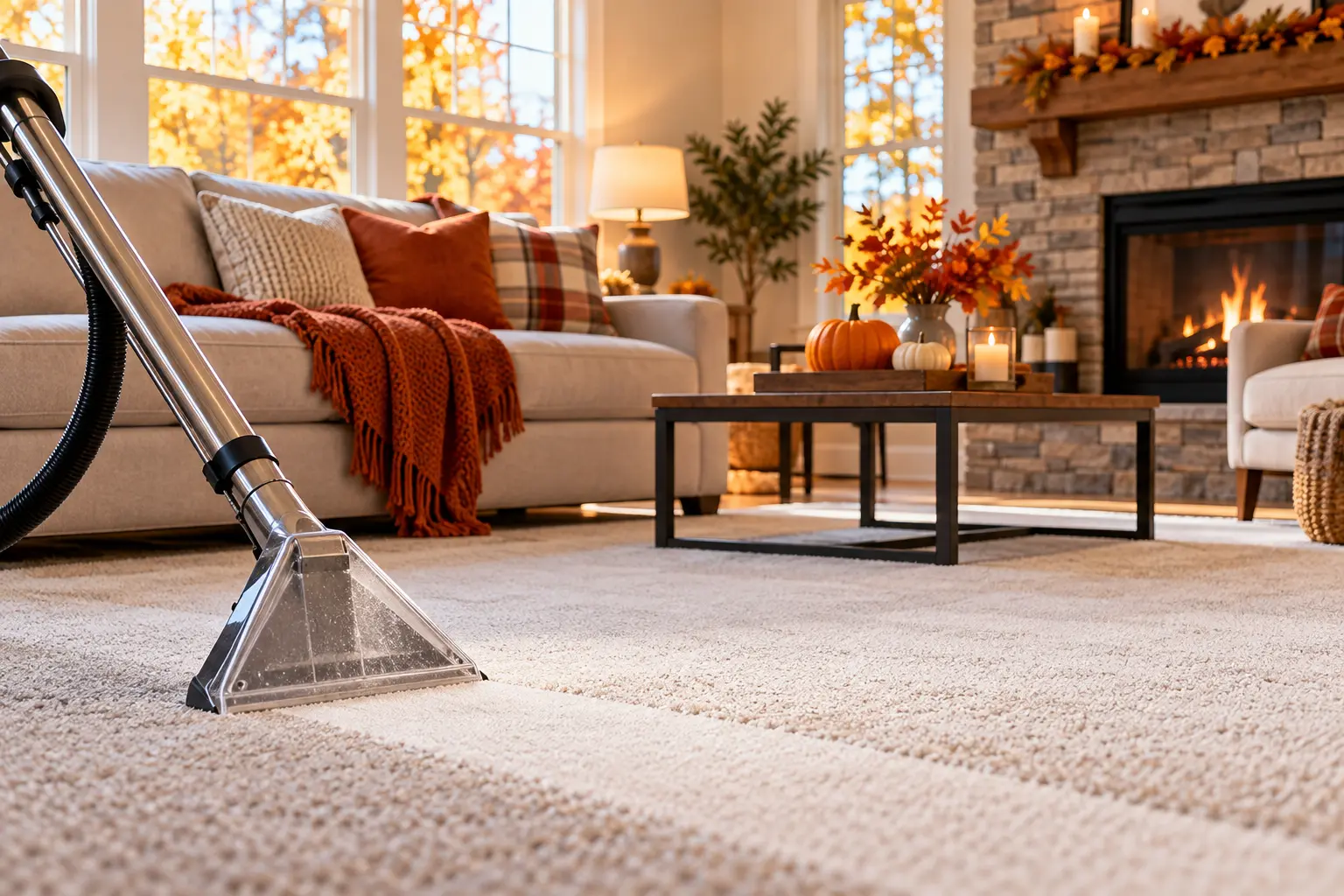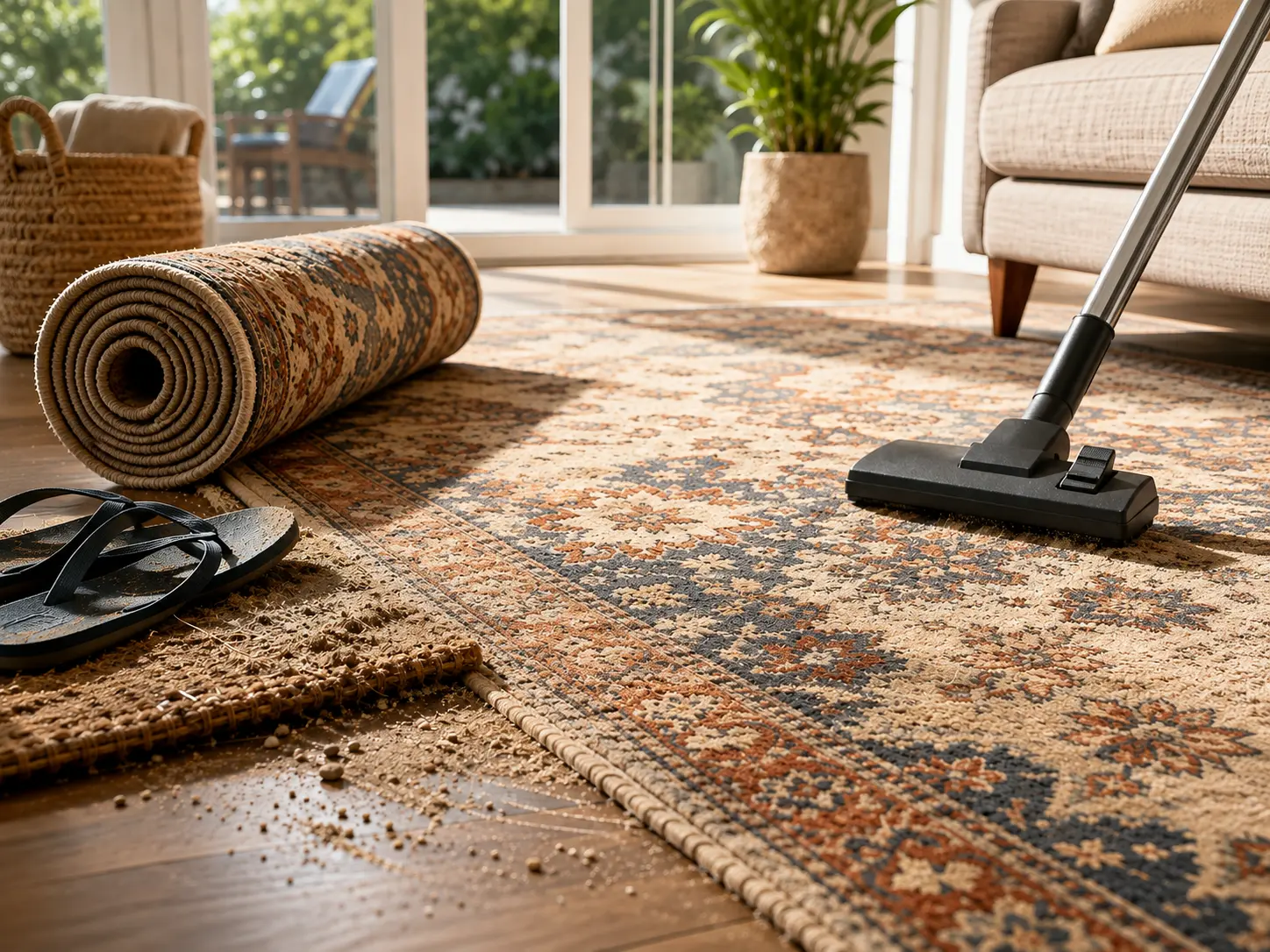

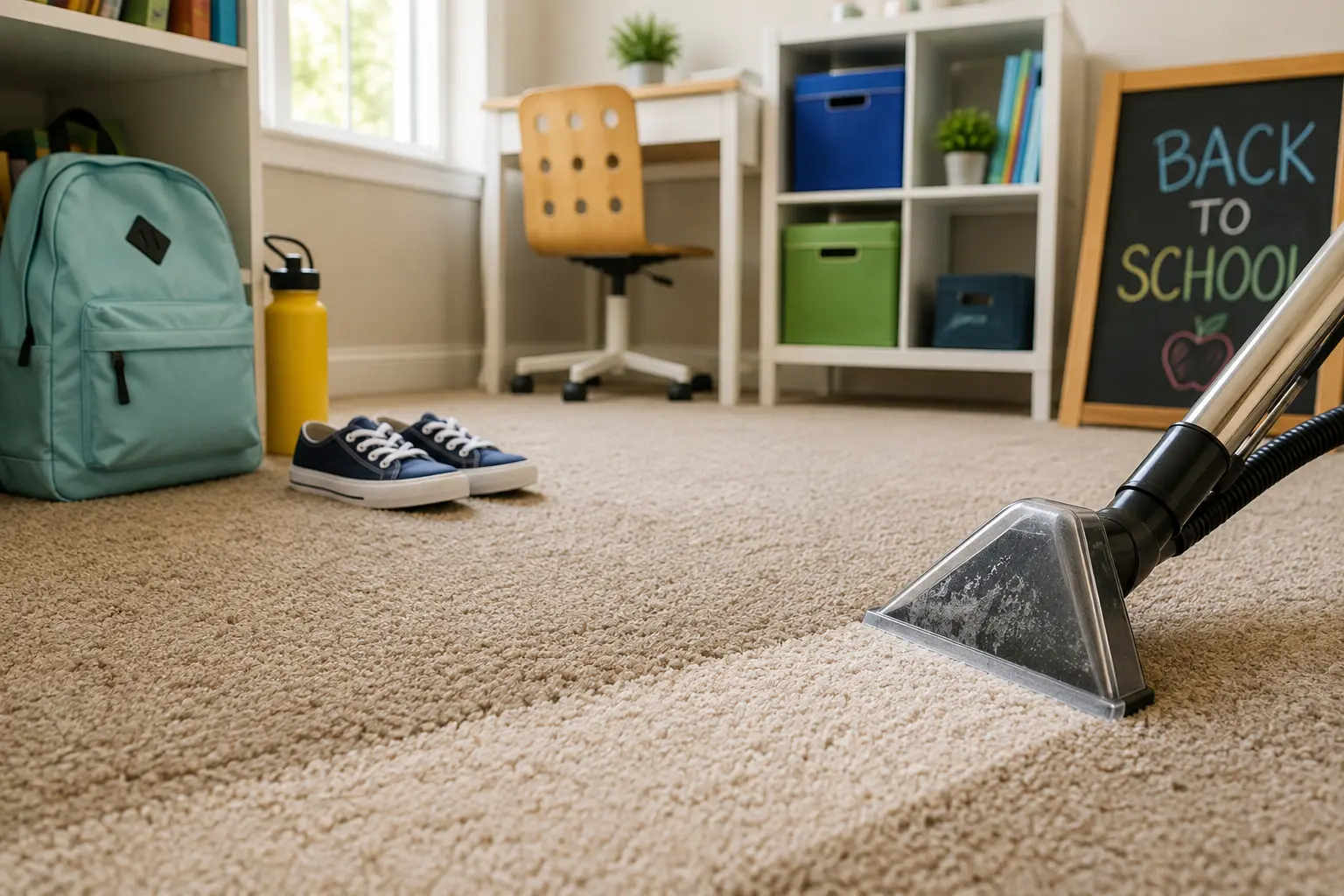
Back-to-school season in Bucks County and Montgomery County means new notebooks, new backpacks, new routines — and carpets that have just survived three months of children home all day.
Summer is the highest-traffic season most residential carpets experience all year. Kids in and out constantly, bare feet and wet shoes, popsicle drips and grass stains, sunscreen tracked in from the back deck, pets sharing more indoor time during the heat of the day. By late August, the carpet that looked reasonably fresh in May has accumulated three months of the most intensive use it will see.
Back-to-school is one of the most natural inflection points in the year for a carpet reset — and one of the most practical. The house returns to a regular schedule. The chaos of summer winds down. And the carpet enters the fall and winter season in the condition it will carry through the next nine months of school-year life.
In our 45+ years serving Philadelphia, Bucks County, and Montgomery County families, we’ve seen what three months of summer does to residential carpet — and what a professional reset before fall does for how that carpet performs over the rest of the year. Here’s what you need to know.
What You’ll Learn
- What three months of summer actually does to carpet fibers and backing
- The specific conditions that make post-summer carpet different from other times of year
- Why back-to-school is the right timing for professional carpet cleaning
- A room-by-room guide to assessing your carpet’s post-summer condition
- What professional cleaning accomplishes versus what home maintenance can handle
- How a fall carpet reset sets up the rest of the school year
- Frequently asked questions from Philadelphia-area parents
What Summer Actually Does to Your Carpet
The cumulative impact of a summer with children home shows up in carpet in specific, measurable ways — most of which aren’t fully visible until you know what to look for.
Signs that your carpet has absorbed a full summer of family life:
- Visible traffic lane darkening in the pathways where kids move between rooms — from the back door to the kitchen, from the stairs to the living room
- Flat, matted pile in high-use areas that doesn’t recover after vacuuming the way it used to
- Scattered spot stains or shadow stains from summer spills that were cleaned at the time but left residue or wicked back up
- A faint background odor — a combination of pet, perspiration, and general summer indoor living — that’s most noticeable when you come in from outside
- Gritty texture underfoot in entryways and hallways from accumulated sand and soil tracked in over three months
- Allergy symptoms that seem worse indoors, particularly as the HVAC system transitions from cooling to heating mode and circulates settled allergens
Two or more of these are present in most active family homes by late August. They’re not a reflection of poor housekeeping — they’re the predictable result of intensive use combined with summer’s specific conditions. And they set the stage for everything that follows if the carpet carries that load into the fall.
Why Post-Summer Carpet Needs More Than Vacuuming: The Real Causes
Understanding what specifically accumulates in carpet over a summer explains why vacuuming alone — however frequent and thorough — isn’t sufficient to reset it going into fall.
1. Three Months of Dry Soil Compaction at the Fiber Base
Fine dry soil — sand, grit, dust, and outdoor particulate — is tracked in with every entry through the summer. In a household with kids who spend significant time outdoors in Doylestown, Warminster, Newtown, or anywhere across Bucks County, the volume of tracked-in soil from late May through August is substantial. This soil works its way through the pile to the carpet backing with each pass of foot traffic, where it compacts and where vacuum suction cannot reach it.
Compacted dry soil at the fiber base is the leading cause of the premature carpet wear and permanent traffic lane darkening we see in high-use family homes. Every step on soil-loaded carpet is a grinding action on the fiber walls. Three months of summer without professional extraction means three months of abrasive compaction building up below the vacuum’s reach.
2. Summer Stain Residue That Wasn’t Fully Resolved
Summer stains — popsicles, fruit juice, sunscreen, grass, mud — are addressed in the moment but rarely fully resolved by DIY spot treatment. Spills that wicked into the carpet backing leave residue that isn’t visible until humidity or heat draws it back to the surface. Spot cleaning with soap-based products leaves a sticky surfactant film that re-attracts soil, creating a shadow of the original stain that darkens progressively through the summer.
By late August, a typical family living room carpet may have five to ten spot-treated areas where residue from both the original stain and the cleaning product has accumulated in the fiber and backing. These areas look slightly darker than surrounding carpet, feel faintly tacky, and continue to attract and hold new soil at a higher rate than untreated areas.
3. Pet Contamination at Maximum Annual Load
For households with pets, late August represents the highest annual accumulation point for pet-related carpet contamination. Dogs and cats that spend more time indoors during summer heat shed more, track in more outdoor soil, and have more contact with carpet throughout the day. Pet dander — the microscopic skin particles that trigger most pet allergies — has accumulated in carpet fibers and backing at peak density.
This matters particularly for households with family members who have allergies or asthma. Fall is the beginning of elevated indoor allergen season, as windows close and HVAC systems recirculate settled particulate. Starting the school year with a professionally cleaned carpet significantly reduces the allergen load that will be recirculated throughout the fall and winter months.
4. Humidity-Driven Odor Compounds Locked into Fiber and Backing
Philadelphia-area summer humidity creates conditions where biological odor compounds — produced by bacteria and mold feeding on the organic material in carpet — develop and become embedded in the fiber structure and backing. The musty, slightly stale background odor that many homeowners notice in late summer carpets isn’t surface dirt; it’s microbial activity that has had three warm, humid months to establish itself.
Vacuuming and surface deodorizers address the symptom temporarily. Professional hot water extraction flushes the organic load from the carpet backing that the microbial activity is feeding on, eliminating the source rather than masking it.
Room-by-Room Post-Summer Carpet Assessment
Walk through each room and assess condition against these indicators. This tells you where the carpet reset will have the most impact and gives you useful information when calling Cahill’s for a free estimate.
Entryways and Hallways
These are always the highest-priority areas. Every entry from outside deposits soil in the first few feet of carpet inside each door. After a summer of barefoot kids, wet shoes, and dog paws, entryway carpet typically shows the highest concentration of dry soil compaction and traffic lane darkening. Press your palm firmly into the carpet and check for gritty texture — grit present means soil has compacted below the vacuum’s reach.
Living Room and Family Room
Check for traffic lane darkening between seating areas and entryways. Examine the area in front of the sofa and around frequently used chairs for flattened pile and body oil accumulation. Look for spot-treated areas that appear slightly darker than surrounding carpet — stain residue and cleaning product buildup. Note any background odor, particularly if the room smells noticeably different after you’ve been outside.
Children’s Bedrooms
Bedrooms used heavily during summer — where kids spent time on the floor, played with friends, had sleepovers — accumulate significant dry soil, skin cells, and in pet-owning households, dander. Check the area of most frequent activity, typically around the bed and any desk or play area. A bedroom that smells musty or “slept-in” even after the bedding has been washed is likely holding odor in the carpet.
Stairs
Stairs concentrate more soil per square foot than almost any other carpeted surface because foot traffic is compressed to a narrow center strip. After a summer of continuous use, stair carpet typically shows pronounced center-strip darkening and pile wear that is disproportionate to the rest of the home. Stairs that look significantly worse than adjacent areas indicate sub-surface compaction that vacuuming won’t address.
The Back-to-School Carpet Reset: What It Involves
Home Preparation Before Professional Cleaning
A few simple steps before Cahill’s arrives make the professional cleaning more thorough and the results last longer:
- Vacuum all carpeted areas thoroughly in the days before your appointment — slow, cross-directional passes remove the surface-level debris so professional extraction can focus on what’s below
- Clear furniture from high-traffic areas where possible to allow full access — our technicians place protective blocks and tabs under all furniture pieces that remain in place
- Note specific problem areas — spots that keep coming back, areas with persistent odor, rooms that had significant incidents over the summer — so your technician can give them additional attention
- Move breakables or items at floor level that could be affected by water or equipment
What Cahill’s Professional Cleaning Does for Post-Summer Carpet
Cahill’s IICRC-certified technicians use truck-mounted hot water extraction — the method recommended by IICRC and most carpet manufacturers — to reach the carpet backing where the summer’s accumulation has settled. Here’s what the process accomplishes:
- Extracts compacted dry soil from the fiber base and carpet backing — eliminating the abrasive layer that damages fibers with every step and ending the grinding cycle that accelerates pile wear in traffic lanes
- Removes stain residue and cleaning product buildup from summer spot treatments — the re-soiling shadows clear, and spot-treated areas return to color consistency with surrounding carpet
- Flushes biological odor sources from the backing — musty, stale, and pet-related odors that have become embedded over the summer are removed at the source, not masked
- Reduces the allergen load — pet dander, dust mite waste, and other biological particles that have accumulated at peak summer density are extracted before the HVAC system begins recirculating them through the fall
- Restores pile structure — fibers that have been weighted down by soil and humidity stand fuller and the carpet looks and feels noticeably cleaner immediately after drying
Carpets dry within 6–12 hours of professional cleaning. Scheduling the reset during the first week of school gives kids time to settle into the new routine while the carpet dries undisturbed — and the household enters the school year with genuinely clean floors.
Maintaining the Reset Through the School Year
A professional cleaning is most effective when followed by habits that slow re-contamination. Our longest-tenured customers — the ones whose carpets last 20+ years — consistently follow these practices:
- Quality entry mats inside and outside every door — the most impactful low-cost investment in carpet longevity. Up to 80% of tracked-in soil can be captured before it reaches carpet.
- Vacuum high-traffic areas two to three times per week with slow, cross-directional passes — frequency and technique both matter
- Immediate spill response: blot with a clean white cloth from the outer edge inward, apply cold water sparingly, and use the complimentary Cahill’s spot remover every customer receives
- A consistent professional cleaning schedule — annually for most households, every 9–12 months for homes with pets, young children, or allergy sufferers
Why Philadelphia-Area Families Choose Cahill’s for the Back-to-School Reset
Back-to-school scheduling is one of our busiest periods of the year — Bucks County and Montgomery County families recognize this timing instinctively as a natural reset point, and scheduling fills quickly in late August and early September. Calling Cahill’s early gives you the appointment window that works with school schedules and new fall routines.
What Cahill’s brings to your post-summer carpet reset:
- 45+ years serving Philadelphia, Bucks County, and Montgomery County families — we know what summer does to carpet in this region specifically
- IICRC-certified technicians averaging 11 years experience — professionals who can assess post-summer condition accurately and treat it appropriately
- Truck-mounted hot water extraction delivering the pressure, temperature, and extraction power that removes three months of compacted soil from the backing
- Furniture protection with blocks and tabs included with every cleaning — no extra charge
- Complimentary bottle of spot remover for every customer — your school-year response kit for the inevitable next incident
- Free estimates for most jobs over the phone at (215) 355-5388
- 6-truck fleet with scheduling flexibility to fit the back-to-school window
- 2023 Community’s Choice Award Winner in Bucks and Montgomery Counties
- Nextdoor Neighborhood Favorite, multiple years recognized
- 5-star ratings on Google, Yelp, Angi, and Nextdoor | BBB A+ rated since 2011
One of our Bucks County customers who’s been with us for more than 20 years put it well: “They are a superior company and our carpets and furniture look brand new. Their employees are professional, honest, reliable, thorough and do a great job.” That consistency is what we bring to every back-to-school appointment.
Frequently Asked Questions
When is the best time to have carpets professionally cleaned?
Late August through early September is one of the most practical times for most Bucks County and Montgomery County families. It follows summer’s peak-use period and resets carpet before the school year begins and windows close for fall. Other natural timing points include spring (after winter salt and mud tracking season) and before major holidays when the home will see guest traffic. For most households, professional cleaning every 12–18 months is the recommended interval.
How long does carpet take to dry after professional cleaning?
With Cahill’s truck-mounted hot water extraction, carpets dry in 6–12 hours under normal indoor conditions. In early September with lower summer humidity and good airflow, drying is typically toward the shorter end of that range. Scheduling the cleaning on a school day means the house is quiet during the drying period and the carpet is ready for the evening routine.
Is professional carpet cleaning safe for homes with kids and pets?
Yes. Cahill’s eco-friendly cleaning options use plant-based solutions that are safe for children and pets once the carpet is fully dry. Our hot water extraction process removes cleaning agents along with the extracted soil — no chemical residue remains in the carpet after the process is complete. Your technician will advise on drying time before the carpet is ready for normal household use.
Can professional cleaning remove the stains my kids left this summer?
In most cases, yes — particularly for stains that were spot-treated at the time but left a shadow or residue. Professional hot water extraction reaches and flushes the backing where stain residue and cleaning product buildup have settled. Stains that oxidized fully (old, set-in, untreated fruit or beverage stains) may have some permanent discoloration, but professional treatment typically reduces their appearance significantly even when it can’t fully eliminate them.
How much does carpet cleaning cost in Bucks County?
Cost varies based on square footage, number of rooms, carpet condition, and whether additional treatments such as pet odor removal are needed. Cahill’s provides free estimates for most jobs over the phone at (215) 355-5388 — most homeowners know exactly what to expect within a brief call. When measured against the cost of carpet replacement that premature wear requires, annual professional cleaning is one of the highest-return home maintenance investments.
Should I clean upholstery as well as carpet for the fall reset?
If sofas and upholstered chairs saw heavy summer use — kids sitting, pets lounging, sunscreen-covered hands on armrests — the answer is yes. Upholstery holds the same organic accumulation as carpet: skin cells, body oils, pet dander, food particles. It’s exposed to the same summer humidity conditions that promote microbial activity. Combining carpet and upholstery cleaning in a single visit is more efficient and addresses the full picture of your home’s air quality reset for fall.
Do you serve my area for back-to-school carpet cleaning?
Yes. Cahill’s 6-truck fleet serves all of Bucks County — including Doylestown, Warminster, Newtown, Richboro, Southampton, Feasterville-Trevose, Langhorne, Yardley, Holland, and Churchville — and all of Montgomery County, including Jenkintown, Abington, Willow Grove, Glenside, Horsham, Ambler, Fort Washington, Lansdale, and Hatboro, plus all Philadelphia neighborhoods. Call (215) 355-5388 to confirm service to your area.
How far in advance should I schedule for the back-to-school period?
Late August and early September fill quickly as many families recognize this timing simultaneously. Calling two to three weeks before your target date gives the best chance of securing the window that works with your school schedule. Call (215) 355-5388 — our 24/7 answering service means you can call any time to check availability and schedule.
Next Steps: Give Your Home the Fresh Start the School Year Deserves
The back-to-school carpet reset is one of the most practical and impactful home maintenance investments a family can make — and the timing is built into the calendar. Here’s how to move forward:
- Walk your carpeted rooms with the assessment criteria above — note traffic lane conditions, spot stain areas, and any odor zones
- Call Cahill’s at (215) 355-5388 as early as possible to secure your late August or early September appointment — free estimate over the phone
- Ask about combining carpet and upholstery cleaning in a single visit if your furniture took a summer beating alongside the carpet
- Mention any pet odor, recurring stains, or heavily soiled areas so your technician comes prepared with the right approach
- Set up quality entry mats at every door before the kids are back — the first defense against re-contaminating freshly cleaned carpet from day one of the school year
Cahill’s Carpet & Upholstery Cleaning | (215) 355-5388 | cahillscarpetcleaning.com
Serving Philadelphia, Bucks County, and Montgomery County since 1980. Trusted Since 1980 — Family-Owned Excellence.
About the Author
Bill Cahill founded Cahill’s Carpet & Upholstery Cleaning in 1980 with a single truck and a commitment to professional service. Over 45+ years later, he leads a team of IICRC-certified technicians — averaging 11 years experience each — serving Philadelphia, Bucks County, and Montgomery County. Cahill’s was recognized as the 2023 Community’s Choice Award Winner and maintains 5-star ratings across Google, Yelp, Angi, and Nextdoor.