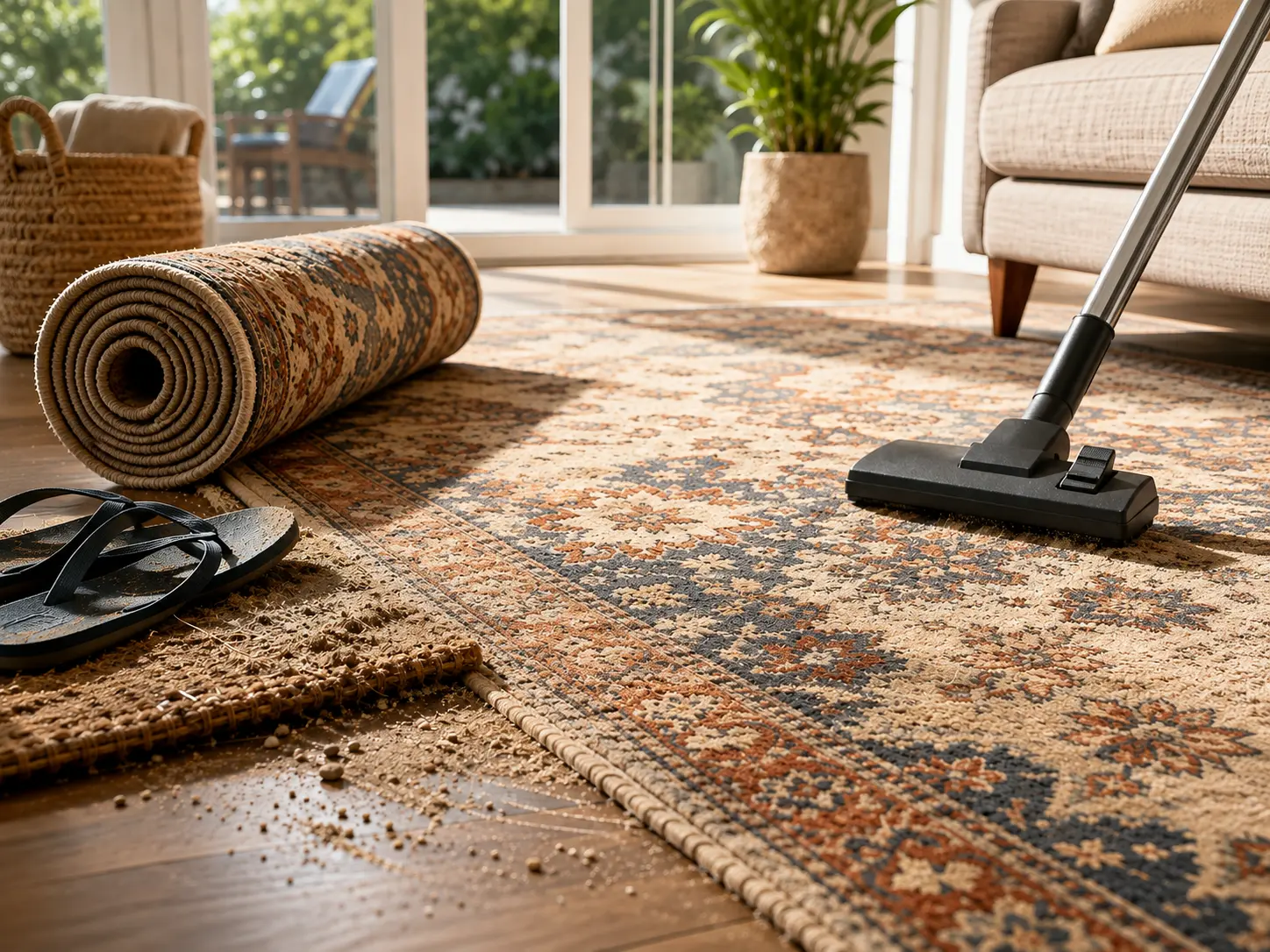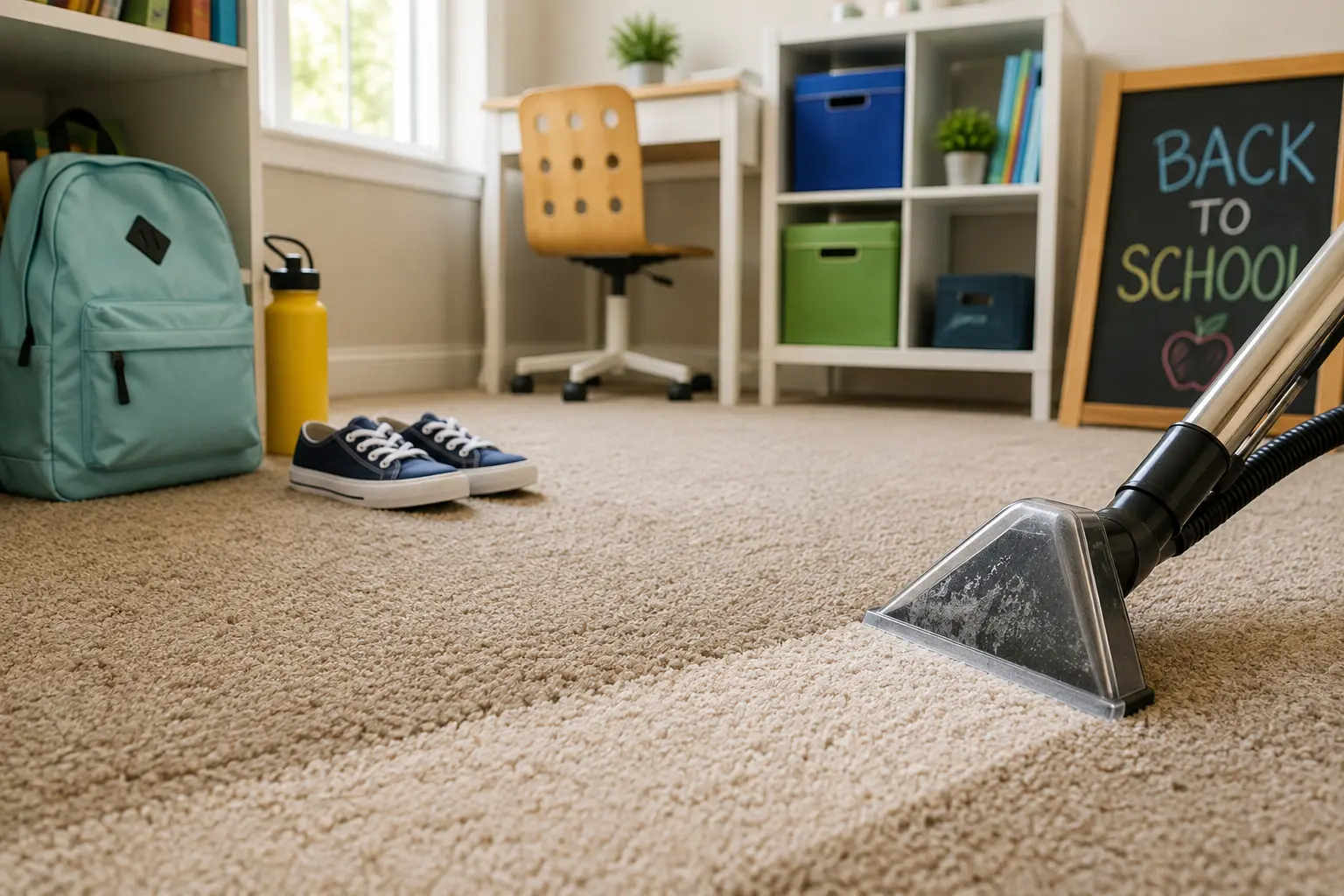


Summer in Bucks County and Montgomery County is great — until you look down at your carpet.
Kids running in from the backyard with grass-stained knees. A popsicle dripped across the living room rug on the way to the couch. Sunscreen transferred from small hands onto the upholstered chair armrest. A watermelon slice that didn’t make it fully to the kitchen. Summer is the season for family memories — and also the season for the stains that come with them.
In our 45+ years serving Philadelphia, Bucks County, and Montgomery County families, we’ve removed just about every summer stain imaginable. The ones that become permanent almost always share one of two histories: they were left too long before treatment, or they were treated with the wrong product in the wrong way.
This guide gives Philadelphia-area parents the practical, stain-by-stain information needed to handle summer’s most common carpet and upholstery challenges — and to know when it’s time to call in professional reinforcement.
What You’ll Learn
- Why summer stains are particularly problematic for carpet and upholstery
- The universal first-response rules that apply to every stain
- Specific treatment guidance for popsicles, grass, sunscreen, watermelon, bug spray, and more
- When to stop DIY treatment and call Cahill’s
- Frequently asked questions from parents throughout the Philadelphia area
Why Summer Is Peak Stain Season for Bucks County Families
Summer creates a perfect storm of staining conditions that other seasons don’t. Kids are home all day. The boundary between indoors and outdoors collapses — bare feet, wet swimsuits, and backyard-dirty hands move freely across carpet and upholstery. The foods of summer — popsicles, watermelon, berries, juice pouches — are intensely pigmented. And the products of summer — sunscreen, bug repellent, after-sun lotion — contain oils and chemicals that interact with carpet fibers in ways that make them particularly difficult to remove.
What makes many summer stains uniquely challenging:
- Fruit-based stains contain natural sugars and pigments that bond to carpet fibers quickly and become progressively harder to lift as they dry and oxidize
- Sunscreen and bug repellent contain oily compounds and chemical actives that don’t respond to standard water-based spotters
- Grass stains involve chlorophyll — a plant pigment that requires specific treatment chemistry to break down
- Heat speeds up the staining process: on a warm summer day, a spill that might stay workable for 10 minutes in winter becomes much harder to address within 5 minutes
- High-traffic summer conditions mean stains often get walked into carpet before they’re noticed, spreading the contamination laterally and pushing it deeper
Speed and correct technique are the two variables that determine whether a summer stain becomes a memory or a permanent fixture. Here’s what our 45+ years of experience has taught us about both.
Why Summer Stains Become Permanent: The Real Causes
When a stain becomes permanent, it’s rarely because the original substance was inherently impossible to remove. It’s almost always because of what happened — or didn’t happen — in the minutes and hours after the stain occurred.
1. Delayed Response: The Most Preventable Cause
Most liquid stains begin wicking into the carpet backing within one to two minutes of contact. Stains left for 30 minutes have already begun to bond with the fiber. Stains left for several hours have often oxidized — a chemical change that locks pigment into the fiber structure at a level that surface treatment cannot reach. Stains discovered the next morning, or after being walked into the carpet, frequently cannot be fully removed even with professional treatment.
The two-minute window is real. The difference between a stain that comes out completely and one that leaves a ghost is often measured in how quickly it was addressed.
2. Rubbing Instead of Blotting
The instinct to scrub a stain is almost universal — and almost universally counterproductive. Rubbing a fresh stain does three things, none of them helpful: it spreads the stain laterally to a larger area, it pushes the stain deeper into the fiber structure and backing, and it physically damages carpet fibers, creating a fuzzy, abraded patch that holds future soil more readily.
Blotting — pressing firmly with a clean cloth and lifting straight up — draws the stain up and out rather than pushing it in. It’s the opposite motion from rubbing, and the correct one for virtually every carpet stain situation.
3. Using the Wrong Product for the Stain Type
Not all stains respond to the same chemistry. Using a general-purpose household cleaner on a sunscreen stain, for example, typically does nothing because sunscreen’s oily base requires a degreasing agent, not a standard surfactant. Using a bleach-based product on a fruit stain on colored carpet removes the stain and the dye simultaneously. Using an oxidizing stain remover on a grass stain before understanding the dye stability of the carpet can cause permanent color damage.
Consumer stain removers are formulated to work on a broad range of stains, which means they’re optimized for none of them specifically. They also frequently leave a sticky surfactant residue that re-attracts soil, creating the familiar “stain shadow” that reappears after the treated area dries.
4. Over-Wetting During Treatment
Applying too much liquid during stain treatment is one of the most common DIY mistakes we see throughout our service area in Doylestown, Warminster, Abington, and across the Philadelphia area. Over-wetting pushes the stain down into the backing and padding, where it sits until the carpet dries from the top down — at which point it wicks back up to the surface. This is the “stain that keeps coming back” phenomenon, and it’s caused by over-wetting, not by the original substance.
The Summer Stain Guide: Specific Treatment for Every Common Culprit
Before treating any stain, follow these universal first-response rules:
- Act immediately — every minute counts with summer stains
- Blot, never rub — press and lift with a clean white cloth
- Work from the outside edge of the stain inward — prevents spreading
- Use cold or room-temperature water — hot water sets many stains permanently
- Apply cleaning solution sparingly — avoid over-wetting
- Always test any product on an inconspicuous area first
Popsicle and Fruit Juice Stains
Why they’re tricky: intense artificial and natural dyes combined with sugar. The sugar makes the stain sticky, which holds the dye against the fiber. Heat and time oxidize the pigment rapidly.
- Blot up as much liquid as possible immediately with a clean white cloth.
- Mix one tablespoon of dish soap with two cups of cold water. Apply sparingly to the stain and blot from outside in.
- Rinse with cold water (apply with a spray bottle) and blot again.
- For stubborn residue, a solution of one tablespoon white vinegar plus one tablespoon dish soap in two cups of warm water can help break down remaining pigment.
- Finish with a clean water rinse and place dry paper towels over the area with a heavy book to wick remaining moisture upward.
Call Cahill’s if: the stain was left more than 30 minutes before treatment, or if it covers a large area. Oxidized fruit dye responds significantly better to professional hot water extraction than to continued DIY spot treatment.
Grass Stains
Why they’re tricky: chlorophyll is a stubborn natural pigment that bonds quickly to protein-based fibers (wool, nylon) and resists standard water-based cleaning.
- Do not wet the stain initially — if dry, carefully remove any solid material first with a dull knife or the edge of a spoon.
- Apply a small amount of rubbing alcohol to a clean white cloth and blot the stain. Alcohol helps break down chlorophyll without setting it.
- Follow with a dish soap and cold water solution, blotting from outside in.
- Rinse thoroughly with cold water and blot dry.
- Avoid hot water or heat at any stage — heat sets grass stains permanently.
Call Cahill’s if: the stain was tracked through the carpet before being noticed, or if alcohol and dish soap treatment didn’t fully lift the pigment. Enzyme-based professional cleaners are more effective on set chlorophyll than consumer products.
Sunscreen
Why they’re tricky: sunscreen contains a combination of oily ingredients and chemical UV filters that create a two-part stain — the oily carrier and the active ingredient residue. Standard water-based cleaners don’t break down the oil component.
- Scrape up any excess product with a dull knife or spoon — don’t rub it in.
- Apply a small amount of dry-cleaning solvent or a dish soap solution directly to the stain. Dish soap is a degreaser and works reasonably well on the oily component of sunscreen.
- Blot from outside in with a clean white cloth, working the degreaser into the fiber gently.
- Rinse with cold water applied via spray bottle and blot completely dry.
- If a yellowish or white residue remains after drying, a second pass with dish soap solution is often needed.
Call Cahill’s if: the oily residue isn’t lifting after two treatments, or if the stain has been walked into the carpet. Sunscreen residue that penetrates to the backing is particularly prone to attracting additional soil and darkening over time.
Watermelon and Berries
Why they’re tricky: high water content combined with intense natural pigments. The water volume accelerates how quickly the stain spreads and wicks into the backing. The pigments — lycopene in watermelon, anthocyanins in berries — are among the most persistent natural dyes.
- Blot up liquid immediately with a thick stack of paper towels, pressing firmly to absorb volume before treating.
- Mix one tablespoon each of dish soap and white vinegar with two cups of warm water. Apply sparingly and blot.
- Rinse with cold water spray and blot thoroughly.
- For berry stains with significant remaining pigment, a hydrogen peroxide solution (3%) applied briefly can help on light-colored or white carpet — test an inconspicuous area first and do not use on dark or colored carpet.
Call Cahill’s if: the stain covered a large area, if the carpet is dark or colored (hydrogen peroxide is not safe for dyed fibers), or if significant pigment remains after initial treatment.
Bug Spray (DEET-Based)
Why they’re tricky: DEET is a solvent-based chemical that can actually dissolve certain synthetic carpet fibers and dyes on contact with extended exposure. This is one of the few summer stain types where speed of removal is genuinely urgent.
- Blot up any wet product immediately — don’t allow it to sit on synthetic carpet fibers.
- Rinse the area with cold water immediately to dilute the DEET concentration.
- Follow with a dish soap solution and gentle blotting.
- Rinse again thoroughly and blot dry.
- Do not use additional chemical solvents or dry-cleaning products on a DEET stain — the risk of dye damage increases with additional solvent contact.
Call Cahill’s if: there is any color change or texture damage to the carpet fiber, or if the stain left a noticeable residue after treatment. DEET-related dye damage may be irreversible, but professional assessment will confirm the extent and options.
Mud and Tracked-In Soil
Why they’re tricky: the instinct is to clean mud immediately. The correct approach is counterintuitive.
- Let the mud dry completely before attempting removal. Wet mud spreads dramatically when touched; dry mud breaks apart.
- Once dry, break up and vacuum the dried mud particles thoroughly.
- Treat any remaining stain with a dish soap and water solution, blotting from outside in.
- Rinse and blot dry.
Call Cahill’s if: mud was tracked through a large area before drying, or if the soil has embedded into the carpet backing. Deeply embedded soil is the leading cause of premature fiber wear and requires professional hot water extraction to remove fully.
When to Call Cahill’s: And Why It Matters
Home treatment handles a lot — when it’s fast, correct, and the stain didn’t penetrate below the fiber surface. But summer, with its volume of incidents and the specific chemistry of the stains involved, produces more “beyond DIY” situations than any other season.
Cahill’s IICRC-certified technicians have encountered every summer stain combination there is in 45+ years serving families throughout Philadelphia, Bucks County, and Montgomery County. Here’s what professional treatment adds:
- Truck-mounted hot water extraction that reaches and flushes the carpet backing — where DIY treatment leaves stain residue that wicks back to the surface
- Professional-grade enzyme and oxidizing treatments formulated for specific stain chemistry — not broad-spectrum consumer products
- Technicians who can identify whether a stain has oxidized, set into the backing, or caused dye damage before treatment begins
- Proper moisture management — extracting 95% of introduced moisture immediately to prevent the over-wetting that causes stains to reappear
- Complimentary bottle of spot remover for every customer — for handling the next incident between professional visits
Our 6-truck fleet serves all of Bucks County, Montgomery County, and Philadelphia, and our 24/7 answering service means you can reach us any time — including after the Saturday afternoon popsicle incident. We’re recognized as the 2023 Community’s Choice Award Winner in Bucks and Montgomery Counties, a Nextdoor Neighborhood Favorite for multiple years, and hold 5-star ratings across Google, Yelp, Angi, and Nextdoor. BBB A+ rated and accredited since 2011.
Frequently Asked Questions
What removes popsicle stains from carpet?
Blot up the liquid immediately with a clean white cloth, then treat with a solution of one tablespoon dish soap and two cups of cold water, blotting from the outer edge inward. For stubborn pigment, add one tablespoon of white vinegar to the solution. Rinse with cold water and blot dry. If the stain was left to dry or covers a large area, professional hot water extraction by Cahill’s will be more effective than continued DIY treatment.
How do you get grass stains out of carpet?
Start with rubbing alcohol applied to a clean cloth and blot the stain — alcohol breaks down chlorophyll without setting it. Follow with a dish soap and cold water solution. Never use hot water on grass stains; heat sets the pigment permanently. For stains that were tracked through the carpet before being noticed, professional enzyme-based treatment is typically more effective than consumer products at removing set chlorophyll.
Does sunscreen stain carpet permanently?
Sunscreen doesn’t permanently stain carpet when treated promptly with the right approach. The oily base requires a degreaser — dish soap works reasonably well. The challenge is that sunscreen residue left untreated continues to attract soil, creating a darkening stain shadow over time. If dish soap treatment doesn’t fully lift the residue after two passes, call Cahill’s at (215) 355-5388 before the residue accumulates more soil.
Why does a stain come back after I clean it?
Recurring stains almost always indicate one of two things: wicking or residue re-soiling. Wicking occurs when the stain soaked into the backing and wasn’t fully extracted — as the carpet dries from the top, the residual stain migrates back up the fiber. Residue re-soiling happens when a soap-based cleaner left a sticky film that collects new soil. Both require professional hot water extraction with proper moisture removal to fully resolve.
Should I let mud dry before cleaning it from carpet?
Yes — this is counterintuitive but correct. Wet mud spreads dramatically when touched or blotted, increasing the stained area and pushing the soil deeper into the fiber. Letting mud dry completely first allows you to vacuum up the broken particles before any wet treatment. The exception is a very large mud incursion across a wide area, where calling Cahill’s for professional extraction may be more effective than waiting and treating yourself.
Is DEET bug spray dangerous to carpet?
DEET is a solvent that can dissolve the dyes in certain synthetic carpet fibers on extended contact. Act fast: blot immediately, rinse with cold water to dilute the DEET, then treat with a dish soap solution. Don’t apply additional chemical solvents. If you notice any color change or texture difference in the carpet after treatment, call Cahill’s at (215) 355-5388 for a professional assessment — DEET dye damage may not be reversible but a professional can advise on options.
How much does professional carpet stain removal cost in Bucks County?
Cost depends on the number and type of stains, carpet size, and whether full cleaning or targeted spot treatment is needed. Cahill’s provides free estimates for most jobs over the phone at (215) 355-5388. For families managing a summer’s worth of incidents, a full professional cleaning at the end of the season is often more cost-effective than individual spot treatments — and it removes the embedded dry soil that accumulated alongside the stains.
Do you serve all of Bucks County for carpet cleaning?
Yes. Cahill’s 6-truck fleet serves all of Bucks County — including Doylestown, Warminster, Newtown, Richboro, Southampton, Feasterville-Trevose, Langhorne, Yardley, and Holland — and all of Montgomery County, including Jenkintown, Abington, Willow Grove, Glenside, Horsham, Ambler, and Fort Washington, plus all Philadelphia neighborhoods. Call (215) 355-5388 to confirm service to your area.
Next Steps: Keep This Guide Handy — and Know When to Call
Summer with kids means stains are going to happen. Having the right response ready before the next popsicle hits the carpet is the difference between a five-minute cleanup and a permanent reminder of July. Here’s how to stay prepared:
- Keep a pH-neutral carpet spotter, a spray bottle of cold water, and a stack of clean white cloths accessible — the response kit that makes the two-minute window achievable
- Bookmark this guide or print it for the refrigerator — stain-specific steps are easy to forget in the moment
- Save Cahill’s number in your phone: (215) 355-5388 — our 24/7 answering service means we’re reachable when the incident happens, not just during business hours
- Consider scheduling a professional carpet cleaning at the end of summer to address accumulated stains and embedded soil before the school year begins
- Every Cahill’s customer receives a complimentary bottle of spot remover — ask about it when you call
Cahill’s Carpet & Upholstery Cleaning | (215) 355-5388 | cahillscarpetcleaning.com
Serving Philadelphia, Bucks County, and Montgomery County since 1980. Trusted Since 1980 — Family-Owned Excellence.
About the Author
Bill Cahill founded Cahill’s Carpet & Upholstery Cleaning in 1980 with a single truck and a commitment to professional service. Over 45+ years later, he leads a team of IICRC-certified technicians — averaging 11 years experience each — serving Philadelphia, Bucks County, and Montgomery County. Cahill’s was recognized as the 2023 Community’s Choice Award Winner and maintains 5-star ratings across Google, Yelp, Angi, and Nextdoor.