

Your dryer used to finish a load in 45 minutes. Now it takes two full cycles — and your clothes still come out damp. The machine feels hot to the touch, your laundry room is unusually warm, and there’s a faint burning smell you can’t quite explain. If this sounds familiar in your Bucks County or Montgomery County home, you’re likely dealing with a clogged dryer vent — and it’s more dangerous than most homeowners realize.
According to the National Fire Protection Association (NFPA), dryers cause thousands of residential fires across the United States every year, with failure to clean being the leading contributing factor. In our 45+ years serving Philadelphia area families at Cahill’s Carpet & Upholstery Cleaning, we’ve seen firsthand how a simple maintenance task can prevent a devastating house fire. Here are the warning signs every homeowner should recognize — and what to do about them.
What You’ll Learn
- What Is a Clogged Dryer Vent and Why Is It Dangerous?
- The Real Causes Behind Dryer Vent Clogs
- 5 Warning Signs Your Dryer Vent Needs Cleaning Now
- DIY vs. Professional Solutions for Bucks and Montgomery County Homeowners
- Why Philadelphia Area Families Trust Cahill’s
- Frequently Asked Questions About Dryer Vent Cleaning
- Next Steps: Protect Your Home Today
What Is a Clogged Dryer Vent and Why Is It Dangerous?
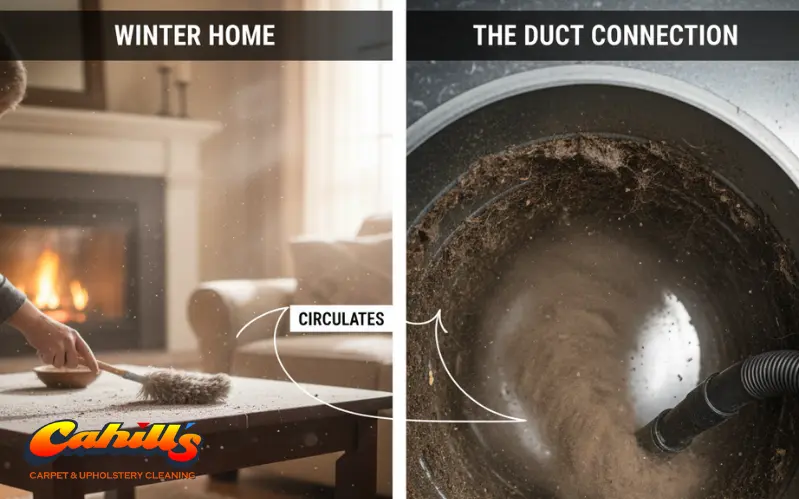
A clogged dryer vent occurs when lint, debris, and moisture accumulate inside the ductwork that carries hot, humid air from your dryer to the outside of your home. Every time you run a load of laundry, small fibers shed from your clothing. While your lint trap catches most of these fibers, a significant amount passes through and collects inside the vent system over time.
This buildup restricts airflow, which forces your dryer to work harder and run hotter. The combination of extreme heat and highly flammable lint creates a serious fire hazard right inside your walls. Beyond fire risk, a clogged vent also leads to higher energy bills, longer drying times, premature appliance failure, and even potential carbon monoxide buildup in homes with gas dryers.
Homeowners in Bucks County, Montgomery County, and throughout the Philadelphia area are particularly susceptible during fall and winter months when dryer usage increases significantly. NFPA data shows that January is the peak month for dryer-related fires, making this a critical maintenance item that should never be overlooked.
The Real Causes Behind Dryer Vent Clogs
Understanding why dryer vents clog helps you prevent the problem before it becomes dangerous. In our 45+ years serving Montgomery County and Bucks County families, Cahill’s technicians have identified four primary causes that Philadelphia area homeowners face.
Gradual Lint Accumulation
Even with a clean lint trap, approximately 25% of lint produced during each drying cycle passes into the vent system. Over months and years, this creates layers of compacted lint that narrow the duct opening and restrict airflow. Most homeowners don’t realize this is happening because the buildup is hidden inside walls and ductwork — completely out of sight.
Long, Complex Vent Runs
Many homes in Doylestown, Warminster, Jenkintown, and other Philadelphia suburbs have dryer vents that travel long distances through walls, crawl spaces, or up to rooftop exits. Every bend, elbow, and extra foot of ductwork creates another spot where lint settles and accumulates. The longer and more complex the run, the faster clogs develop and the harder they are to clear with basic cleaning.
Improper Vent Materials
Flexible plastic or thin foil accordion-style ducts are still found in many older Bucks County and Montgomery County homes. These ribbed materials trap lint far more easily than smooth, rigid metal ductwork. Dryer manufacturers and the NFPA recommend rigid metal venting because the smooth interior surface allows lint to pass through rather than catching on ridges and folds.
Exterior Vent Obstructions
The vent cover on the outside of your home can become blocked by bird nests, debris, ice, or overgrown landscaping — particularly common in wooded neighborhoods throughout Warrington, Horsham, Abington, and Fort Washington. When the exterior flap can’t open freely, airflow is restricted from the outside in, causing lint to back up through the entire system.
5 Warning Signs Your Dryer Vent Needs Cleaning Now
Based on our technicians’ average of 11 years experience each, these are the most reliable indicators that your dryer vent is clogged and needs immediate attention.
1. Clothes Take More Than One Cycle to Dry
This is the most common and earliest warning sign. A properly functioning dryer should complete a medium load in 35 to 45 minutes. If your clothes are still damp after one full cycle and you’re routinely running a second round, restricted airflow from a clogged vent is almost certainly the cause. The trapped moisture has nowhere to go, so your dryer keeps running — wasting energy and wearing down the appliance with every load.
2. The Dryer or Laundry Room Feels Unusually Hot
When hot air can’t escape through the vent, it builds up inside the dryer drum and radiates into your laundry room. If the top or sides of your dryer feel hot to the touch during a cycle, or if your laundry room temperature noticeably spikes when the dryer runs, that heat is being trapped by a blockage. This overheating also stresses internal components like thermostats and heating elements, shortening your dryer’s lifespan.
3. You Notice a Burning Smell When the Dryer Runs
A burning odor during a dryer cycle is a serious red flag that demands immediate action. This smell typically comes from lint that has accumulated to the point where it’s being heated to near-ignition temperatures. If you detect this smell, turn off your dryer immediately, unplug it, and do not use it again until the vent has been professionally inspected and cleaned. This is one warning sign Philadelphia area homeowners should never ignore.
4. Lint Is Accumulating Around the Dryer Door or Behind the Machine
When a vent is severely clogged, lint has nowhere to go. Instead of traveling through the duct to the outside, it backs up into the dryer itself and starts appearing in unusual places — around the door seal, on top of the dryer, behind the machine near the connection point, or even on your freshly dried clothes. Visible lint outside the lint trap is a clear sign that airflow is significantly compromised.
5. The Exterior Vent Flap Doesn’t Open During Operation
Here’s a simple test every homeowner in Huntingdon Valley, Southampton, Richboro, or anywhere in our service area can perform: Go outside while your dryer is running and check the vent flap where it exits your home. That flap should be pushed open by the force of the exhaust air. If it barely moves, doesn’t open at all, or you feel little to no warm air coming out, your vent is blocked and needs cleaning right away.
DIY vs. Professional Solutions for Bucks and Montgomery County Homeowners
What You Can Do at Home
Some basic maintenance can help prevent dryer vent clogs between professional cleanings. Clean the lint trap after every single load — this is the single most important habit. Once a month, check the exterior vent cover to make sure it opens freely and isn’t blocked by debris or landscaping. You can also periodically pull your dryer away from the wall and disconnect the short vent hose to remove any lint that’s accumulated near the connection point.
Important warning: DIY cleaning can only address the first few feet of the vent. For the sections running through your walls, ceiling, or roof — where the most dangerous buildup occurs — you need professional equipment and expertise.
When Professional Cleaning Is the Right Call
Professional dryer vent cleaning is recommended at least once per year for most households, and every six months for families with pets, large households, or heavy laundry use. At Cahill’s, our technicians use specialized equipment designed to reach the entire length of your vent system — not just the visible sections. We clean from the dryer connection all the way to the exterior exit, removing compacted lint, debris, and obstructions that DIY tools simply cannot reach.
Why Professional Cleaning Makes Sense
A thorough professional cleaning eliminates the fire hazard, restores your dryer’s efficiency, reduces energy costs, and extends the life of your appliance. Many of our Bucks County and Montgomery County customers report that their drying times drop by half after service. We have customers throughout Philadelphia who’ve told us their dryers lasted 15+ years with annual Cahill’s vent cleaning. When you compare the modest cost of professional cleaning to the price of a new dryer — or worse, fire damage — the value is clear.
Why Philadelphia Area Families Trust Cahill’s
Since Bill Cahill started this company with a single truck in 1980, Cahill’s Carpet & Upholstery Cleaning has grown into one of the most trusted home service providers in the Philadelphia tri-county area. Our dryer vent cleaning service is performed by IICRC-certified technicians who are bonded, experienced, and committed to doing the job right.
Here’s what sets us apart for Bucks County, Montgomery County, and Philadelphia homeowners:
- 45+ years of trusted service — family-owned and operated since 1980
- IICRC-certified, bonded technicians averaging 11 years of hands-on experience
- 2023 Community’s Choice Award Winner — recognized by Bucks and Montgomery County residents
- Nextdoor Neighborhood Favorite multiple years running (2021, 2022, and beyond)
- 5-star ratings across Yelp, Google, Angi, and Nextdoor
- BBB A+ rated and accredited since 2011
- 6-truck fleet providing prompt service throughout the tri-county area
As one satisfied customer shared: “I called at the end of the day because my dryer vent became disconnected from the wall while in the middle of drying clothes and it was evident that my vents needed cleaning. When I called they squeezed me in for the next day. He was prompt and so helpful and so nice. He did a fantastic job.”
Frequently Asked Questions About Dryer Vent Cleaning
How much does dryer vent cleaning cost in Bucks County?
The cost of professional dryer vent cleaning varies depending on vent length, complexity, and accessibility. Cahill’s provides free estimates — most over the phone — so you’ll know the cost upfront with no surprises. Call (215) 355-5388 for a personalized quote for your home. Professional cleaning is significantly less expensive than dryer replacement or fire damage repair.
How long does professional dryer vent cleaning take?
Most dryer vent cleanings are completed within 30 to 60 minutes, depending on the length and condition of your vent system. Our technicians clean thoroughly from the dryer connection to the exterior exit, so you can be confident the entire system is clear when we finish.
Can I clean my dryer vent myself?
You can clean the lint trap and the first few feet of vent hose behind your dryer as basic maintenance. However, the most dangerous buildup occurs deep within the ductwork — running through walls, ceilings, and up to rooftop exits. Reaching and properly clearing these sections requires professional-grade equipment that goes far beyond what consumer-grade brush kits can accomplish.
How often should I have my dryer vent professionally cleaned?
For most Montgomery County and Bucks County households, annual professional cleaning is recommended. Homes with pets, large families, or heavy laundry usage should schedule cleaning every six to nine months. If you notice any of the five warning signs described above, schedule service immediately regardless of when your last cleaning occurred.
What causes dryer vent fires?
Lint is highly flammable. When it accumulates inside a dryer vent and is exposed to the extreme heat generated by the dryer, it can ignite. The NFPA identifies failure to clean as the leading factor contributing to dryer fires. Annual professional cleaning removes this fuel source and dramatically reduces your fire risk.
When should I call a professional for dryer vent cleaning?
Call a professional immediately if you experience any of the warning signs: extended drying times, a burning smell, visible lint around the dryer, an overheating machine, or a vent flap that won’t open. Additionally, if it’s been more than 12 months since your last professional cleaning, it’s time to schedule service. Call Cahill’s at (215) 355-5388 — our 24/7 answering service ensures we’re always reachable.
Is steam cleaning the same as hot water extraction?
This is a common question we receive about our carpet cleaning services. “Steam cleaning” is actually an industry term for hot water extraction — we don’t use actual steam. This method uses heated water and powerful suction to deep clean carpet fibers and backing. If you’re scheduling dryer vent cleaning, ask about bundling with carpet cleaning for your Bucks County or Montgomery County home.
Do clogged dryer vents really cause house fires?
Yes. According to the NFPA, U.S. fire departments respond to thousands of dryer-related house fires every year, resulting in deaths, injuries, and tens of millions of dollars in property damage annually. Lint buildup from failure to clean is consistently identified as the number one contributing factor. This is a preventable hazard that every homeowner should take seriously.
Protect Your Home: Schedule Your Dryer Vent Cleaning Today
Key takeaways:
- A clogged dryer vent is a serious, preventable fire hazard hiding in your laundry room
- Five clear warning signs tell you when it’s time for professional cleaning
- Annual professional cleaning dramatically reduces fire risk and extends dryer life
- Cahill’s has protected Philadelphia area homes for 45+ years with trusted, certified service
Don’t wait for a warning sign to become an emergency. Call Cahill’s Carpet & Upholstery Cleaning at (215) 355-5388 for your free estimate. Most estimates are provided right over the phone — no pressure, no obligation. Our 24/7 answering service means we’re always available, including emergencies.
Serving all of Philadelphia, Bucks County, and Montgomery County — including Huntingdon Valley, Doylestown, Warminster, Jenkintown, Abington, Horsham, Newtown, Yardley, Langhorne, Willow Grove, and surrounding communities.
Trusted Since 1980 — Family-Owned Excellence