
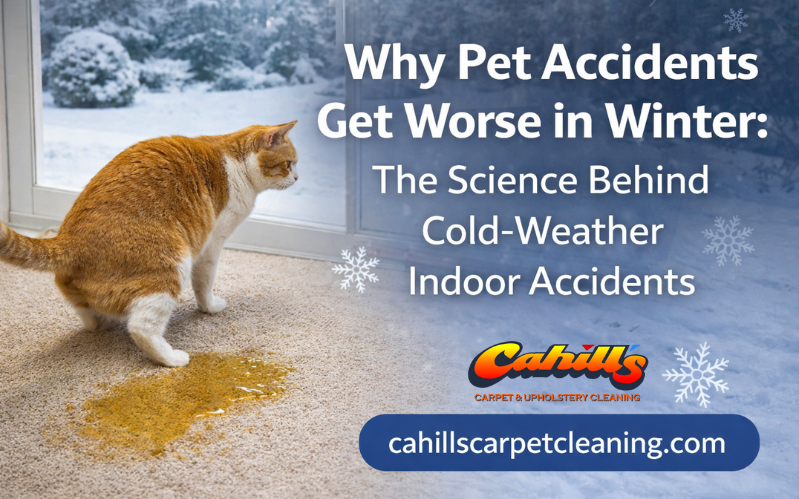
Your dog has been housetrained for years. No accidents, no problems—until winter arrives. Now you’re finding wet spots on the carpet, mysterious puddles by the back door, and that unmistakable smell that tells you something has gone wrong. Your perfectly trained pet has suddenly regressed, and you’re wondering what happened.
If this sounds familiar, you’re not alone—and your pet isn’t broken. In our 45+ years serving Bucks County, Montgomery County, and Philadelphia families since 1980, we’ve helped countless pet owners deal with the frustrating reality of winter indoor accidents. The spike in pet-related carpet cleaning calls we receive every January and February isn’t a coincidence. There’s actual science behind why your well-trained pet suddenly can’t seem to make it outside.
The good news? Once you understand why winter triggers these accidents, you can take steps to prevent them—and properly address the damage when accidents do happen. Here’s what our IICRC-certified technicians have learned from decades of helping Philadelphia area pet owners restore their carpets and eliminate stubborn odors.
The Winter Pet Accident Problem: More Common Than You Think
Winter pet accidents aren’t a sign of poor training or a rebellious animal. They’re a predictable response to environmental changes that affect pets of all ages and breeds—though some are more susceptible than others.
Pet owners throughout Doylestown, Warminster, Jenkintown, and the surrounding communities report similar patterns: dogs that suddenly refuse to go outside, cats that start avoiding the litter box near cold exterior walls, and older pets that seem to lose their bladder control entirely when temperatures drop. The result is the same—damaged carpets, lingering odors, and frustrated families who thought their potty-training days were long behind them.
Common signs of winter-related pet accidents include: finding accidents near doors or in areas your pet associates with going outside, noticing your dog hesitating or refusing to go out in cold or snowy weather, discovering accidents that happen shortly after your pet comes back inside (suggesting they didn’t fully relieve themselves outdoors), and an increase in nighttime accidents when temperatures drop to their lowest.
Perhaps most frustrating is the odor issue. Pet urine contains compounds that bond strongly to carpet fibers and can penetrate deep into the padding and even the subfloor. Many homeowners clean the visible stain only to have the smell return days or weeks later—especially in humid conditions. This isn’t a cleaning failure; it’s chemistry, and understanding it is key to solving the problem permanently.
The Science Behind Winter Pet Accidents: Five Causes Every Pet Owner Should Understand
Understanding why your pet’s bathroom habits change in winter helps you address the root causes—not just clean up the symptoms. Here’s what’s really happening:
Cold Ground and Snow Create Physical Discomfort
Your pet’s paws are sensitive to temperature extremes. When the ground is frozen, covered in snow, or treated with ice-melting chemicals, the sensations can range from uncomfortable to painful. Dogs lose a significant amount of body heat through their paws, and cold ground can quickly become intolerable—especially for small breeds, short-haired dogs, and older animals.
According to veterinary experts, when temperatures drop below freezing, pets may lift their paws, refuse to walk, or rush back inside before fully relieving themselves. Road salt and de-icing chemicals compound the problem by irritating paw pads and creating an even stronger aversion to going outside. The result? Your pet holds it as long as possible, then has an accident indoors when they simply can’t wait any longer.
Snow Changes the Familiar Bathroom Landscape
Dogs learn from an early age where it’s acceptable to relieve themselves. They become accustomed to specific sensations—the feel of grass, dirt, or concrete—as signals that it’s okay to go. When snow covers their familiar bathroom spots, many dogs become confused or anxious. The surface looks, feels, and smells completely different from what they’ve learned to associate with “bathroom time.”
This is especially common in younger dogs experiencing their first winter or pets that have recently moved to the Philadelphia area from warmer climates. The unfamiliar white surface simply doesn’t register as an appropriate place to go—so they wait until they’re back on familiar indoor ground, which unfortunately means your carpet.
Shorter Days Disrupt Established Routines
Winter’s shorter daylight hours affect more than just your mood—they disrupt your pet’s bathroom schedule too. During summer, your dog might go out at 7 AM in full daylight and again at 7 PM while it’s still light. In winter, both of those trips happen in darkness, which can make some pets reluctant to venture outside.
Additionally, human schedules often change in winter. We’re less likely to take long evening walks or spend time outdoors with our pets when it’s dark and cold. This means fewer bathroom opportunities and longer stretches between trips outside—a recipe for indoor accidents, especially for older pets or those with smaller bladders.
Older Pets and Those With Arthritis Struggle More
Cold weather is particularly challenging for senior pets and those with joint problems. Arthritis symptoms often worsen in cold weather, making the simple act of going outside painful. Navigating icy steps, walking on slippery surfaces, and squatting on frozen ground can be difficult or even impossible for pets with mobility issues.
Cornell University’s College of Veterinary Medicine notes that dogs with arthritis often have increased instability when walking on slippery ice or snowy surfaces. For these pets, the discomfort of going outside may outweigh their training, leading them to relieve themselves indoors where it’s warm and the footing is stable. If your older pet suddenly starts having accidents in winter, a veterinary checkup is always a good idea to rule out underlying health issues.
Holiday Schedule Disruptions Add to the Problem
Winter brings holiday gatherings, travel, house guests, and disrupted routines—all of which can affect your pet’s bathroom habits. A house full of visitors may make your dog reluctant to go outside, or guests may not know your pet’s signals that they need to go out. Travel means unfamiliar environments, different schedules, and stress that can lead to accidents.
Even subtle changes matter. If you’re sleeping in during the holidays or staying up later than usual, your pet’s bathroom schedule is affected. Dogs and cats thrive on routine, and winter’s disruptions can throw off even the most reliably housetrained animals.
Why Pet Accidents Are So Difficult to Clean: The Chemistry of Urine Damage
Understanding why pet urine causes such persistent problems helps explain why DIY cleaning often fails—and why professional treatment may be necessary for complete odor elimination.
Pet urine isn’t just water with waste products. It contains uric acid, ammonia, bacteria, and proteins that create a perfect storm of cleaning challenges. When urine soaks into carpet, it doesn’t just sit on the surface—it penetrates deep into the carpet fibers, saturates the padding underneath, and in severe cases, reaches the subfloor itself.
The real problem is uric acid. Unlike other components of urine that can be washed away with water and detergent, uric acid forms crystals that bond tightly to whatever surface they touch. These crystals aren’t water-soluble, which means ordinary cleaning—even vigorous scrubbing with carpet cleaner—won’t remove them. You may eliminate the visible stain and temporarily reduce the odor, but the uric acid crystals remain locked in the carpet fibers.
This explains why pet odors often return after cleaning. When humidity rises or the carpet gets damp, those uric acid crystals reactivate, releasing odor all over again. Your pet can smell these residual odors long before you can—which is why they often return to the same spot for repeat accidents. Their sensitive noses detect the lingering scent and interpret it as an appropriate bathroom location.
Cat urine presents an even greater challenge. Cats evolved as desert animals with highly concentrated urine designed to conserve water. This means cat urine contains higher concentrations of the compounds that cause odor and staining, making it even more difficult to remove completely.
The Solution: Preventing Winter Accidents and Properly Treating Damage
Preventing Winter Pet Accidents: Practical Steps for Philadelphia Area Pet Owners
Understanding the causes of winter accidents points toward practical prevention strategies. Create a cleared, accessible bathroom area by shoveling a designated spot close to your door where your pet can relieve themselves without trudging through deep snow. Keep this area clear throughout winter, and your pet will learn to use this familiar spot consistently.
Protect sensitive paws with booties or paw wax to shield against cold ground and de-icing chemicals. Many pets resist booties at first, so introduce them gradually indoors before expecting your dog to wear them outside. After outdoor trips, wipe your pet’s paws with a warm, damp cloth to remove any salt or chemical residue.
Maintain consistent bathroom schedules even when your own routine changes. If your pet normally goes out at 6 AM, keep that schedule through the holidays. Consider adding extra bathroom breaks during the coldest days—shorter, more frequent trips may be more successful than expecting your pet to stay outside longer in uncomfortable conditions.
For older pets or those with mobility issues, consult your veterinarian about managing arthritis symptoms during winter. Some pets may benefit from joint supplements, pain management, or physical therapy. Making outdoor trips easier—adding non-slip mats to steps, providing ramps instead of stairs, and keeping pathways clear of ice—can help senior pets maintain their bathroom habits.
When Accidents Happen: Immediate Response and DIY Treatment
Quick action makes a significant difference in whether a pet accident becomes a permanent stain and odor problem. When you discover a fresh accident, blot (don’t scrub) the area immediately with paper towels or clean cloths. Press firmly to absorb as much liquid as possible. Scrubbing spreads the urine deeper into carpet fibers and can damage the carpet’s texture.
For cleaning, enzymatic cleaners are the most effective DIY option for pet urine. These products contain beneficial bacteria that actually digest the organic compounds in urine, including the troublesome uric acid crystals. Apply the enzymatic cleaner liberally—the product needs to reach everywhere the urine penetrated, which may be deeper than the visible stain. Allow adequate dwell time (often several hours or overnight) for the enzymes to work completely.
Avoid common cleaning mistakes that make the problem worse. Don’t use steam cleaners on fresh pet stains—the heat can actually set the odor permanently into carpet fibers. Avoid ammonia-based cleaners, which smell similar to urine and may encourage your pet to mark the same spot again. And never mix cleaning products, especially those containing bleach, which can create dangerous fumes and damage carpet fibers.
When Professional Treatment Is Necessary
DIY cleaning works well for occasional, fresh accidents on surface-level stains. But some situations require professional treatment: odors that return after cleaning, multiple accidents in the same area, older stains that have had time to set, or evidence that urine has penetrated the carpet padding or subfloor.
Professional pet stain and odor removal goes beyond surface cleaning. At Cahill’s Carpet & Upholstery Cleaning, our technicians use specialized equipment to extract contamination from deep within carpet fibers and apply professional-strength treatments that neutralize odors at the molecular level. For severe contamination, we can treat the carpet backing and padding where urine often accumulates.
Our hot water extraction process—what’s often called steam cleaning—removes not just the urine compounds but also the bacteria that contribute to ongoing odor problems. Combined with enzymatic treatment, this approach addresses the problem at every level, from the visible stain to the deep contamination that causes odors to return.
Why Philadelphia Area Pet Owners Trust Cahill’s for Pet Stain and Odor Removal
Since Bill Cahill founded Cahill’s Carpet & Upholstery Cleaning in 1980 with a single truck and a commitment to professional service, we’ve helped thousands of pet-owning families throughout Huntingdon Valley, Bucks County, Montgomery County, and Philadelphia restore their carpets after pet accidents.
We understand that pets are family members, and accidents don’t mean you love them any less. Our 45+ years of experience have taught us that pet owners need practical solutions, not judgment. That’s why our IICRC-certified technicians—with an average of 11 years of experience—approach every pet stain situation with expertise and understanding.
Our commitment to customer satisfaction has earned us the 2023 Community’s Choice Award and Nextdoor Neighborhood Favorite recognition in multiple years. We maintain 5-star ratings across Google, Yelp, Angi, and Nextdoor, and the majority of our business comes from satisfied customer referrals.
As one customer with pets shared: “Cahill carpet cleaned my grout in my kitchen and had it sparkling like new. So when I need my area rug cleaned, I knew exactly who I was calling. They came the next day, picked it up and it was returned the following week. The carpet looks brand new and I have 2 dogs!!!”
Frequently Asked Questions About Winter Pet Accidents and Carpet Cleaning
Why does my pet suddenly have accidents in winter when they’ve been housetrained for years?
Winter introduces multiple factors that can disrupt even well-established bathroom habits: cold ground discomfort, snow covering familiar bathroom spots, shorter days changing routines, and joint stiffness in older pets. These aren’t training failures—they’re predictable responses to environmental changes. Address the underlying causes (cleared bathroom areas, paw protection, consistent schedules) while properly cleaning any accidents to prevent repeat incidents.
Why does the pet urine smell keep coming back after I clean the carpet?
Pet urine contains uric acid crystals that aren’t water-soluble and bond tightly to carpet fibers. Standard cleaning removes the visible stain and some odor-causing compounds, but the uric acid remains. When humidity rises or the carpet gets damp, these crystals reactivate and release odor again. Enzymatic cleaners that actually break down uric acid, or professional treatment, are needed for permanent odor elimination.
Can professional carpet cleaning really remove pet urine odors completely?
In most cases, yes. Professional cleaning combines hot water extraction to remove contamination from deep within carpet fibers with specialized enzymatic treatments that neutralize odors at the molecular level. For severe contamination where urine has reached the padding or subfloor, additional treatments may be necessary. During your free estimate, we’ll assess the extent of the damage and recommend the most effective approach.
How soon should I clean a pet accident for best results?
Immediately, if possible. Fresh accidents are much easier to treat than set-in stains. Blot up as much liquid as you can right away, then apply an enzymatic cleaner. The longer urine sits, the deeper it penetrates and the more the uric acid crystals bond to fibers. For older stains or accidents you didn’t discover immediately, professional treatment typically provides better results than DIY cleaning.
Why does my dog keep having accidents in the same spot?
Dogs can smell residual urine odors that are undetectable to humans. Even if you’ve cleaned the visible stain, remaining uric acid crystals signal to your pet that this is an appropriate bathroom location. Breaking this cycle requires thorough cleaning with enzymatic products that eliminate all traces of urine—not just the components you can smell. Professional cleaning is often the most effective way to completely neutralize these scent markers.
Is cat urine harder to clean than dog urine?
Yes. Cats evolved as desert animals with highly concentrated urine designed to conserve water. This means cat urine contains higher levels of uric acid, ammonia, and other odor-causing compounds than dog urine. Cat urine also tends to have a stronger, more persistent smell. Professional treatment is often necessary for complete cat urine odor removal, especially for repeated accidents or older stains.
Should I use a steam cleaner on pet stains?
Not on fresh stains. The heat from steam cleaning can actually set pet odors permanently into carpet fibers, making them much harder to remove. Always treat fresh pet stains with enzymatic cleaner first and allow them to dry completely before using any heat-based cleaning method. Professional hot water extraction is different from consumer steam cleaners and is safe to use after proper pre-treatment.
How much does professional pet stain removal cost in Bucks County?
Costs vary based on the size of the affected area, the severity of contamination, and whether the urine has penetrated the padding or subfloor. Cahill’s provides free estimates—most can be given over the phone by calling (215) 355-5388. We’ll assess your situation and recommend the most cost-effective solution for your specific needs.
Ready to Eliminate Pet Odors for Good?
If your Bucks County, Montgomery County, or Philadelphia home is dealing with stubborn pet stains and odors—whether from this winter’s accidents or older issues that keep coming back—professional cleaning can restore your carpets and eliminate odors at the source.
Key takeaways to remember: Winter pet accidents are caused by environmental factors, not training failures—understanding the causes helps prevent future incidents. Pet urine contains uric acid crystals that standard cleaning can’t remove, which is why odors often return. Quick response to fresh accidents and proper enzymatic treatment improve outcomes significantly. Professional cleaning reaches deep contamination that DIY methods can’t address, eliminating odors permanently.
Call Cahill’s Carpet & Upholstery Cleaning Today
(215) 355-5388
Free Estimates | 24/7 Answering Service for Emergencies
Pet Stain & Odor Removal | Carpet Cleaning | Upholstery Cleaning | Area Rug Cleaning
Serving Huntingdon Valley, Doylestown, Warminster, Jenkintown, Abington, Willow Grove, and all of Bucks County, Montgomery County & Philadelphia
Trusted Since 1980 — Family-Owned Excellence