
The Post-Holiday Carpet Blues: You’re Not Imagining It
The tree is down. The decorations are packed away. The last of the holiday cookies have been eaten. And now, in the quiet aftermath of the season, you’re looking at your carpets and thinking: “What happened?”
You’re not imagining it. Those carpets that looked perfectly fine before Thanksgiving now appear dull, matted, and tired. There are mysterious stains that seemed to appear overnight. Traffic patterns that weren’t visible before now stand out like highways through your living room. And is that smell… lingering eggnog?
If you’re a homeowner in Bucks County, Montgomery County, or the greater Philadelphia area dealing with post-holiday carpet exhaustion, you’re far from alone. In our 45+ years serving families throughout the region since 1980, January is consistently our busiest month—and it’s not hard to understand why.
Maybe you’ve already tried vacuuming more aggressively. Perhaps you’ve attacked individual stains with store-bought spot removers. Some of you may have even rented a carpet cleaning machine from the hardware store. Yet your carpets still look… exhausted.
Here’s what our IICRC-certified technicians—averaging 11 years of experience each—have learned about why holiday carpets suffer so much, what’s actually happening beneath the surface, and how to restore them to their pre-holiday glory. Understanding the problem is the first step to solving it.
What Is Post-Holiday Carpet Damage?
Post-holiday carpet damage refers to the cumulative wear, staining, and deterioration that occurs during the concentrated activity of the holiday season—typically from Thanksgiving through New Year’s Day. Unlike normal everyday wear that happens gradually over months, holiday damage compresses weeks or months of stress into just 5-6 weeks.
Common Signs Your Carpets Suffered Holiday Stress
- Visible traffic patterns, especially from entryways to living areas and kitchens
- Matted, flattened fibers that don’t bounce back after vacuuming
- Mystery stains—some you remember, others that seem to have appeared from nowhere
- Dull, grayish appearance even after thorough vacuuming
- Lingering odors—food, beverages, or that vague “staleness”
- Gritty texture underfoot, especially near entrances
- Stains that seemed cleaned but have reappeared
The problem isn’t just aesthetic. Embedded soil acts like sandpaper, cutting carpet fibers with every footstep. Left untreated, holiday damage accelerates permanent wear—carpets that should last 15-20 years may show premature aging within just a few seasons.
The Real Causes: Why Holiday Season Is So Hard on Carpets
Understanding why your carpets suffer during the holidays is essential to understanding what it takes to restore them. In our 45+ years serving Montgomery County and Bucks County families, we’ve identified five primary causes of post-holiday carpet damage.
1. Concentrated Foot Traffic
The average American home sees about 4-6 people daily. During holiday gatherings, that number can spike to 15, 20, or even 30+ people in a single day—and often multiple times throughout the season.
Here’s the math that matters: A typical guest takes 50-100 steps across your carpet during a 3-hour visit. Multiply that by 20 guests and you’ve added 1,000-2,000 footsteps in a single afternoon—the equivalent of a week’s normal traffic compressed into hours.
This concentrated traffic doesn’t just flatten fibers. Each step grinds tracked-in soil deeper into the carpet backing, where your vacuum can’t reach. The damage is cumulative and often invisible until weeks later.
2. Winter Weather Tracking
Philadelphia winters bring a unique combination of carpet enemies: road salt, ice melt chemicals, snow, slush, and mud. Every guest who walks through your door during holiday season potentially tracks in:
- Calcium chloride and sodium chloride (road salt)—corrosive compounds that break down carpet fibers
- Fine sand and grit from treated sidewalks—abrasive particles that cut fibers
- Moisture that soaks into carpet backing, promoting mold and mildew growth
- Organic matter (mud, leaves, debris) that decomposes and creates odors
Even with entry mats, studies show that it takes 12-15 steps on clean flooring to remove most debris from shoe soles. If your mat is only a few feet from carpet, guests are depositing winter grime directly into your fibers.
3. Food and Beverage Spills—The “Sleeper Stains”
Holiday entertaining means food and drinks in areas that don’t normally see them. Living rooms become dining rooms. Family rooms become buffet zones. And accidents happen.
The most dangerous spills aren’t the dramatic red wine disasters—those get immediate attention. The real threat comes from what we call “sleeper stains”:
- Cream-based dips and sauces that soak in before anyone notices
- Sugary beverages (eggnog, cider, cocktails) that leave sticky residue attracting more soil
- Gravy drips that blend with carpet color initially but oxidize darker over days
- Candle wax splatters from holiday centerpieces
- Chocolate from desserts and candy—containing oils that bond permanently to fibers if not treated quickly
Many of these stains aren’t visible immediately. They appear days or weeks later as the spill oxidizes, dries, and attracts additional soil—creating those “mystery stains” homeowners discover in January.
4. Christmas Tree Debris and Seasonal Decorations
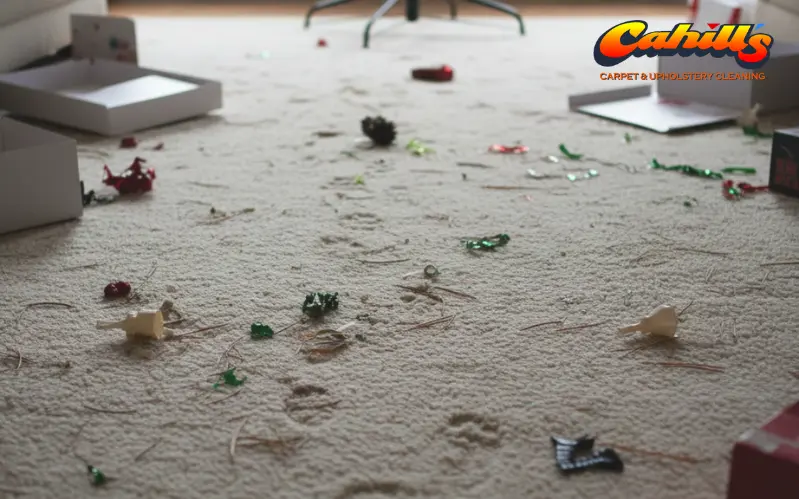
Real Christmas trees shed needles, deposit sap, and drip water throughout their 3-4 week stay in your home. Even artificial trees accumulate and release dust from year-long storage.
Tree sap is particularly problematic—it’s sticky enough to bond with carpet fibers but not immediately visible. Homeowners often don’t notice sap deposits until they’ve attracted enough dirt to become dark spots. By then, the sap has cured and becomes extremely difficult to remove without professional solvents.
Additionally, the constant foot traffic around tree areas (gifts going in, presents coming out, watering, adjusting lights) creates concentrated wear patterns that may only become apparent once the tree is removed.
5. Delayed Cleaning Allows Permanent Damage
Perhaps the biggest factor in post-holiday carpet damage isn’t any single cause—it’s timing. During the busy holiday season, homeowners understandably focus on entertaining rather than deep cleaning. Spills get a quick blot. Vacuuming gets postponed. Professional cleaning gets pushed to “after the holidays.”
But here’s what happens during that delay:
- Stains set deeper into fibers and backing
- Soil bonds chemically with carpet materials
- Embedded grit continues cutting fibers with every step
- Moisture trapped in backing promotes mold and mildew
- Odor-causing bacteria multiply in organic matter
What could have been cleaned in early January becomes a permanent problem by February. That’s why timing matters so much for post-holiday carpet recovery.
How to Assess Your Carpet’s Post-Holiday Condition
Before deciding whether you need professional cleaning or can handle recovery yourself, it helps to assess the actual condition of your carpets. Here’s a simple diagnostic approach our technicians use:
The Daylight Test
Open blinds and examine your carpets in natural daylight. Artificial lighting hides discoloration and traffic patterns. If your carpets look significantly different in daylight than under lamps—grayer, duller, or more stained—embedded soil is the culprit.
The Touch Test
Run your hand across high-traffic areas versus corners or under furniture. Does the texture feel different? Gritty? Matted? If high-traffic areas feel noticeably different from protected areas, embedded soil has changed the carpet’s texture.
The Smell Test
Get close to your carpet—especially in areas where food was served. Any musty, sour, or stale odor indicates organic matter decomposing in your carpet backing. This won’t resolve with vacuuming alone.
The Stain Reappearance Check
Look at spots where you cleaned spills during the holidays. Have any stains returned or darkened? This “wicking” indicates the stain penetrated into the backing and pad—surface cleaning only removed what was visible while the source remains below.
Solutions: How to Restore Your Post-Holiday Carpets
What You Can Do Right Now (DIY Maintenance)
Some immediate steps can prevent further damage while you decide on professional cleaning:
- Vacuum Thoroughly and Slowly: Make multiple slow passes over high-traffic areas. Quick vacuuming doesn’t give suction time to lift embedded soil.
- Address Visible Stains Carefully: Blot (don’t rub) with clean white cloths. Test any cleaning solution in an inconspicuous area first. Avoid over-wetting.
- Improve Entry Protection: Place longer mats at entrances to capture more incoming soil before it reaches carpet.
- Increase Ventilation: Good airflow helps carpets release trapped moisture and odors.
When Professional Cleaning Is Essential
DIY maintenance has limits. Professional hot water extraction is necessary when:
- Stains have reappeared after cleaning (indicating deep penetration)
- Odors persist despite surface cleaning
- Traffic patterns are visible even after thorough vacuuming
- Carpet texture has changed in high-traffic areas
- It’s been more than 12 months since your last professional cleaning
- You notice allergy symptoms have worsened (trapped allergens in carpet)
What Professional Hot Water Extraction Actually Does
Professional carpet cleaning isn’t just “better vacuuming.” Hot water extraction (often called steam cleaning, though actual steam isn’t used) works fundamentally differently than any DIY method:
- Pre-Inspection: Our technicians examine your carpet’s fiber type, condition, and specific stains to customize the approach.
- Pre-Treatment: Specialized solutions break the bond between soil and carpet fibers, loosening embedded debris.
- Hot Water Extraction: Our truck-mounted equipment injects hot water and cleaning solution deep into carpet fibers, then immediately extracts it along with dissolved soil—reaching the backing and pad where DIY methods can’t.
- Stain Treatment: Stubborn stains receive targeted treatment with professional-grade solutions matched to the stain type.
- Grooming: Final grooming restores fiber direction and promotes even drying.
- Furniture Protection: Blocks and tabs placed under all furniture prevent transfer during drying.
The key difference is extraction power. Consumer-grade rental machines simply can’t match the suction force of truck-mounted professional equipment. They leave behind moisture that promotes mold growth and soil that continues damaging fibers.
Why Philadelphia Area Homeowners Choose Cahill’s for Post-Holiday Recovery
Cahill’s Carpet & Upholstery Cleaning has been restoring carpets for Bucks County, Montgomery County, and Philadelphia families since 1980. Bill Cahill started the business with one truck and a commitment to doing the job right—45+ years later, that commitment hasn’t changed.
What Sets Cahill’s Apart
- 45+ Years of Local Expertise: We understand Philadelphia-area homes, from historic Doylestown colonials to modern Warrington townhomes.
- IICRC-Certified Technicians: All our technicians are certified, bonded, and average 11 years of industry experience.
- 6-Truck Fleet: Comprehensive coverage means faster scheduling, even during busy January.
- 2023 Community’s Choice Award Winner: Recognized by our Bucks and Montgomery County neighbors.
- Free Estimates: Most provided right over the phone—no obligation.
- Complimentary Spot Remover: Every customer receives a free bottle for between-cleaning maintenance.
| “Cahill carpet cleaning has been cleaning my carpets for over 35 years. They are simply the best in the business!! My current home I just recently replaced my carpets after 20 years and they actually still looked great—definitely a credit to Cahill for doing a great job keeping them clean and in great condition.”
— Verified Customer Review |
This is the kind of long-term relationship we build with our customers. Regular professional cleaning—including post-holiday recovery—is an investment that helps carpets last decades rather than years.
Frequently Asked Questions About Post-Holiday Carpet Cleaning
How long after the holidays should I wait to clean my carpets?
Don’t wait. The sooner you address holiday damage, the better your results. Stains and soil bond more permanently to carpet fibers over time. Ideally, schedule professional cleaning within the first two weeks of January to prevent temporary damage from becoming permanent.
How much does professional carpet cleaning cost in Bucks County?
Costs vary based on carpet size, condition, and specific needs. Cahill’s provides free estimates—most right over the phone at (215) 355-5388. We believe in transparent pricing with no surprise fees.
How long does professional carpet cleaning take?
A typical home takes 1-3 hours depending on size and condition. Our technicians work efficiently while ensuring thorough results. We’ll give you a time estimate when you schedule.
How long until my carpets are dry after cleaning?
With our truck-mounted extraction equipment, carpets are typically dry within 6-12 hours. We recommend good ventilation and waiting 24 hours before replacing furniture. We place protective blocks and tabs under all furniture to prevent any transfer during drying.
Can you remove stains that have been there since Thanksgiving?
In most cases, yes. While fresher stains respond better, our professional-grade solutions and 45+ years of experience allow us to remove many “set” stains. We’ll assess your specific stains and give you honest expectations during the estimate.
Is steam cleaning safe for my carpet type?
Hot water extraction (“steam cleaning”) is safe and recommended for most carpet types and is the method endorsed by major carpet manufacturers. Our technicians assess your specific carpet and adjust techniques accordingly. We also offer eco-friendly, plant-based solutions for sensitive households.
Should I vacuum before your technicians arrive?
A quick vacuum helps, but isn’t required. Our pre-cleaning process addresses loose soil. What helps most is picking up items from the floor and moving small, fragile objects from the cleaning areas.
Do you clean area rugs too?
Absolutely. We offer area rug cleaning with free pickup and delivery. Rugs are cleaned in our controlled facility using methods appropriate for each rug type—including delicate wool and silk rugs.
How often should I have my carpets professionally cleaned?
We recommend annual professional cleaning for most homes, every 6 months for high-traffic households or homes with pets and children. Regular professional cleaning—like our customers who’ve used us for 20-35+ years—helps carpets last decades rather than years.
What areas do you serve?
Cahill’s serves all of Bucks County (including Doylestown, Warminster, Newtown, Yardley, Langhorne), Montgomery County (including Jenkintown, Abington, Willow Grove, Horsham, King of Prussia), Philadelphia, and parts of New Jersey. Our headquarters in Huntingdon Valley provides coverage throughout a 10-12 mile radius.
Start Your New Year With Fresh, Restored Carpets
Your carpets worked hard this holiday season. Now it’s time to give them the recovery they need.
Key Takeaways:
- Post-holiday carpet damage is real—concentrated traffic, winter weather, and spills take a toll
- Acting quickly prevents temporary damage from becoming permanent
- Professional hot water extraction reaches embedded soil that DIY methods miss
- Regular professional cleaning helps carpets last 20+ years
- January is the ideal time to reset your carpets for the year ahead
Ready to Restore Your Carpets?
Call (215) 355-5388 for Your Free Estimate
Most estimates provided right over the phone
24/7 Answering Service Available | Family-Owned Since 1980