
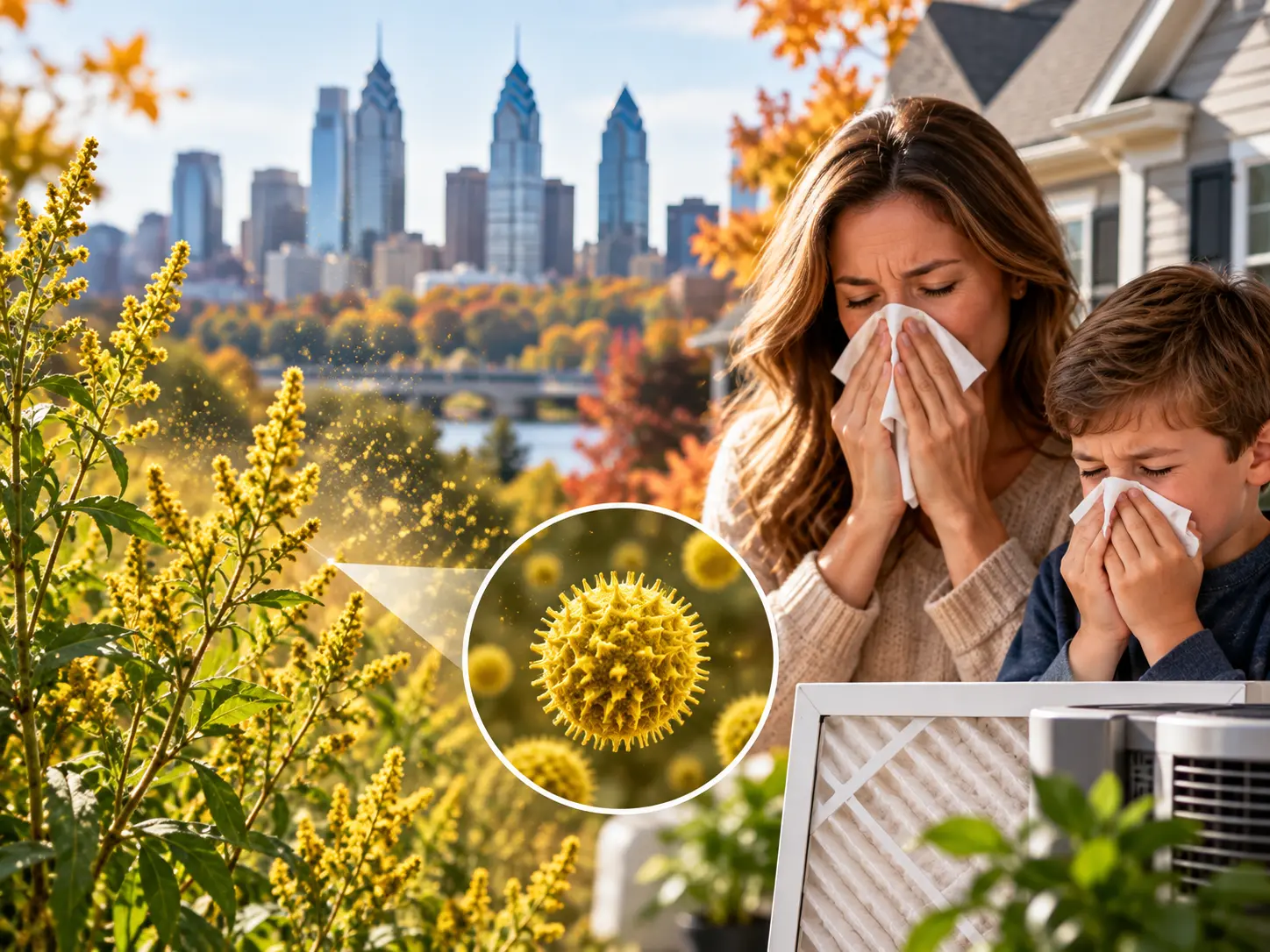
Spring gets most of the attention as allergy season, but for millions of people throughout the Philadelphia area, fall is actually worse. Ragweed — the primary driver of fall allergic rhinitis — typically peaks across Pennsylvania and New Jersey from mid-August through October, releasing pollen in concentrations that dwarf what tree and grass species produce in spring.
If someone in your Bucks County or Montgomery County household is sneezing more, dealing with itchy eyes, waking up congested, or feeling worse indoors than out during September and October, fall allergens are almost certainly the cause. And one of the most overlooked contributors to elevated indoor allergen levels is the carpet and upholstery that has accumulated a full summer’s worth of allergen load and is now being sealed inside a closed home as the windows go down for fall.
In our 45+ years serving Philadelphia, Bucks County, and Montgomery County families, we regularly hear from customers that allergy symptoms improved noticeably after professional carpet cleaning. There’s a reason for that — and understanding it changes how you approach indoor allergen management for fall.
What You’ll Learn
- Why fall allergens are more problematic for Philadelphia-area households than spring
- How carpet and upholstery become the primary indoor allergen reservoir during ragweed season
- The specific allergens that accumulate in carpet and what they do to indoor air quality
- What professional carpet cleaning removes that vacuuming cannot
- Home steps that reduce allergen load between professional cleanings
- Frequently asked questions from allergy households throughout the Philadelphia area
The Problem: Why Fall Is the Hardest Allergy Season for Philadelphia Households
Ragweed is the dominant fall allergen throughout the mid-Atlantic region. A single ragweed plant can produce up to one billion pollen grains over its seasonal cycle, and those grains are light enough to travel hundreds of miles on wind currents. In the Philadelphia, Bucks County, and Montgomery County area, peak ragweed pollen counts typically occur from mid-August through late October — often overlapping with the return of school-year schedules and the transition to keeping windows closed.
What makes fall particularly difficult for allergy households:
- Ragweed pollen is present at high concentrations outdoors from mid-August through October, entering homes on clothing, shoes, skin, and pet fur with every trip inside
- As temperatures drop and windows close, indoor air circulation decreases and allergens that entered the home during summer accumulate without dispersal
- The HVAC system transitions from cooling to heating mode, recirculating allergens that settled into ductwork and carpet during the summer months
- Mold spores — a separate fall allergen — peak in October as leaves decompose, entering homes through the same pathways as pollen
- Dust mite populations peak in late summer and early fall when humidity has been at its highest, and their waste particles are a major year-round allergen that concentrates in carpet and upholstery
- Pet dander accumulation from summer indoor-outdoor movement reaches its annual maximum, adding to the allergen load at the exact moment windows close
The combination of peak outdoor allergen load, closed-home conditions, and a summer’s worth of accumulated indoor allergens creates the worst possible indoor air quality environment for allergy sufferers — precisely when they’re spending more time indoors.
Why Carpet Is the Primary Indoor Allergen Reservoir During Fall
Carpet functions as both a trap and a reservoir for airborne allergens. Understanding the specific mechanism explains why professional cleaning — not just vacuuming — is the effective intervention for allergy households.
1. Pollen Particles Settle Into Carpet and Stay There
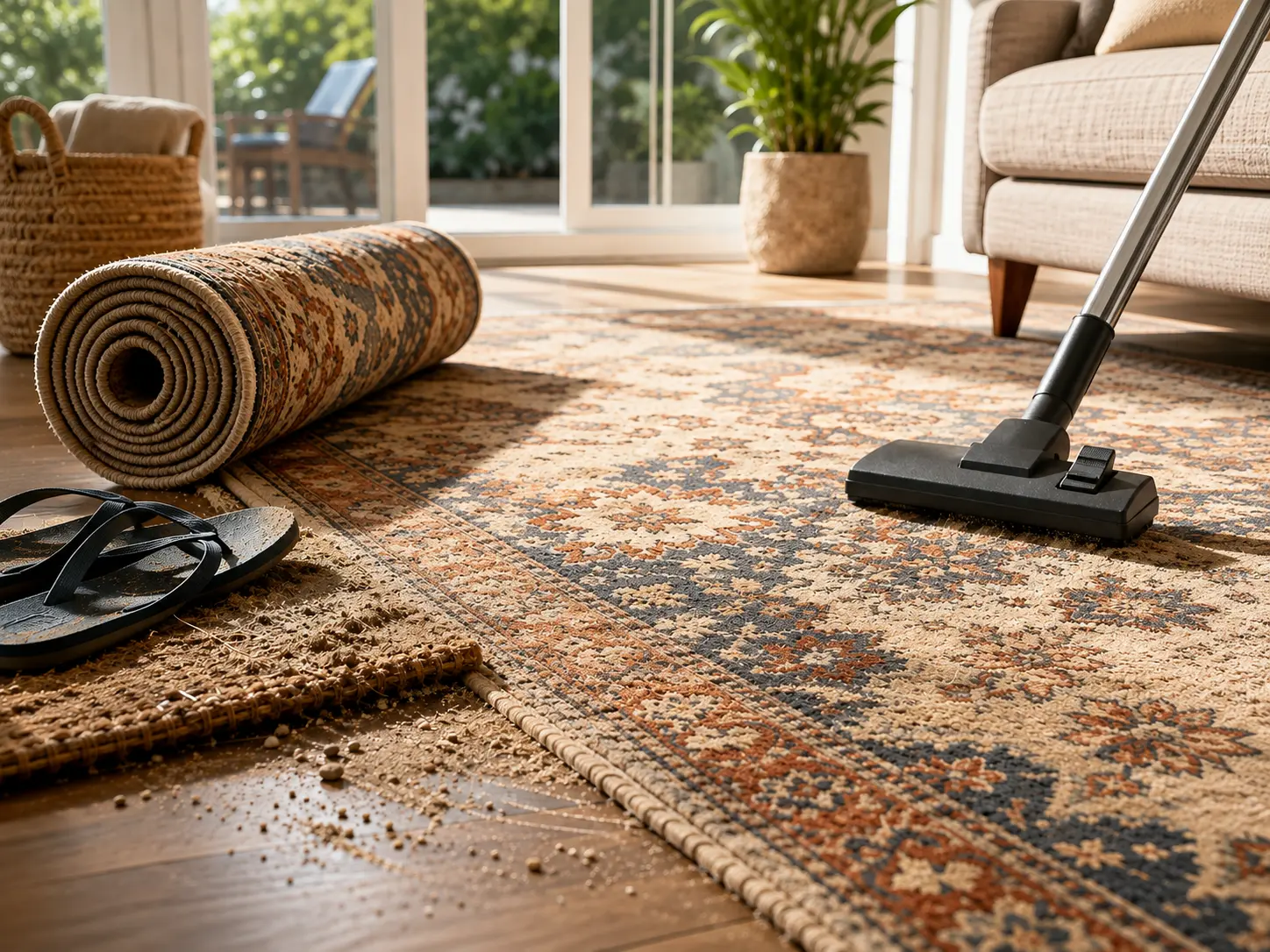
Ragweed pollen grains and other airborne particles are subject to gravity — they don’t stay suspended in air indefinitely. They settle onto horizontal surfaces, and carpet is the largest horizontal surface in most homes by far. Once settled into carpet pile, pollen is protected from the air currents that would otherwise carry it to filtration. Every step across the carpet surface disturbs settled pollen, briefly re-aerosolizing it into the breathing zone before it settles again.
In a household with a ragweed-sensitive family member, this cycle — settle, disturb, re-aerosolize, settle — means the carpet itself becomes an ongoing allergen source throughout the fall season, not just a passive accumulator. Standard vacuuming can remove settled surface pollen, but fine particles that have worked into the pile structure and backing require professional extraction to remove effectively.
2. Dust Mite Allergens Peak in Fall and Live in Carpet
Dust mites are microscopic organisms that live in carpet, bedding, and upholstered furniture throughout the year, feeding on shed skin cells. Their populations are largest in late summer and early fall, when warm temperatures and high humidity have provided ideal conditions for reproduction through the preceding months. The allergen is not the mite itself but its waste particles and shed body fragments, which are fine enough to remain airborne for significant periods.
Carpet provides the ideal dust mite habitat: warm, humid (relative to the ambient air), supplied with the organic material the mites consume, and protected from UV light and air movement that would reduce populations. After a summer of optimal conditions, fall carpet in an active Philadelphia-area household can harbor a substantial dust mite population at exactly the moment the household is most reliant on indoor air quality.
3. Pet Dander at Annual Peak Load
Dogs and cats shed more skin cells and fur during the warmer months, and pets that have spent significant time indoors during the heat of summer have deposited dander into carpet and upholstery at a sustained rate all season. Pet dander particles are extremely light and irregular in shape, which allows them to remain airborne for extended periods and penetrate into carpet fiber structures where vacuuming suction cannot reach them.
For the approximately 60% of Philadelphia-area households with one or more pets, pet dander in carpet and upholstery is the single most significant indoor allergen source year-round. At the transition into fall, when windows close and the dander load is at its annual maximum, the combination creates elevated allergen concentrations that many sensitive individuals notice as a significant worsening of symptoms.
4. Mold Spores Track In From Outdoor Sources
Fall mold spores from decomposing leaves enter homes in the same ways as pollen — on shoes, clothing, and pet fur — and settle into carpet where they can remain viable. In homes with existing humidity issues — finished basements, lower-level rooms with limited airflow, areas that experienced summer humidity accumulation — carpet can provide the moisture conditions for spore germination. Mold in carpet is a more serious problem than surface allergen accumulation, but spore presence in carpet without active growth is still an allergen load that contributes to fall allergy symptoms.
How to Tell If Your Carpet Is Contributing to Fall Allergy Symptoms
These observations help connect indoor allergen load to carpet condition in your home:
- Symptom location pattern: if allergy symptoms are noticeably worse in carpeted rooms than in tile or hardwood rooms of the same home, carpet allergen load is a likely contributor. Symptoms that worsen on the floor (children playing, sitting on the floor) versus seated in furniture point more specifically to carpet.
- Symptom timing: symptoms that are worst in the morning shortly after getting up — when the bedroom carpet has had eight or more hours of settled allergen accumulation undisturbed — often implicate bedroom carpet as a significant source.
- Vacuuming correlation: if symptoms briefly worsen directly after vacuuming, it’s evidence that the vacuum is re-aerosolizing allergens it isn’t capturing. This is common with vacuums that don’t have HEPA filtration, or with carpet that has allergen levels beyond what the vacuum’s filtration can handle.
- Pet and carpet overlap: if symptoms are significantly worse when pets have been on carpeted furniture or flooring, dander in those specific surfaces is likely the primary trigger.
- Cleaning history: if the carpet hasn’t been professionally cleaned in more than 12 months, allergen accumulation is almost certainly a meaningful factor in fall symptom levels regardless of other indicators.
Two or more of these patterns pointing to carpet as a contributor warrants professional cleaning as a direct allergen management strategy — not just a maintenance task.
Ragweed Season Protection: What Actually Reduces Indoor Allergen Load
Home Steps That Help
These measures meaningfully reduce allergen accumulation and are most effective when combined with professional carpet cleaning:
- Vacuum frequently with a HEPA-filter vacuum — two to three times per week during peak ragweed season. Standard vacuums without HEPA filtration re-aerosolize fine allergen particles through the exhaust. HEPA filtration captures particles down to 0.3 microns, which includes most pollen and dust mite allergens.
- Remove shoes at the door during ragweed season: shoe soles carry pollen, mold spores, and outdoor soil directly into carpet with every step. A shoe-free entryway policy from mid-August through October reduces the rate of outdoor allergen introduction significantly.
- Change HVAC filters to a high-efficiency (MERV 11 or higher) filter and check them monthly during fall: the HVAC system recirculates air throughout the home, and a high-efficiency filter captures airborne allergens on each pass rather than just the largest dust particles.
- Shower and change clothes after extended outdoor exposure during high pollen days: pollen carried on hair, skin, and clothing transfers directly to upholstered furniture and carpet on contact.
- Run the bathroom exhaust fan and maintain indoor humidity between 40–50%: dust mite populations are significantly lower below 50% relative humidity. A dehumidifier in finished basement or lower-level carpeted rooms directly reduces the habitat viability for mites in those areas.
- For bedrooms: encase mattresses and pillows in allergen-barrier covers and wash bedding weekly in hot water during peak season — this reduces the bedroom dust mite burden alongside whatever the carpet is contributing.
What Professional Carpet Cleaning Does for Allergy Households
Professional hot water extraction by Cahill’s IICRC-certified technicians provides a level of allergen removal that no home maintenance routine can match. Here’s specifically what professional cleaning accomplishes for allergy households:
- Flushes the carpet backing and fiber base with pressurized hot water — removing the pollen, dust mite allergens, pet dander, and mold spores that have settled below the vacuum’s reach over the summer and into fall
- Extracts biological contamination at the source — dust mite waste particles, pet dander, and decomposed organic matter that drive allergen levels are physically removed from the carpet rather than redistributed
- Eliminates the organic load that supports dust mite populations — removing the food source (shed skin cells, food particles, organic debris) that sustains mite colonies in the fiber base slows their repopulation rate after cleaning
- Removes approximately 95% of introduced moisture immediately through truck-mounted extraction — preventing the over-wetting that could temporarily worsen mold conditions in the carpet backing
- Improves indoor air quality measurably in the days following cleaning — the re-aerosolization cycle that occurs when allergens settled in carpet are disturbed by foot traffic is dramatically reduced after professional extraction
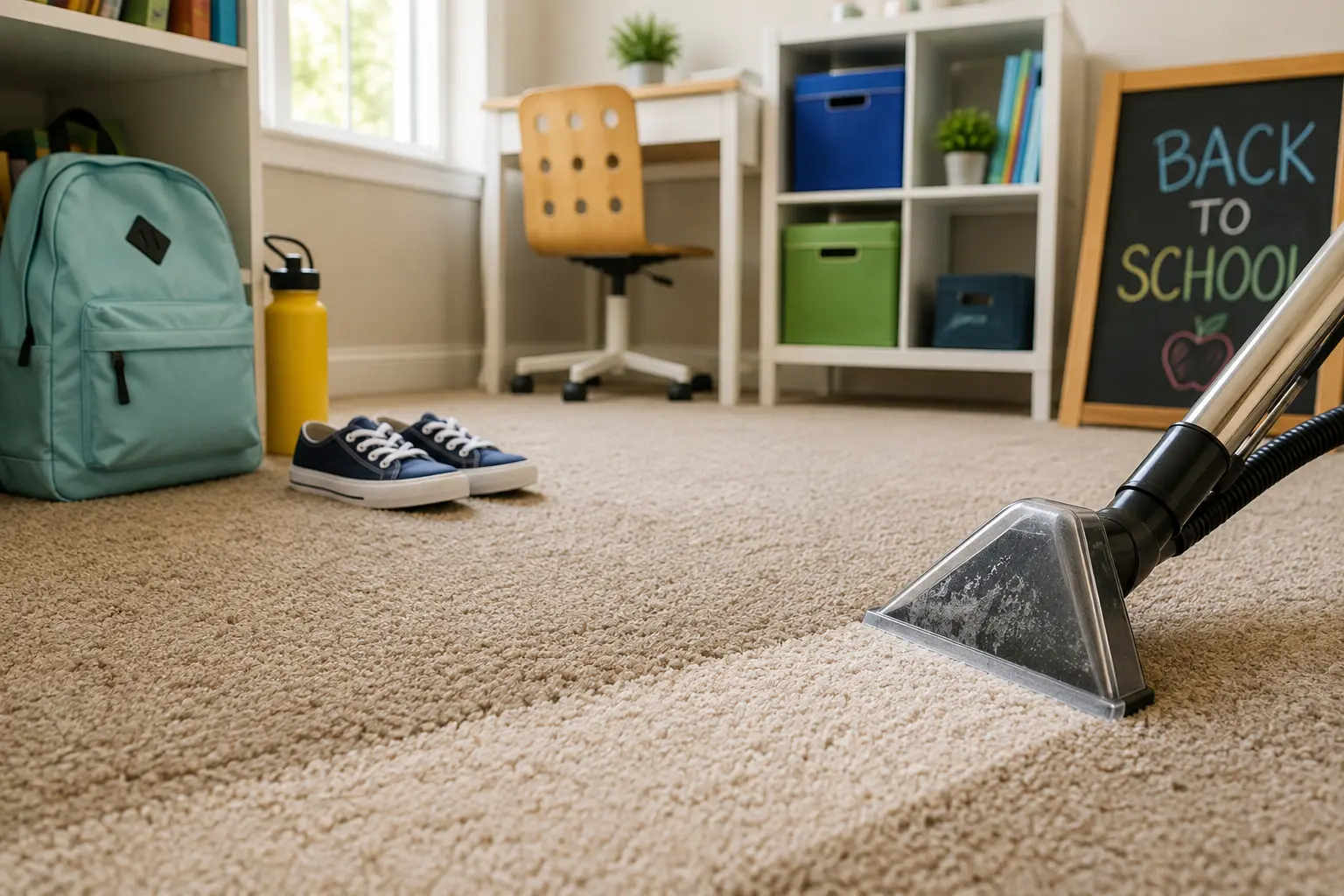
The most effective timing for allergy-focused professional cleaning is just before ragweed season peaks — late August to early September — so the carpet enters the closed-home months with the lowest possible allergen load. This is one of the primary reasons back-to-school timing is also ideal for professional carpet cleaning: the two benefits align.
Upholstery Cleaning: The Other Half of Indoor Allergen Management
Upholstered furniture accumulates the same allergens as carpet and is frequently an even higher-density source because people sit on sofas and chairs for extended periods — constantly disturbing settled allergens into the immediate breathing zone. Pet dander in particular concentrates on furniture that pets use, and dust mite populations in cushion foam can be substantial.
Combining carpet and upholstery cleaning as part of a fall allergen management strategy addresses both primary indoor allergen reservoirs in a single service visit. For households where allergy symptoms are a significant quality-of-life concern, this combination cleaning is among the most practical indoor air quality investments available.
Why Philadelphia-Area Allergy Households Choose Cahill’s
Allergy management is one of the most compelling reasons a household takes professional carpet cleaning seriously on a consistent schedule rather than cleaning reactively when the carpet looks dirty. In 45+ years serving families throughout Philadelphia, Bucks County, and Montgomery County, we’ve seen the difference consistent professional cleaning makes for allergy households — and we bring that understanding to every fall cleaning appointment.
- IICRC-certified technicians averaging 11 years experience — trained to clean to the carpet backing where allergen accumulation is most concentrated, not just the pile surface
- Truck-mounted hot water extraction with professional-grade suction — the extraction power that removes biological material from the fiber base and doesn’t re-aerosolize what it extracts
- Eco-friendly, plant-based cleaning options safe for allergy-sensitive households and children
- Combined carpet and upholstery cleaning available in a single visit — the complete indoor allergen management approach in one appointment
- Free estimates for most jobs over the phone at (215) 355-5388
- 6-truck fleet with the scheduling flexibility to serve Bucks County, Montgomery County, and Philadelphia before peak ragweed season
- 2023 Community’s Choice Award Winner in Bucks and Montgomery Counties
- Nextdoor Neighborhood Favorite, multiple years recognized
- 5-star ratings on Google, Yelp, Angi, and Nextdoor | BBB A+ rated since 2011
Frequently Asked Questions
Does carpet cleaning actually help with allergies?
Yes — meaningfully, for allergy households. Professional hot water extraction removes pollen, dust mite waste particles, pet dander, and mold spores from the carpet fiber base and backing — the areas where allergen accumulation is highest and where vacuuming doesn’t reach. The re-aerosolization cycle that occurs when settled allergens in carpet are disturbed by foot traffic is significantly reduced after professional extraction, producing measurable improvement in indoor air quality.
When is the best time to clean carpet for fall allergy season?
Late August to early September is the most effective timing — just before ragweed pollen peaks across the Philadelphia area and before windows close for fall. Cleaning at this point removes the allergen load accumulated over summer, so the carpet enters the closed-home fall season with the lowest possible allergen density. Annual cleaning in this window is one of the most practical proactive steps an allergy household can take.
Is vacuuming enough to reduce allergens in carpet?
Frequent vacuuming with a HEPA-filter vacuum is an important maintenance step that reduces surface allergen levels between professional cleanings. However, vacuuming doesn’t reach the fiber base and backing where the highest concentrations of dust mite allergens, pet dander, and fine pollen particles accumulate. It also temporarily re-aeroslizes fine particles that the vacuum doesn’t fully capture. Professional extraction addresses the deeper accumulation that vacuuming manages but cannot resolve.
What are the worst allergens in carpet during fall?
In a Philadelphia-area home during fall, the primary carpet allergens are dust mite waste particles and shed body fragments (at their annual peak population density), pet dander from summer accumulation, ragweed pollen that entered the home on clothing and shoes, and mold spores from fall leaf decomposition tracked in from outdoors. The combination of all four at seasonal peak levels, sealed inside by closed windows, creates the elevated indoor allergen environment that drives worsening fall symptoms for sensitive individuals.
How often should allergy households have carpet professionally cleaned?
Households with one or more allergy or asthma sufferers benefit from professional carpet cleaning every 6–9 months rather than the standard 12–18 month interval for households without allergy concerns. In practical terms, this often means a late summer or early fall cleaning before ragweed season peaks, and a late winter or spring cleaning before the outdoor pollen season begins. Each cleaning resets the allergen load before the next peak season.
Should I also have upholstery cleaned for allergy management?
Yes, particularly for sofas, armchairs, and any upholstered furniture that pets or allergy sufferers use regularly. Upholstered furniture is often a higher-density allergen source than carpet because people sit on it for extended periods, continuously disturbing settled allergens into the immediate breathing zone. Combining carpet and upholstery cleaning in a single fall appointment addresses both primary indoor allergen reservoirs at the same time.
How much does allergen-focused carpet cleaning cost in Bucks County?
Cost is the same as standard professional carpet cleaning — there’s no premium for allergen-focused cleaning because the hot water extraction process that removes embedded allergens is the same process used for all residential carpet cleaning. Cahill’s provides free estimates for most jobs over the phone at (215) 355-5388. When weighed against allergy medication costs and the quality-of-life impact of reduced indoor allergen exposure, consistent professional cleaning is highly cost-effective.
Do you serve Bucks County and Montgomery County for allergy-season carpet cleaning?
Yes. Cahill’s 6-truck fleet serves all of Bucks County — including Doylestown, Warminster, Newtown, Richboro, Southampton, Feasterville-Trevose, Langhorne, Yardley, and Holland — and all of Montgomery County, including Jenkintown, Abington, Willow Grove, Glenside, Horsham, Ambler, Fort Washington, Lansdale, and Hatboro, plus all Philadelphia neighborhoods. Call (215) 355-5388 to confirm service to your area.
Next Steps: Reduce Indoor Allergen Load Before Ragweed Season Peaks
The window for the most effective pre-season intervention is late August through early September. Here’s how to act on it:
- Note which rooms feel worst for allergy sufferers in your household — carpeted rooms, bedrooms, rooms where pets spend the most time — and share this with the technician so problem areas get targeted attention
- Call Cahill’s at (215) 355-5388 for a free estimate — most provided over the phone in minutes, scheduling confirmed quickly before the fall window fills
- Ask about combining carpet and upholstery cleaning in a single visit if furniture is also a significant allergen source
- After professional cleaning, implement the HEPA vacuum, shoe-free entry, and humidity management steps above to slow the re-accumulation rate through the fall season
- Our 24/7 answering service means you can reach us any time — including evenings and weekends when allergy symptoms are driving the urgency
Cahill’s Carpet & Upholstery Cleaning | (215) 355-5388 | cahillscarpetcleaning.com
Serving Philadelphia, Bucks County, and Montgomery County since 1980. Trusted Since 1980 — Family-Owned Excellence.
About the Author
Bill Cahill founded Cahill’s Carpet & Upholstery Cleaning in 1980 with a single truck and a commitment to professional service. Over 45+ years later, he leads a team of IICRC-certified technicians — averaging 11 years experience each — serving Philadelphia, Bucks County, and Montgomery County. Cahill’s was recognized as the 2023 Community’s Choice Award Winner and maintains 5-star ratings across Google, Yelp, Angi, and Nextdoor.