Area Rug Cleaning Cost: A Practical Pricing Guide
DIY cleaning may seem like the least expensive option, but it is not always the safest choice for an area rug. Excess water, strong products, aggressive scrubbing, or poor drying can lead to color bleeding, shrinkage, odors, or backing damage. Comparing the full area rug cleaning cost with the rug’s value, age, condition, and replacement price can help you make a practical decision. Professional service may be worthwhile for wool, silk, antique, hand-knotted, heavily soiled, or sentimental rugs. This guide breaks down typical pricing, cleaning methods, extra charges, and ways to request an accurate quote from Cahill’s.
Key Takeaways
- Expect area rug cleaning to cost about $2 to $7 per square foot: The final price may depend on the rug’s size, fiber, construction, condition, cleaning method, and any minimum service charge.
- Choose a cleaning process suited to the rug: Durable synthetic rugs may be suitable for in-home extraction, while antique, silk, wool, valuable, or heavily soiled rugs may need specialized or off-site care.
- Request an inspection and itemized estimate: Provide measurements, photos, material details, stains, odors, and access information, then confirm whether pickup, delivery, drying, and treatments are included.
What Does Area Rug Cleaning Cost?
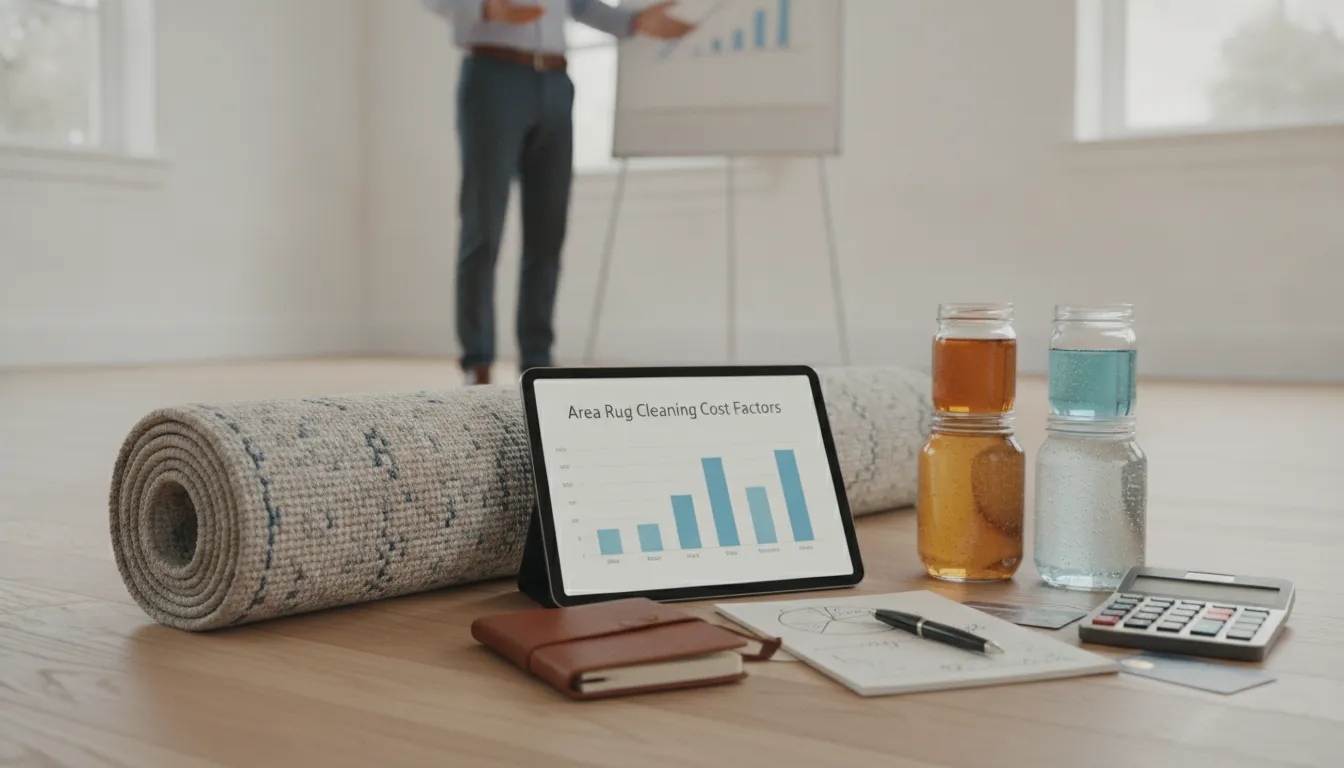
Professional area rug cleaning commonly costs about $2 to $7 per square foot. Your final price depends on the rug’s size, fiber, construction, condition, cleaning method, and whether the work takes place in your home or at a facility. These figures offer a useful starting point, but an inspection and written estimate provide a more accurate price.
For homeowners in Montgomery and Bucks Counties, Cahill’s area rug cleaning service evaluates each rug individually. This helps identify the safest cleaning method and any treatments the rug may need before work begins.
Professional cleaning: $2–$7 per square foot
A durable synthetic rug with light soil may fall near the lower end of the range. Wool, silk, antique, heavily soiled, or stained rugs often cost more because they require specialized products, extra labor, and careful drying.
For example, a 5-by-8-foot rug contains 40 square feet. At $2 per square foot, cleaning would cost about $80. At $7 per square foot, the estimate would be about $280. The difference reflects the rug’s material, condition, and the amount of care required.
Pricing information from Baba’s Rug Cleaning also identifies cleaning method and rug condition as important pricing factors. Ask whether the estimate includes inspection, stain treatment, deodorizing, drying, and protective treatments.
Estimated costs for 2×3, 5×8, 8×10, and 9×12 rugs
You can estimate a rug’s basic cleaning cost by multiplying its length by its width, then multiplying the total square footage by the provider’s rate.
- 2-by-3-foot rug: 6 square feet, or about $12 to $42
- 5-by-8-foot rug: 40 square feet, or about $80 to $280
- 8-by-10-foot rug: 80 square feet, or about $160 to $560
- 9-by-12-foot rug: 108 square feet, or about $216 to $756
These examples use the $2 to $7 per-square-foot range and do not guarantee a final price. Small rugs may fall under a company’s minimum charge, while large or delicate rugs may require an inspection before the company can provide a firm estimate.
When requesting a quote, share the rug’s measurements, fiber type if known, photos, and information about stains, pet accidents, odors, or previous damage. These details help the cleaning professional provide a more useful starting estimate.
Compare square-foot pricing with minimum charges
Square-foot pricing makes it easy to estimate the cost of a larger rug, but it may not tell the whole story for smaller pieces. Many cleaning companies apply a minimum charge to cover travel, equipment setup, labor, and service time. As a result, a 2-by-3-foot rug may cost more than its calculated $12 to $42 range.
Minimum charges vary by provider and location. Consumer Reports notes that minimum service charges can differ substantially between markets. Some companies set one minimum for the entire appointment, while others apply a minimum to each rug.
Before scheduling, ask whether the company uses square-foot pricing, a flat rate, or a minimum charge. If you have several rugs, ask whether cleaning them during the same appointment changes the overall price.
Off-site cleaning: about $4–$7 per square foot
Off-site area rug cleaning typically costs about $4 to $7 per square foot, although the rate varies by material, condition, and cleaning provider. The price may include transportation, detailed inspection, washing, controlled drying, and return delivery.
This option can suit delicate, valuable, antique, or heavily soiled rugs. A professional facility may have specialized equipment and drying areas that are not practical in a home. Controlled drying also helps reduce the risk of lingering moisture, odors, shrinkage, or backing damage.
Ask how long the process will take and whether pickup and delivery are included. NYC Steam Cleaning’s pricing guide treats off-site cleaning as a separate pricing category, so compare estimates that include similar services. A lower base rate may not include transportation or specialty treatments.
Account for minimum, flat-rate, pickup, delivery, and travel fees
The advertised cleaning rate may cover only the basic cleaning process. Your final estimate could also include a minimum charge, pickup and delivery, travel, stain treatment, odor removal, or special handling.
Ask for a complete list of possible charges before approving the work. If the rug will be transported, confirm whether pickup and delivery are included or billed separately. This is especially important for large rugs that require two people to move safely.
Travel fees may apply when a property falls outside a company’s standard service area. When contacting Cahill’s, provide your address in Huntingdon Valley, Southampton, Jenkintown, Abington, Willow Grove, Langhorne, Newtown, or a nearby community. Stanley Steemer recommends requesting a free quote that explains potential charges before service begins.
Review each item in a transparent quote
A transparent quote should explain what you are paying for instead of providing one unexplained total. Review the rug’s measured size, cleaning method, base rate, and minimum charge. The estimate should identify separate services, such as pet odor treatment, enzyme treatment, fringe cleaning, stain removal, deodorizing, or fabric protection.
If the rug requires off-site cleaning, check whether the quote includes pickup, delivery, inspection, and drying. Ask whether the price could change after inspection and what would cause an adjustment. A professional should explain each recommended service before starting the work.
A detailed quote makes it easier to compare providers fairly. Stanley Steemer explains that a cost breakdown helps customers understand what their payment covers. It also gives you a chance to ask questions before the rug leaves your property or treatment begins.
Understand why inspection may change the price
An initial estimate may change after a technician examines the rug in person. Measurements and photos show the rug’s size, but they may not reveal its fiber type, construction, backing condition, colorfastness, or staining. These details help determine which cleaning method is safe and how much labor the job requires.
During an inspection, a technician may identify pet urine, old spills, dye transfer, loose fibers, fringe damage, shrinkage risk, or previous water damage. Some rugs need a hidden-area colorfastness test before cleaning. Others may require low-moisture treatment or off-site washing.
The technician may also consider stairs, parking, building access, and the space needed for safe removal and drying. NYC Steam Cleaning explains that size, material, condition, cleaning method, and access can all affect the final price. Ask the technician to explain any adjustment and approve the revised estimate before work begins.
What Affects Area Rug Cleaning Costs?
Area rug cleaning prices vary because rugs differ in size, material, construction, condition, and location. A small synthetic rug with light surface dirt may need a straightforward service. A large antique wool rug with pet odor may require testing, specialized products, controlled drying, and off-site cleaning.
The most accurate estimate comes from an inspection. A professional can identify the rug’s fibers, check for existing damage, measure the cleanable area, and recommend a suitable method. Cahill’s Carpet & Upholstery Cleaning provides professional area rug cleaning services for homes and businesses throughout Montgomery County, Bucks County, and nearby Pennsylvania communities.
Size, shape, and cleanable square footage
Rug size is one of the most common factors in the cleaning price. Many companies measure rugs by square feet and apply a rate to the total cleanable area. A larger rug generally requires more cleaning solution, labor, handling, and drying space, so it usually costs more than a smaller rug.
Shape can affect the estimate, too. Rectangular rugs are simple to measure and process, while round rugs, runners, irregular shapes, and rugs with attached sections may take additional time. A cleaner may measure the rug in person instead of relying on an approximate size given over the phone.
When requesting an estimate, provide the rug’s length and width, along with clear photos if possible. Mention any sections that should not be cleaned, such as attached fringe or a delicate backing. The final price may change after an inspection reveals unusual construction, damage, or heavy soil.
Fiber type: wool, silk, cotton, synthetic, or braided
The rug’s fiber affects both the cleaning method and the amount of labor required. Synthetic fibers, including nylon and polypropylene, are often durable and may tolerate more efficient cleaning methods when the manufacturer permits them. Wool, silk, cotton, and other natural fibers may require gentler solutions, lower moisture levels, and closer monitoring.
Silk rugs typically need particularly careful handling because the fibers can react poorly to heat, agitation, or excessive moisture. Wool may also require specialized care to limit shrinkage, texture changes, dye movement, and fiber damage. Braided rugs can contain multiple materials or have a construction that makes moisture control more difficult.
A professional should identify the fiber before cleaning rather than use the same process for every rug. The Carpet and Rug Institute’s cleaning guidance recommends following care instructions and selecting methods suited to the rug’s materials.
Construction: hand-knotted, handwoven, antique, or specialty
How a rug is made can matter as much as the fiber itself. Machine-made rugs often have a consistent structure and may be suitable for efficient cleaning methods. Hand-knotted and handwoven rugs require more attention because their knots, edges, dyes, and backing may respond differently to moisture and agitation.
Antique, heirloom, and specialty rugs may require a detailed inspection before cleaning. A technician may check for loose knots, weakened fibers, previous repairs, unstable dyes, or damage hidden beneath the surface. Some rugs are better cleaned at a specialized facility, where they can be washed, rinsed, dried, and inspected in a controlled setting.
That additional handling may increase the price, but it can help limit avoidable damage. Before scheduling service, share the rug’s age, origin, construction, and known repairs. If you are unsure about any of these details, provide photographs and ask whether an in-person assessment is recommended.
Soil, stains, pet accidents, and odors
A rug with light dust and routine foot traffic usually takes less time to clean than one with set-in stains, grease, pet accidents, or strong odors. Heavy soil may require thorough vacuuming, pre-treatment, agitation, rinsing, and more than one cleaning pass. Each step adds labor and may require specialized products.
Pet urine can be especially difficult because it may travel through the rug and into the backing or pad. Surface cleaning may improve the appearance without fully addressing the source of the odor. Depending on the rug’s fiber and construction, a technician may recommend an enzyme treatment or another targeted odor treatment.
Not every stain can be removed completely. Age, heat, earlier cleaning attempts, and dye type can permanently alter a fiber’s color. A reputable cleaner should explain what may improve, what may remain, and whether a treatment has any risk before work begins. Cahill’s professional cleaning services are selected according to each rug’s condition.
Fringe, backing, colorfastness, and existing damage
Small details can affect both the price and the cleaning plan. Fringe may need separate attention to prevent tangling or discoloration. Latex, rubber, foam, and adhesive backings can react poorly to moisture, heat, or cleaning products. As these materials age, they may crack, flake, or detach.
Colorfastness testing is another important step. If dyes bleed or transfer, the rug may require a lower-moisture process or a different solution. Existing damage, including tears, worn areas, loose edges, moth damage, and earlier dye bleeding, can make cleaning more time-consuming and increase the risk involved.
Tell the cleaner about visible damage before the appointment, and take photographs for your records. A professional inspection should document the rug’s condition and identify concerns before work begins. This creates a clear baseline and helps both parties understand what the cleaning can reasonably achieve.
Labor, access, transportation, and drying
The quoted price may include more than the cleaning process itself. Large or heavy rugs may require two technicians to move safely. Stairs, narrow hallways, limited parking, and furniture that must be moved can add labor. Commercial properties may also require work around business hours, employees, customers, or building access rules.
Some rugs are cleaned at the property, while others are transported to a facility for more controlled treatment. Pickup and delivery may appear as separate charges, especially when the rug needs several days for washing and drying. Proper drying is important because prolonged dampness can lead to odor, mildew, backing problems, or texture changes.
Ask whether moving, transportation, drying, and return delivery are included in the estimate. Cahill’s serves Huntingdon Valley, Montgomery County, Bucks County, and surrounding communities, so access and travel requirements can be reviewed when you request a quote.
Protection, deodorizing, enzyme treatments, and add-ons
Some additional services may be useful for specific rugs and households. Fabric protection can help slow future soil absorption and make spills easier to address. Deodorizing may help with lingering smells after cleaning, while an enzyme treatment may be suitable for certain organic stains and pet accidents.
These services are often priced separately because not every rug needs them. Protection may not be necessary for a decorative rug that receives little use. In a home with pets, however, deodorizing or an enzyme treatment may be worth considering. The right choice depends on the rug’s fibers, backing, condition, and expected use.
Ask what each treatment does, how long the results may last, and whether it is compatible with the rug. You should also have the opportunity to approve or decline extra services before they are added to the invoice. A detailed quote makes it easier to compare the full value of each service.
Rug value, cleaning risk, and Montgomery and Bucks County pricing
A rug’s financial and sentimental value can affect the level of care it requires. Cleaning a valuable wool, silk, antique, or family heirloom may cost more because the process involves testing, careful handling, and greater risk control. In these cases, professional cleaning may cost less than replacing the rug or repairing preventable damage.
Local pricing can vary across Montgomery County, Bucks County, and nearby communities. Labor rates, travel distance, facility costs, demand, and the number of technicians needed can all affect an estimate. A company serving a limited radius may structure travel charges differently from a provider coming from farther away.
Experience is especially important when a rug has delicate fibers, unusual construction, or visible damage. Cahill’s has 48 years of professional cleaning experience and employs IICRC-certified, bonded professionals. You can contact Cahill’s to discuss the rug’s size, material, condition, and location before arranging an estimate.
How Do Cleaning Methods Affect Cost?
The cleaning method is one of the main factors behind an area rug cleaning quote. A durable synthetic rug may be suitable for in-home hot-water extraction, while a hand-knotted wool or silk rug may need specialized care at a facility. The right method depends on the rug’s fibers, construction, backing, dye stability, soil level, and drying requirements.
A lower-priced method is not always the best value. Too much moisture, the wrong solution, or excessive heat can cause color bleeding, shrinkage, odors, or backing damage. A professional cleaner should inspect the rug before recommending a process and explain how that choice affects the total cost.
Cleaning methods also differ in labor and turnaround time. Some rugs can be cleaned and dried during an in-home appointment. Others require transportation, detailed inspection, hand washing, controlled drying, or additional stain treatment. Cahill’s Carpet & Upholstery Cleaning can help homeowners and businesses choose an appropriate method based on the rug’s condition and construction. Its area rug cleaning service uses experienced technicians and professional equipment for rugs that need more care than routine vacuuming can provide.
Use hot-water extraction for compatible, durable rugs
Hot-water extraction, often called steam cleaning, uses heated water and a cleaning solution to loosen soil before powerful equipment removes moisture and debris. It can provide a thorough clean for many synthetic and durable rugs, particularly those with stable dyes and moisture-resistant construction.
This process often costs more than dry cleaning because it requires specialized equipment, careful extraction, and controlled drying. Hot-water extraction is not appropriate for every rug, so the material and backing should be assessed first.
For a rug that can safely tolerate moisture, extraction may remove deeply embedded soil more effectively than light surface cleaning. The quote may include pre-treatment, extraction, furniture moving, and drying time. Ask whether each step is included before approving service.
Choose off-site cleaning for delicate, valuable, or heavily soiled rugs
Off-site cleaning usually means the rug is picked up, transported to a cleaning facility, cleaned under controlled conditions, and returned after it dries. This process can cost more because it includes additional handling, transportation, specialized equipment, and labor.
It may be a practical choice for Persian, Oriental, wool, silk, antique, or heavily soiled rugs that need more attention than an in-home visit allows. At a facility, technicians may inspect both sides, remove dry soil, wash the rug carefully, and dry it flat or in a controlled area.
Off-site rug cleaning can be especially useful when a rug has strong odors, pet contamination, delicate fringe, or a specialty construction. Ask whether pickup and delivery are included, how long the process should take, and whether odor or stain treatments carry an additional charge.
Use low-moisture or dry cleaning for moisture-sensitive materials
Some rugs should not receive a large amount of water. Moisture-sensitive fibers, unstable dyes, certain backings, and rugs labeled “dry clean only” may require a low-moisture or dry-cleaning process. These methods can shorten drying time and reduce the risk of water-related damage, although they may not remove deeply embedded soil as thoroughly as a full wash.
The Carpet and Rug Institute’s cleaning guidance recommends following the care label and manufacturer instructions. A professional may use dry compounds, controlled moisture, or another specialized technique after inspecting the rug.
The final price depends on the method, labor, rug condition, and any spot or odor treatments. A lower moisture level does not automatically mean a lower price. Specialized products and careful handling may require just as much time as other cleaning methods.
Hand-wash delicate rugs and specialty constructions
Hand washing can be the safest option for delicate rugs, specialty constructions, and pieces that need close attention throughout the cleaning process. A technician may clean the rug in small sections, protect the fringe, manage the dye load, and rinse it carefully.
Because hand washing requires more time than a standard machine process, it can increase the labor portion of the quote. This method may be appropriate for some hand-knotted, handwoven, antique, or heirloom rugs. It can also help when aggressive agitation could damage the rug’s fibers or construction.
Small washable rugs may have different care requirements, but the Carpet and Rug Institute still advises following the care label. Before service begins, ask whether hand washing is recommended, how the rug will be dried, and whether fringe care is included in the price.
Inspect fibers and test for colorfastness before cleaning
A proper inspection helps a cleaner select a method that fits the rug instead of treating every piece the same way. The technician should identify the fiber, check the backing and seams, look for previous repairs, and note stains, fading, pet damage, and wear.
The cleaner may also perform a colorfastness test in an inconspicuous area to see whether the dyes are likely to bleed or transfer. This step can affect cost because a rug with unstable dyes may require slower work, limited moisture, or a specialized process. Existing damage should also be documented before cleaning.
Prompt spot treatment matters, too. Products that are too strong can damage fibers or leave residue that attracts more soil. The Carpet and Rug Institute’s maintenance recommendations support using suitable products and addressing spills quickly.
Control drying to limit shrinkage and backing damage
Drying is part of the cleaning process, not an afterthought. Rugs should dry completely to help prevent mildew, lingering odors, dye migration, and backing damage. Depending on the material and construction, a technician may use air movement, controlled temperature, moisture monitoring, or a flat drying area.
These extra steps require space, equipment, and labor, which can raise the cost. Rugs with dense fibers, thick padding, or heavy backing may take longer to dry than thin synthetic pieces. A cleaner may recommend off-site service when the rug cannot dry safely in the home.
Ask how moisture will be removed, how long drying usually takes, and whether the rug will be inspected before delivery. A careful drying plan protects the rug from problems that may cost more to repair later. It also helps ensure the rug is ready to return to the room without dampness or musty odors.
Compare each method’s labor, turnaround time, and cost
When comparing quotes, look beyond the price per square foot. A basic in-home service may cost less and have a shorter turnaround, while off-site cleaning may include more handling and specialized care. Hand washing, stain treatment, odor treatment, fringe work, pickup, delivery, and drying can all change the final amount.
Many companies calculate the base price by measuring the rug’s cleanable square footage. Area rug pricing commonly starts with that measurement, then adds charges based on condition and service requirements.
Compare what each quote includes, not just the starting rate. Two estimates may look different because one includes transportation and treatment while the other covers basic cleaning only. Also ask whether the company has a minimum service charge, since a small rug may still require setup, inspection, and travel.
Ask questions before approving a cleaning method
Before scheduling service, ask what method the technician recommends and why it fits the rug. Confirm whether the work will take place in your home or at a facility, how long it should take, and whether pickup and delivery are included.
You can also ask which solutions will be used, how stains and odors are handled, and what happens if testing reveals unstable dyes or existing damage. These questions make it easier to compare quotes and avoid unexpected charges.
Request a written estimate that lists the base cleaning charge, minimum fee, transportation, protection, and add-on treatments. A professional cleaner should explain the process before work begins. For exact pricing, request an area rug cleaning estimate from Cahill’s Carpet & Upholstery Cleaning and share the rug’s size, material, condition, location, and any concerns about stains, pets, or delicate construction.
What Does DIY Area Rug Cleaning Cost?
DIY area rug cleaning can cost as little as a few dollars when you are handling routine maintenance, small spills, or light surface soil. A vacuum, clean towels, a soft brush, and a suitable spot cleaner may be enough. Washable synthetic rugs can also be cleaned at home when the care label allows machine washing or water-based cleaning.
The cost changes when you move from spot treatment to full-rug cleaning. You may need specialty products, rented equipment, extra towels, fans, and a suitable drying area. You also need to account for your time and the possibility of damaging the rug. Color bleeding, shrinkage, overwetting, odors, and backing damage can create repair or replacement expenses that outweigh the original savings.
Before choosing a DIY method, consider the rug’s fiber, construction, condition, age, and value. A basic synthetic rug may be a practical home project, while a wool, silk, antique, hand-knotted, or sentimental rug may need professional care. The Carpet and Rug Institute’s cleaning guidance recommends following care instructions, vacuuming regularly, and using products that are appropriate for the material.
Vacuum regularly for low-cost rug maintenance
Regular vacuuming is the least expensive way to care for an area rug. It removes loose dirt before foot traffic pushes soil deeper into the fibers. Vacuum high-traffic areas more often, and follow a consistent schedule for the rest of the rug. The Carpet and Rug Institute recommends frequent vacuuming with equipment that has earned its Seal of Approval.
Use the correct setting for the rug’s construction. Avoid aggressive beater bars on delicate, looped, fringed, or antique rugs because they can pull fibers and damage edges. When the manufacturer allows it, vacuum both sides and clean the floor beneath the rug. These simple habits can reduce how often you need deep cleaning.
Treat spots and pet stains with mild products
Prompt spot treatment usually costs less than full-rug cleaning. Blot fresh spills with a clean, absorbent cloth instead of rubbing, which can spread the stain and push it farther into the fibers. Start with a small amount of water or a mild product approved for the rug’s material. Apply cleaner to the cloth rather than soaking the rug.
Pet accidents need extra care because liquid can reach the backing or pad. An enzyme product may help with organic stains and odors, but it must be compatible with the rug. The Carpet and Rug Institute advises treating spills quickly with products that will not damage the fibers or cause rapid resoiling. If an odor remains, professional area rug cleaning may be safer.
Expect to spend about $1.50–$10 on DIY supplies
Basic DIY spot cleaning may cost about $1.50 to $10 for items such as a small bottle of cleaner, absorbent towels, a soft brush, or a spray bottle. Your actual cost depends on what you already have and whether you need a product made for wool, natural fibers, pet stains, or odor removal.
That estimate generally applies to maintenance and limited spot treatment, not a complete cleaning. A large rug may require several towels, more solution, protective gloves, and fans for drying. Specialty products can cost more, and the wrong product may cause permanent discoloration. Read every label carefully, and never combine cleaning products. A low-cost bottle is not a good value if it damages the rug.
Rent a carpet cleaner for about $25, plus solution and fees
A rented carpet cleaner may cost about $25 for a 24-hour rental, although rates differ by location and equipment type. You may also pay for cleaning solution, taxes, deposits, late fees, transportation, or optional attachments. The final price can exceed the advertised rental rate, especially if you need the machine longer than expected.
Rental equipment is not suitable for every area rug. It may leave delicate materials too wet, force moisture into the backing, or remove too little water from a dense rug. Check the care instructions before renting, and confirm that the machine is approved for the rug’s construction. For a large, valuable, or difficult-to-dry rug, compare the full rental cost with a professional estimate.
Clean washable, durable synthetic rugs at home
Some washable rugs and durable synthetic rugs are reasonable candidates for home cleaning. Polypropylene and polyester may tolerate water better than silk, viscose, antique, or tightly woven natural-fiber rugs. Even with synthetic materials, review the care label before using a washing machine or extraction equipment.
Measure the rug and confirm that your washer can handle its weight when wet. A rug that fits when dry may become too heavy during the wash cycle, placing strain on the machine and preventing proper rinsing. Use the recommended detergent and cycle, then dry the rug completely before returning it to the floor. Home washing can be practical, but it is not appropriate for every synthetic rug.
Follow care labels and manufacturer instructions
The care label is the best starting point for deciding whether DIY cleaning is suitable. It may specify machine washing, hand washing, dry cleaning, spot cleaning, or professional cleaning only. Follow those instructions even if the rug appears sturdy. The label often reflects details about the material, dye, backing, and construction that are not obvious from the surface.
If the label says dry clean only, do not assume a rented carpet cleaner is a safe substitute. Keep purchase information, care documents, and records of previous cleaning. These details can help a professional select a method that protects the rug. When instructions are missing or unclear, avoid experimenting with strong products or excess water.
Test products on hidden areas first
Always test a cleaning product before applying it across the rug. Choose an inconspicuous section beneath furniture or along an edge. Apply a small amount according to the product directions, blot it, and allow the area to dry fully. Check for fading, color transfer, texture changes, stiffness, or a visible ring.
A successful test does not guarantee that every part of the rug will respond the same way. Sun exposure, wear, previous spills, and repairs can affect color stability. Press a clean white cloth against the damp area to check for dye transfer. If the test causes any change, stop the DIY process and request an assessment from a professional rug cleaner.
Avoid color bleeding, shrinkage, overwetting, odors, and backing damage
Too much water is one of the most common DIY rug-cleaning problems. Excess moisture can cause natural fibers to shrink, dyes to bleed, and backing adhesives to loosen. It can also create persistent odors or mildew if the rug cannot dry quickly and completely. A wet rug may become heavy and difficult to move without stretching or tearing.
Do not saturate a rug simply because the surface looks dirty. Use a controlled amount of solution, remove as much moisture as possible, and provide airflow during drying. Keep the rug flat when its construction requires it, and do not return it to the floor while the underside remains damp. Stop if you notice dye transfer, rippling, delamination, or a strong odor.
Account for time, effort, drying space, and environmental impact
The product price does not represent the full cost of DIY cleaning. Include the time needed to move furniture, vacuum, test products, clean both sides, remove moisture, and monitor drying. A large rug may require two people to move safely. You also need a clean, protected area with enough room for the rug to dry flat.
Consider water use, discarded towels, packaging, and leftover cleaning solution. Renting a machine avoids buying equipment, but transporting and returning it adds work. If the rug stays damp too long, correcting the resulting damage can cost more than the original savings. Convenience, risk, and the rug’s expected lifespan should all factor into your decision.
Choose professional cleaning when the added cost makes sense
Professional cleaning may provide better value for valuable, delicate, heavily soiled, or sentimental rugs. A trained technician can inspect the fiber, construction, dyes, backing, and existing damage before choosing a method. That assessment helps reduce the risk of excess moisture or an incompatible product.
Consider professional service when the rug has pet odors, widespread staining, fringe, a fragile backing, unusual construction, or a history of color bleeding. It may also make sense when you lack enough drying space or cannot move the rug safely. Cahill’s Carpet & Upholstery Cleaning uses eco-friendly solutions and advanced steam and hot-water extraction equipment. The company serves Huntingdon Valley and surrounding Montgomery and Bucks County communities.
When Does Cleaning Cost Less Than Replacing a Rug?
The lower price is not always the better value. A new area rug may seem like the easiest option, but replacement also involves shopping, transporting, disposing of the old rug, and finding a style that fits your room. Professional cleaning may make more sense when the rug is well made, difficult to replace, or affected by soil and stains that have not caused permanent damage.
The right choice depends on the rug’s material, condition, original cost, and personal value. A professional can inspect the fibers, backing, dyes, and construction before recommending treatment. Cahill’s area rug cleaning services help homeowners and businesses care for rugs throughout Montgomery and Bucks Counties.
Compare cleaning costs with replacement prices
Start by comparing the estimated cleaning price with the rug’s current replacement cost. Professional area rug cleaning is often priced by square foot, although minimum charges, pickup and delivery, travel, and specialty treatment fees may also apply. A larger or more delicate rug may cost more to clean than a small synthetic rug.
For example, cleaning a 5-by-8-foot rug at $2 per square foot would cost about $80 before additional services. If the rug originally cost $70 and has extensive wear, replacement may be practical. A rug that cost several hundred dollars, fits your space perfectly, or would be difficult to replace may be worth cleaning even when the service costs more than its original purchase price.
Ask for a written estimate that explains the cleaning method and each additional charge. Scheduling a professional rug inspection can also show whether the rug needs specialized care before you decide.
Clean wool, silk, durable, valuable, or sentimental rugs
Cleaning is often easier to justify when a rug is made from wool, silk, or another high-quality material. These fibers require careful handling, but replacing them may be expensive. Hand-knotted, antique, and artisan-made rugs also deserve special consideration because their construction and craftsmanship may be difficult to replicate.
Sentimental value matters, too. A rug passed down through your family, purchased during a memorable trip, or connected to an important stage of life may be worth preserving regardless of its resale value. Professional cleaning can remove embedded soil and improve the rug’s appearance while helping protect its fibers.
Before approving service, ask how the cleaner will test for colorfastness and manage moisture. Cahill’s experienced cleaning team can assess the rug’s condition and recommend an approach based on its material and construction.
Replace inexpensive rugs with severe damage
Replacement may be the sensible choice for an inexpensive synthetic rug with extensive damage. If the rug has widespread fraying, melted fibers, deep discoloration, a deteriorated backing, or an odor that remains after treatment, cleaning may not restore its appearance or function.
Severe pet damage can also change the calculation. Cleaning may address surface soil and some odors, but urine that has penetrated deeply into the fibers, backing, or floor underneath may require more involved treatment. In some cases, restoration can cost as much as, or more than, a similar new rug.
That does not mean every stained budget rug needs to be discarded. A professional can determine whether the problem is removable soil, a treatable spot, or permanent damage. Get an assessment before spending money on several home treatments or replacing a rug that could have been restored.
Distinguish removable stains from permanent fiber, dye, or backing damage
A stain is not automatically a reason to replace a rug. Dirt, food spills, and some pet-related spots can often be treated when addressed promptly. The result depends on the material, the substance involved, how long it has been present, and whether someone has already applied a household product.
Permanent damage is different. Bleach, strong chemicals, sunlight, heat, and improper cleaning can alter the dye or weaken the fibers. Excess moisture can affect the backing, cause rippling, or create a lingering odor. Frayed edges and missing fibers may also require repair rather than cleaning.
Avoid aggressive scrubbing when you are unsure what caused the mark. Blot liquid spills, remove solid debris carefully, and contact a professional for guidance. The Carpet and Rug Institute’s cleaning guidance also recommends following care instructions and addressing spills promptly.
Extend your rug’s useful life with professional cleaning
Regular professional cleaning removes fine particles that settle below the surface. This includes soil, dust, hair, and other debris that ordinary vacuuming may not fully remove. Over time, these particles can rub against rug fibers and contribute to a worn, dull appearance.
Cleaning also gives a technician the opportunity to identify developing problems, such as loose edges, damaged backing, color changes, or areas of concentrated wear. Addressing these issues early may help you avoid more costly repairs or premature replacement.
The ideal schedule depends on the rug, room, and household. A decorative rug in a low-traffic room may need less frequent service than one in an entryway or family room. Professional area rug cleaning can be part of a maintenance routine that helps preserve rugs for longer.
Clean more often with heavy traffic, pets, children, or indoor air concerns
Rugs in busy homes collect soil faster. Foot traffic, children, pets, open windows, and nearby entrances can all increase the amount of debris worked into the fibers. Pets may also introduce hair, dander, moisture, and odors that regular vacuuming cannot completely remove.
Consider professional cleaning every six to 12 months for rugs in high-use areas, then adjust the schedule based on their condition. Homes with pets, young children, allergies, or indoor air concerns may benefit from more frequent service. A rug that looks clean can still hold fine particles beneath the surface.
Use visible soil, odor, traffic patterns, and household needs as practical indicators. Waiting too long can allow grit and stains to become more difficult to remove. If you are unsure how often your rugs need service, ask a qualified cleaner to recommend a schedule after assessing the material and traffic level.
Reduce future costs with vacuuming, rug pads, rotation, and prompt spot treatment
Simple maintenance can reduce wear between professional cleanings. Vacuum both sides when the rug’s construction allows it, using a setting appropriate for the material. Focus on entrances and high-traffic paths, but avoid aggressive brushing on delicate fibers or fringe.
A properly sized rug pad helps keep the rug stable and creates a buffer between the rug and floor. Rotate the rug periodically to distribute traffic and sunlight more evenly. Place mats near exterior doors to reduce the amount of grit brought indoors.
When a spill occurs, remove solids carefully and blot liquids with a clean, absorbent cloth. Do not scrub, soak the rug, or apply a strong product without testing it in an inconspicuous area. The Carpet and Rug Institute’s maintenance recommendations offer additional guidance for routine care.
Weigh quality, convenience, and long-term value
Price should be only one part of the decision. A new rug may require time to find, transport, and install, and an inexpensive replacement may wear out quickly. Cleaning can be the better value when it preserves a durable rug that already suits your room.
Convenience matters as well. Professional service may save you from moving furniture, handling a large wet rug, finding enough space for drying, and dealing with disposal. Delicate or valuable rugs also carry a higher risk when cleaned without the right equipment or experience.
Consider the rug’s expected life after cleaning, not just the immediate invoice. If professional treatment can restore a useful, attractive rug for several more years, the cost may be reasonable. If the rug has severe structural damage and little remaining value, replacement may be more practical. An inspection and clear estimate can help you make that choice with confidence.
How Can You Get an Accurate Rug Cleaning Quote?
An accurate rug cleaning quote starts with complete information. Most professional cleaners consider the rug’s size, fiber, construction, condition, cleaning method, and location before setting a price. A small synthetic runner with light soil may need a straightforward service, while a large wool rug with pet stains, fringe, or unstable dyes may require more careful treatment.
Before you request an estimate, measure the rug and take clear photos of the front, back, fringe, label, and any visible stains. Note where the rug is located, whether it can be moved easily, and whether it has been exposed to pets, food spills, water, smoke, or other odors. If you know the material or manufacturer’s care instructions, share those details, too.
A professional estimate should explain more than a total price. It should identify the recommended cleaning method, treatments, drying plan, and any additional charges for pickup, delivery, travel, protection, or minimum service requirements. If the cleaner needs to inspect the rug before providing a final quote, ask what the inspection includes and which conditions could change the price.
Cahill’s Carpet & Upholstery Cleaning serves residential and commercial customers throughout Huntingdon Valley, Montgomery County, Bucks County, and nearby Pennsylvania communities. Its IICRC-certified technicians use eco-friendly solutions and advanced equipment to assess each rug and recommend appropriate care.
Share key details when requesting an estimate
Start with the rug’s length and width. Many professional cleaners calculate a baseline price using the rug’s cleanable square footage, so accurate measurements help establish a useful starting point. Mention the shape as well. Round rugs, runners, ovals, and irregularly shaped pieces may require different calculations than standard rectangular rugs.
The fiber and construction also affect the estimate. Tell the cleaner whether the rug is wool, silk, cotton, synthetic, braided, hand-knotted, handwoven, antique, or another specialty type. If you are unsure, send a photo of the label, weave, or underside. This rug cleaning price guide explains how size can affect an initial estimate, although the final price may change after inspection.
Describe the rug’s condition as accurately as possible. Include the type and location of stains, how long they have been present, and whether you have used a store-bought product or home remedy. Also mention pet accidents, odors, loose fringe, worn backing, fading, color bleeding, or areas that feel fragile. These details help the technician plan a suitable treatment and identify concerns before cleaning begins.
Schedule an inspection for accurate pricing and method selection
Measurements and photos are helpful, but an in-person inspection gives the technician a better understanding of the rug’s needs. The technician can examine the fibers, dyes, backing, fringe, construction, and existing damage. They can also determine whether the rug is appropriate for on-site hot-water extraction or would benefit from controlled off-site cleaning.
An inspection is especially important for antique, hand-knotted, silk, brightly colored, or heavily soiled rugs. Two rugs with the same dimensions may require different levels of labor and care, so their final prices may not match. The Institute of Inspection Cleaning and Restoration Certification provides training and standards that can help consumers identify qualified cleaning professionals.
Ask whether the inspection is included with the estimate and whether the price is firm or subject to change after evaluation. A reputable cleaner should explain what they found, which method they recommend, and why it fits the rug. This conversation also gives you a chance to ask about possible limitations, such as permanent dye damage or stains that may not respond fully to treatment.
Ask about solutions, drying, pickup, protection, insurance, and minimum charges
A quote should explain more than the cleaning fee. Ask which solutions will be used and whether they are suitable for the rug’s fiber, dyes, and backing. If you prefer environmentally responsible products, discuss that request before scheduling service. You can also ask whether the quote includes spot treatment, deodorizing, enzyme treatments, or protective treatments.
Drying deserves just as much attention. Find out whether the rug will dry at your home or in a controlled facility, how long drying may take, and what steps the company uses to limit musty odors, shrinkage, or backing damage. Proper moisture control is an important part of professional rug cleaning.
Confirm whether pickup and delivery are included or billed separately. Some companies may also charge travel fees, minimum service charges, furniture-moving fees, or additional fees for difficult access. Ask whether the company is bonded and insured, then request a written breakdown of every charge. A detailed estimate makes it easier to compare services and avoid unexpected costs.
Address residential and commercial cleaning needs
Homeowners may need one rug cleaned after a spill or several rugs refreshed after years of everyday use. Businesses often have larger quantities and specific scheduling requirements. Offices, stores, restaurants, apartment communities, and other commercial properties may need service during evenings, weekends, or staged appointments that keep the space accessible.
When requesting a commercial quote, provide the number of rugs, their approximate dimensions, the property address, and your preferred service window. Explain where the rugs are located, such as a lobby, hallway, office, dining area, or other high-traffic space. Parking, stairs, elevators, furniture, and limited access can affect labor and scheduling.
Cahill’s offers commercial cleaning services alongside residential rug care. Sharing the full scope of the project helps the team recommend a practical schedule and prepare an estimate that reflects the property’s needs. If you manage several locations, ask whether the company can coordinate a consistent service plan.
Look for IICRC certification, bonding, uniforms, and experience
Rugs can suffer damage from the wrong temperature, moisture level, cleaning product, or agitation method. Before hiring a cleaner, ask whether the technicians have IICRC training and experience with the type of rug you own. Certification does not replace a careful inspection, but it indicates training in recognized cleaning and restoration practices.
Bonding and insurance provide another layer of reassurance. You can also look for uniformed professionals, clear communication, written estimates, and an established local presence. These details do not guarantee a particular result, but they can help you identify a professional service provider.
Experience matters when a rug has delicate fibers, unstable dyes, fringe, old stains, or existing wear. Cahill’s has 48 years of experience serving homes and businesses. Its technicians can assess the rug, explain the recommended care, and discuss what cleaning may or may not improve before work begins.
Choose Cahill’s eco-friendly solutions and advanced steam and hot-water extraction equipment
The cleaning method should match the rug rather than the equipment a company happens to use. Durable, compatible rugs may respond well to hot-water extraction when a trained technician controls the moisture, pressure, and drying process. Delicate or valuable rugs may require lower-moisture cleaning, hand cleaning, or off-site treatment in a controlled setting.
Cahill’s uses eco-friendly solutions and advanced steam and hot-water extraction equipment as part of its professional cleaning services. During the assessment, the technician can determine whether that approach is suitable for your rug. If the material or construction requires specialized care, the process can be adjusted accordingly.
Ask which solutions and equipment will be used, how the rug will be protected, and whether any additional treatments are optional. Steam cleaning may offer deeper soil removal than some low-moisture methods, but the best choice depends on the fiber, dye stability, backing, and drying conditions. Review Cahill’s cleaning services before your appointment so you know which questions to ask.
Rely on Cahill’s 48 years of professional cleaning experience
A long service history can be valuable when a rug needs more than basic surface cleaning. Cahill’s has served local homes and businesses for 48 years, giving its team experience with household rugs, commercial rugs, high-traffic soil, stains, odors, and other common cleaning concerns.
Experience also supports clearer communication. A technician should explain what can reasonably be improved, what may remain visible, and whether existing damage could limit the result. No cleaner can guarantee that every stain will disappear, especially when dyes, fibers, or backing have already been damaged. An honest assessment helps you decide whether cleaning is worthwhile before you approve the service.
Cahill’s sends bonded, uniformed professionals to homes and businesses within its service area. You can learn more about the company’s background, certifications, and service standards on its About Cahill’s page. When you request a quote, ask the technician to explain any risks and recommendations in plain language.
Request service in Huntingdon Valley, Southampton, Jenkintown, Abington, Willow Grove, Langhorne, Newtown, and nearby communities
Local service can make estimates and scheduling more convenient. Cahill’s serves Huntingdon Valley, Southampton, Jenkintown, Abington, Willow Grove, Langhorne, Newtown, and surrounding communities in Montgomery and Bucks Counties.
When you contact the company, provide the complete service address and explain whether the request is for a home, office, retail space, or another property. If you have several rugs, list each rug’s dimensions, material, condition, and location. This information helps the team prepare for the appointment and determine whether an on-site assessment is appropriate.
Review Cahill’s service areas to confirm that your community is included. If you live nearby but do not see your town listed, contact the company directly and ask whether service is available. Be sure to mention access details, such as stairs, elevators, parking restrictions, or a long distance between the entrance and the rug.
Request an area rug cleaning estimate from Cahill’s Carpet & Upholstery Cleaning
Once you have the rug’s measurements, photos, condition details, and service address, request an estimate from Cahill’s Carpet & Upholstery Cleaning. Include any concerns about pet stains, odors, fringe, colorfastness, water exposure, or previous cleaning attempts. Complete information helps the team recommend a suitable method and explain the likely cost.
Ask for a written quote that identifies the cleaning method, treatments, drying plan, pickup or delivery charges, minimum fees, and services that are not included. If an inspection is required before final pricing, ask what the technician will evaluate and which findings could change the estimate.
You can contact Cahill’s to discuss your area rug and request service. A professional assessment can help you avoid unsuitable DIY methods, protect delicate materials, and choose cleaning that makes sense for the rug’s condition and value.
Frequently Asked Questions
How much does professional area rug cleaning cost?\ Professional area rug cleaning often costs around $2 to $7 per square foot. The final price depends on the rug’s size, material, construction, condition, cleaning method, and whether it is cleaned at home or at a facility. Minimum charges, transportation, stain treatment, and drying may also affect the total.
Is professional rug cleaning worth the cost?\ It can be a practical choice for wool, silk, antique, hand-knotted, valuable, or sentimental rugs. Professional cleaning may also make sense when a rug has pet odors, heavy soil, delicate fibers, or limited drying space. An inspection can help you compare the cleaning price with the rug’s replacement cost and condition.
Can I clean my area rug myself?\ DIY cleaning may be suitable for routine vacuuming, small spills, and some washable synthetic rugs. Always follow the care label and test products in a hidden area first. Avoid saturating delicate, antique, silk, or handwoven rugs, since excess moisture and unsuitable products can cause dye transfer, shrinkage, odors, or backing damage.
How does the cleaning method affect the price?\ Durable rugs may be suitable for in-home hot-water extraction, while delicate or heavily soiled rugs may need hand cleaning or off-site service. Facility cleaning can include transportation, detailed inspection, controlled washing, and specialized drying, which may increase the cost. The method should match the rug’s fiber, construction, dye stability, and backing.
How can I get an accurate area rug cleaning quote?\ Share the rug’s measurements, photos, material, construction, stains, odors, pet concerns, previous cleaning history, and service address. Ask whether the quote includes inspection, stain treatment, deodorizing, drying, pickup, delivery, and minimum charges. Cahill’s Carpet & Upholstery Cleaning can assess rugs in Huntingdon Valley, Southampton, Jenkintown, Abington, Willow Grove, Langhorne, Newtown, and nearby Montgomery and Bucks County communities.