
Area Rug Cleaning Service: How to Clean Carpet Safely
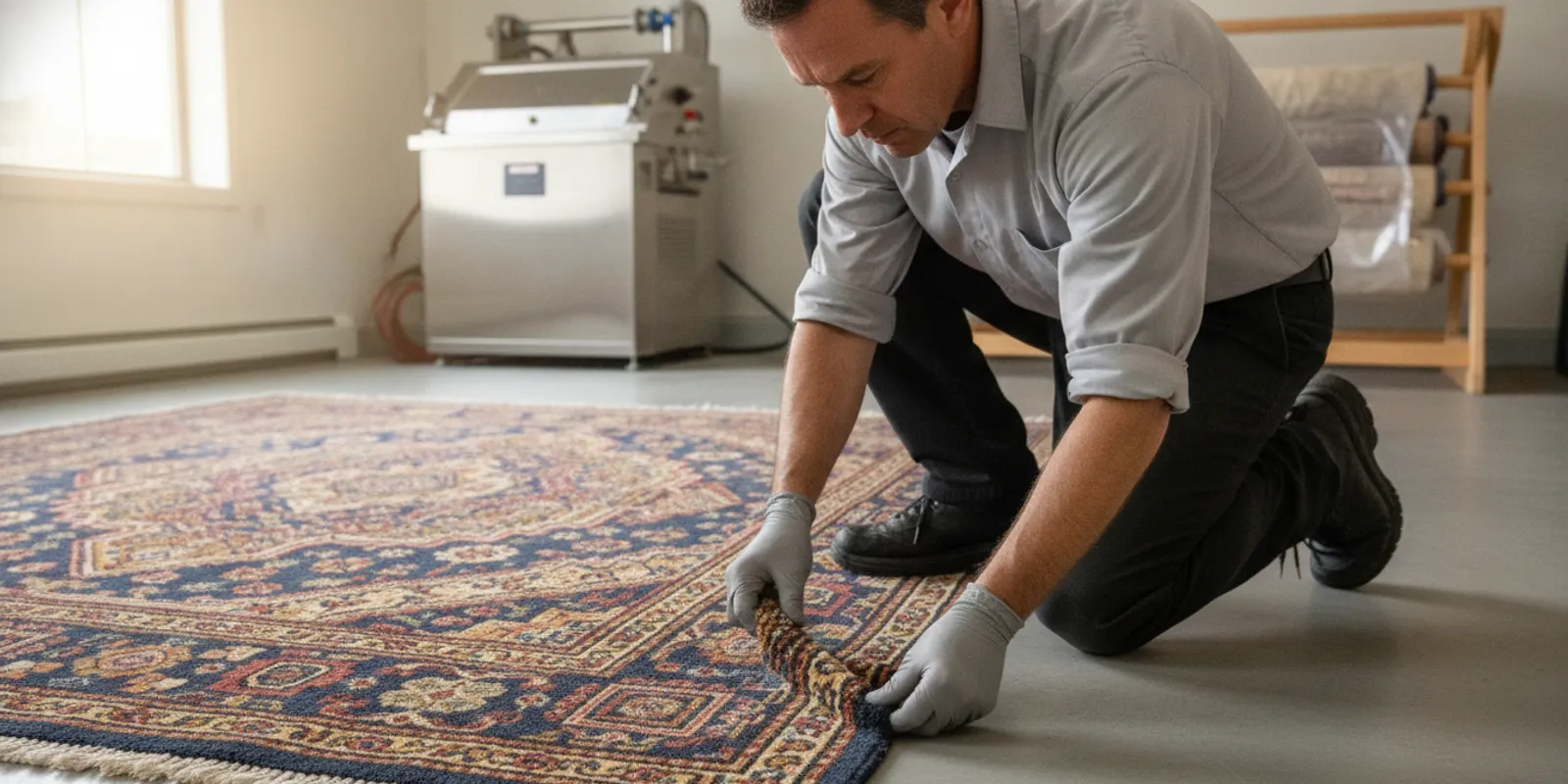
Knowing how to clean carpet starts with identifying the material and construction in front of you. An area rug may have a wool, cotton, silk, viscose, or synthetic pile, plus a backing, fringe, dyes, and prior treatments that affect what it can tolerate. The safest plan is not one universal recipe: begin with gentle dry care, handle fresh spills carefully, and pause before broad wet cleaning if the rug is delicate, valuable, or unfamiliar. This guide covers useful home care and when to ask about professional area rug cleaning. The practical goal is to remove loose soil and respond carefully to a spill without creating a larger problem through excess moisture, harsh rubbing, or an unsuitable product.
What should you identify before cleaning an area rug?
Look for a manufacturer label or care instructions first. Check both sides of the rug, including the backing and edge binding, and note whether there is fringe, a loose seam, a worn patch, or a previous repair. If you know the fiber or have product information, keep it nearby. If you do not know what the rug is made from, do not guess based on appearance alone. Two rugs that look similar may react differently to moisture, rubbing, and cleaning products. A rug's construction matters as much as its visible pile, because the backing, adhesives, binding, and foundation can respond differently from the top surface.
Fiber is only one part of the picture. The rug's dyes may transfer when damp, its backing may react to water, and a previous treatment can change how a new product behaves. Some constructions are intended for careful dry maintenance; others may allow limited spot treatment under their care instructions. A visible test area can reveal an immediate color reaction, but passing a small test does not prove that a full wash is safe. A large area introduces more moisture and may dry less evenly. Treat a spot test as a limited check, not as permission to soak or clean the whole rug using the same approach.
Before deciding what to do, record the issue you want to address. Is the rug dusty all over, is there a small recent spill, or is there a persistent odor or broad discoloration? Note any earlier spot products or home remedies. This short inventory helps keep the response proportional and keeps you from treating the rug repeatedly without knowing what has already been applied. If the rug is especially valuable, antique, or unfamiliar, the conservative choice is to avoid wet treatment until you have clear care guidance or a professional assessment.
- Read the care label and follow any restrictions.
- Identify the fiber and construction when information is available.
- Inspect the face, back, edges, fringe, and worn areas.
- Notice fading, color transfer, old residue, or past repairs.
- Do not mix household cleaners or use a product without following its label.
How can you remove ordinary dust and loose soil?
For routine upkeep, start with dry removal rather than adding moisture. Vacuuming helps lift loose dust and grit before they settle farther into the pile. Choose suction and a setting appropriate to the rug's height and construction. A beater bar or rotating brush may be unsuitable for delicate pile, loops, fringe, weak edges, or a rug that is already worn. If the vacuum catches threads or pulls at the surface, stop and change to a gentler attachment or method. The machine should move without snagging or dragging the rug, and a low setting is preferable to forcing a tool through pile that resists it.
Work in slow, overlapping passes, and avoid forcefully pushing the vacuum across an edge or fringe. Where the care instructions permit, vacuum in the direction of the pile and then make a light pass across it to loosen surface debris. Do not assume every rug should be vacuumed on both sides. Turn it over only if it is manageable and the backing can tolerate handling; keep the floor beneath it protected from grit. A small rug may be shaken outdoors only if it is safe to carry and the action will not strain seams or fibers. For a large rug, cleaning the accessible area is safer than dragging it or attempting to lift it alone.
Furniture needs attention too. Move light items carefully, but do not drag heavy furniture across the rug or pull the rug by its fringe. If the piece is too large or awkward to move, clean only the accessible area or get help. A rug pad suited to both rug and floor can reduce slipping and friction. Check the pad periodically for debris, bunching, or a surface that no longer holds the rug as intended. Grit caught beneath a rug can rub against its underside, so when it is safe to lift an edge, inspect the floor and pad as part of ordinary care.
Dust care is not the same as washing. If the rug still looks dull after vacuuming, the cause may be embedded soil, pile direction, fading, wear, or old residue. Adding soap or water without identifying the cause can leave a new problem. Compare a high-traffic path with a protected area under furniture, but remember that a difference in color can come from fading or wear rather than removable soil. For an unfamiliar or delicate rug, it is reasonable to stop at gentle dry care and ask what an assessment would involve rather than treating dullness as proof that the rug needs a full wash.
What should you do when a spill happens?
Respond promptly, but resist the urge to scrub. Scrubbing can spread a spot, rough up the pile, or drive material farther down. First, protect nearby flooring and move objects that might transfer color. If the spill contains solids, lift them gently with a spoon or blunt edge, working from the outside toward the center. Avoid scraping the fibers. Use a clean tool and remove only what comes away without forcing the material deeper. If the spill is still spreading, place an absorbent cloth nearby to protect the floor, then focus on blotting rather than wiping the liquid outward.
For liquid, blot with a clean, white absorbent cloth. Press and lift instead of rubbing side to side, and turn to a dry part of the cloth as it absorbs moisture. Continue only while blotting is improving the situation. A colored towel can transfer dye, and a wet cloth may add more moisture than the rug can safely take. Do not press so hard that liquid is forced through the backing into the floor. If the cloth becomes saturated, replace it rather than reusing the wet section. Check the underside only if it can be done safely and without lifting a heavy wet rug.
Check the label before using water or a spot product. If instructions permit a small amount of cool water, apply it sparingly to a cloth rather than pouring it directly onto the rug, then blot again. A spot product should be labeled for the relevant material and used exactly as directed. Do not combine products, make a stronger mixture, or use heat as a shortcut. A product that works on one stain type may spread or set another. When the substance is unknown, or when a rug's dye stability is uncertain, do not use an improvised household mixture as a substitute for material-specific guidance.
A careful spill-response sequence
- Move nearby items and protect any flooring that could be affected.
- Lift solids gently without grinding them into the pile.
- Blot liquid with a clean white cloth, using a fresh dry section as needed.
- Check care instructions before adding water or a cleaning product.
- Use only a small, permitted amount and avoid rubbing or soaking.
- Allow airflow and keep foot traffic off the treated area while damp.
- Recheck after drying; stop if there is color change, residue, spreading, or lingering odor.
Different spills require different decisions. Oil, food, dye, ink, and pet accidents are not interchangeable. A small drink spill on a sturdy synthetic rug may call for careful blotting and label-approved spot care, while an unknown liquid on a silk or antique rug is a reason to stop after lifting what you can. A pet accident can soak below the visible pile, so repeated surface treatment may not address what has reached the backing. These examples are not guarantees or recipes; the label, construction, and spill history matter. A cleaner will need to know what happened and what product was used, so keep the container or write down its name if you have already applied something.
If you do not know what the spill is, if the spot is large, or if the rug is valuable, avoid experimenting with successive household remedies. Tell a professional what happened and what you have already tried. Complete information can help the cleaner assess likely risks and explain what is and is not realistic before work is approved. Be clear about the approximate time of the spill, whether the rug was wet through, and how the area changed after drying. That history is often more useful than applying another product before requesting advice.
How should you dry a rug after spot care?
After any permitted spot treatment, remove as much moisture as practical with clean, dry towels. Let air move around the rug and keep the area open rather than covering it with furniture or another rug. Do not return a damp rug to a floor that may be affected by moisture. Check the underside and the floor as the area dries, especially if the spill was more than a small surface mark. If the rug is resting on a moisture-sensitive floor, take care not to trap dampness underneath it; do not handle a heavy wet rug alone to achieve this.
Avoid high heat or intense direct sunlight as a quick fix. Heat and strong light can affect some fibers and dyes. Do not roll, fold, or store a damp rug. If the backing remains wet, the spot expands, the pile changes, or an unpleasant odor develops, do not mask it with fragrance or repeat a treatment. Ask for guidance instead. Air movement around the area can help it dry, but do not use a heater or a device in a way that creates a safety risk or exposes the rug to damaging heat.
Drying is a key difference between a small spot response and cleaning an entire rug. Broad wetting can move soil outward, create a visible ring, affect dyes or backing, or leave different sections drying at different rates. A rug that is saturated may be too heavy to move safely, and handling it while wet can stress seams and edges. Avoid trying to wash a large rug in a bathtub or outdoors unless its care guidance specifically supports that method and you can manage wet weight, drainage, and complete drying safely. A rug that cannot dry thoroughly before being returned to use should not be treated casually at home.
When is home cleaning not the right next step?
Home care is often a good fit for routine dust removal and a small, fresh spill on a rug whose care instructions are clear. It becomes less suitable when the material is unknown, colors may run, the backing is fragile, or a spot has spread through the rug. The same is true when an earlier attempt left a stiff or sticky feel, uneven appearance, or recurring mark. Repeating a treatment without understanding the cause can add residue or enlarge the affected area. If you cannot confidently identify what the rug can tolerate, the safest home choice may be to stop after blotting and record what happened.
Consider an assessment if soil covers a broad area, a spill has soaked through, the rug is delicate or valuable, fringe is loose, or the item is difficult to lift and dry. You may also want help when routine vacuuming no longer makes a meaningful difference or when the rug has a cleaning history you cannot identify. These are reasons to ask questions, not proof that a particular treatment will solve every concern. Tell the provider about visible wear and old repairs; a new treatment cannot reverse damage that is already present, and the assessment should distinguish existing condition from cleaning goals.
A professional should ask about fiber, construction, condition, dyes, soil, spills, and prior treatment before recommending a process. If important information is unknown, say so. Ask what can be assessed before work begins and what uncertainties remain. The Institute of Inspection, Cleaning and Restoration Certification (IICRC) publishes professional standards and certification information; its official site is one place to learn about the organization when comparing credentials. A credential is useful context, but the proposed scope should still be explained for the specific rug. Ask how the recommendation accounts for this item's materials and condition rather than relying on a general promise.
What does an area rug cleaning service include?
The phrase “rug cleaning” can mean different scopes, so ask what is included rather than assuming it means the same process everywhere. For an area rug, a useful conversation may begin with identification and condition review, followed by an explanation of the recommended cleaning approach and any limits. A provider should consider the rug as a whole, including face, backing, edges, fringe, dye behavior, and previous treatments—not only the visible spot. Ask what the service does not include as well as what it does, especially if you are seeking help with a specific stain or odor.
Cahill's Carpet & Upholstery Cleaning describes area-rug assessment and facility cleaning, with pickup and return noted on its area rug cleaning service page. Eligibility and arrangements should be confirmed for the particular item and address. A photo can help start a discussion, but it cannot confirm hidden construction, identify every fiber, or establish how a dye will respond. Do not assume a fixed turnaround, universal pickup arrangement, or guaranteed stain outcome. The service page is a useful place to learn about the offering, while the estimate conversation should clarify what applies to your rug.
Ask for the scope to be stated plainly before approving work. Clarify whether the discussion covers dust and general soil, a particular spot, odor concerns, fringe, or any additional treatment. Ask what will happen if testing or assessment reveals a risk, and whether a proposed add-on is optional. This is especially useful when several rugs need attention: the same method or estimate should not be assumed to fit every item. If a spot may not respond, ask how that limitation will be communicated and whether you will be asked before the scope changes.
An estimate is a chance to discuss the rug and requested work before service. Cahill's states that estimates are free; the estimate depends on factors such as area, condition, soil, fiber, and treatment. There is no single public rate or turnaround that applies to every rug. If you are comparing providers, request comparable information about each rug and scope rather than comparing different descriptions as though they were the same job. Ask what factors could change the estimate and when you will review any proposed changes before work continues.
How can you compare home care and professional assessment?
Start with the risk and size of the problem. Gentle dry care is usually the most conservative option for ordinary loose dust. A fresh, small spill may call for blotting and a limited step allowed by the rug's care instructions. Professional assessment is more appropriate to consider when the rug is delicate, the spot is broad or persistent, moisture has reached the backing, or the right method is unclear. Compare the care instructions, the size of the affected area, and the effort needed to move and dry the rug before deciding that a home wash is practical.
| Situation | Reasonable first step | What to avoid or clarify |
|---|---|---|
| Loose dust on a sturdy rug | Use a gentle vacuum setting suited to the pile | Stop if the brush catches fibers or pulls fringe |
| Small fresh spill with clear care instructions | Lift solids and blot carefully | Do not scrub, soak, or use an unapproved product |
| Unknown fiber, delicate dyes, or fragile backing | Pause before wet treatment and ask for an assessment | Clarify what is known, what needs testing, and what risks remain |
| Broad soil, saturation, old residue, or recurring spot | Describe the full history to a professional | Ask about scope, limits, handling, and drying expectations |
This comparison is about choosing a prudent next step, not diagnosing a rug from a distance. A durable synthetic rug is not automatically safe for every household cleaner, and an expensive rug is not automatically impossible to clean. The detail that matters is whether a proposed method matches the particular fiber, dye, condition, and construction. If an explanation stays general, ask how it applies to your item. A careful provider should be able to discuss the factors considered and any limits that remain, even if no one can predict the exact result of every treatment in advance.
What should you ask before approving professional work?
A useful estimate conversation answers practical questions in language you understand. You do not need to know the technical name for every fiber. Share what you know and ask the provider to explain what they can determine from the rug and what still needs inspection. If a promise sounds absolute, ask what conditions or limits apply instead of relying on a guarantee. Good questions do not need to be confrontational; they help you understand the work and decide whether the scope matches your priorities.
- What material and construction do you think this rug has, and what remains uncertain?
- How will you evaluate dyes, backing, fringe, and existing wear?
- What cleaning steps are included in the proposed scope, and which are optional?
- How will you handle a spot or odor that may not respond as hoped?
- What should I know about moving, pickup, return, and timing for this rug?
- How should I prepare the floor and care for the rug after it is returned?
- Will you note pre-existing wear, fading, repairs, or limitations before work?
For a set of rugs, make a short list with one line per item. Include approximate size, fiber or label if known, current condition, visible spots, and previous treatment. Mark which rug is the priority. That keeps a conversation about one item from being mistaken for an assessment of the others and makes it easier to compare scopes consistently. If different rugs have different care labels or concerns, point those out rather than presenting the whole group as one undifferentiated job.
How can you prepare a rug for an assessment?
Take clear photographs in natural light of the full rug, the area of concern, the back, and any label or unusual edge. Include a ruler or familiar object for scale only if it is easy to do without obscuring the condition. Write down approximate dimensions, when the concern appeared, what caused it if known, and what you have already used. Do not apply another product just before the assessment in an effort to make the rug look better. A clear, unaltered view of the current condition is more useful than a photo taken after additional treatment.
Move fragile objects away and mention access limits, furniture, stairs, or handling concerns before arranging service. Do not attempt to carry a heavy or awkward rug alone. If the rug is damp, say so and explain how much of it is affected. Keep the floor beneath it accessible for inspection where practical, and do not place a wet rug back over wood or another moisture-sensitive surface. If several people need to approve work, gather questions in advance so the scope can be shared clearly with everyone involved.
For local homeowners and property or facility managers, service details can depend on the item and address. Cahill's serves communities including Huntingdon Valley, Southampton, Jenkintown, Abington, Willow Grove, Langhorne, Newtown, and Montgomery and Bucks Counties. Confirm that the requested rug service and pickup or return arrangements can be accommodated for your location. You can review the company's cleaning FAQs and then ask about any detail specific to your rug. Naming the town or county in the first inquiry helps make the service-area question clear without assuming every item has identical logistics.
When you request an estimate, keep the first message focused: location, approximate dimensions, what the rug is made of if known, the concern, and earlier treatments. A photo can be useful, but do not treat a photo review as a confirmed diagnosis or final scope. The provider can explain what more is needed to assess the item and what can be determined before work is approved. Include your preferred way to discuss the estimate and any access limitations that could affect pickup or return, then wait for confirmation rather than assuming an appointment or schedule is set.
How often should you check and maintain an area rug?
There is no single cleaning interval that fits every rug or home. Instead of choosing a calendar schedule alone, look at how the rug is used and what it shows. A rug near an entry may collect grit more quickly than one in a low-traffic room. A rug under a dining table may need more frequent spot attention, while a delicate piece may call for gentler handling even when it does not look heavily soiled. Pets, children, footwear, open windows, and nearby renovation work can all change the amount and type of debris reaching a rug.
A practical routine is to check the rug during normal housework. Look at high-traffic paths, edges, and the area beneath furniture. Vacuum when loose debris is visible or when the pile feels gritty, using a setting that suits its construction. Turn or rotate a rug only if its care information allows it and it can be moved safely. Rotation may distribute wear and light exposure more evenly, but it will not reverse fading or repair damage. Check the pad and floor when you move it, and remove trapped grit carefully. A brief inspection can also reveal a loose edge or fringe before it catches on a vacuum or foot traffic.
Keep a simple record if the rug has recurring trouble. Note dates and locations of spills, products used, whether the rug was wet through, and what changed after drying. That record is useful for a persistent stain or odor because a visible mark may have been treated more than once. It also helps a cleaner avoid guessing about old residue. If nothing unusual is happening, there is no need to apply a product just because a certain number of months has passed. A care schedule should respond to actual use, label instructions, visible soil, and the rug's condition rather than a universal calendar rule.
Why can a spot look worse after it dries?
A stain that seems to disappear while wet can become visible again after the rug dries. One possible reason is that material remained lower in the pile or backing and moved toward the surface as moisture evaporated. Cleaning-product residue can also attract or hold soil, while excess moisture may spread a mark beyond its original edge. These are possible explanations, not a diagnosis: fiber, dye, backing, spill type, and earlier treatment all influence what happens. In some cases, what looks like a stain may instead be a change in color or pile, so more cleaning is not necessarily the answer.
If a mark returns, do not automatically repeat the same treatment or scrub harder. First allow the rug to dry, then inspect the size and appearance of the spot in good light. Compare it with a photograph taken before treatment if available. Note whether the pile feels stiff or sticky, whether the spot spread, and whether the backing was damp. Avoid adding fragrance or another cleaner to hide a smell; that can make the treatment history harder to assess. Recording what changed gives the next person more useful information than applying another product without knowing why the first attempt did not last.
When you ask for help, describe the sequence rather than simply saying the stain came back. Explain what the original spill was, if known, when it happened, what you applied, how much moisture was used, and how the mark changed during drying. This information helps set a realistic conversation about assessment and possible limits. Some discoloration can be a change to the fiber or dye rather than removable soil, so a cleaner should not promise that every mark can be eliminated before evaluating it. Ask whether a proposed step is aimed at residue, remaining soil, or some other identified concern.
Which situations call for different choices?
Consider three common situations. In the first, a sturdy synthetic rug has crumbs and loose dust but no specific stain. Gentle vacuuming is a reasonable first response; a full wet treatment is not automatically needed. In the second, a small drink spill occurs on a rug with clear instructions permitting limited spot care. Lift solids, blot with a white cloth, use only the permitted method, and keep the area open to dry. In the third, a large unknown stain appears on a delicate rug with fringe and a fragile backing. Stop after careful blotting, avoid moving the rug while wet, and ask for an assessment rather than testing several products. Each situation differs in material certainty, scale, and moisture risk.
The difference among these examples is not simply how dirty the rug looks. The first has a clear, low-moisture maintenance option. The second has a known recent incident and instructions to guide limited action. The third combines uncertainty, scale, and possible material sensitivity. Those factors raise the risk of making the affected area larger or causing an additional change. If you are unsure which situation applies, use the more conservative response and explain the uncertainty when seeking advice. A good decision can be to stop, document the condition, and ask what an assessment would involve.
For property or facility managers, the same reasoning applies when several rugs are present in one space. Identify which pieces are walk-off mats, decorative rugs, or items with special construction, and note the traffic or spill concern for each. Do not assume one treatment scope covers every piece just because they are in the same building. Confirm access, handling, timing, and approval steps before arranging work, especially when the room needs to remain available to occupants. For multiple items, list priorities and ask whether the estimate will describe the scope per rug so a decision about one does not inadvertently commit the facility to a different item.
How can you make a professional estimate conversation more useful?
Before contacting a provider, decide what result you are hoping for and what matters most. You may want general soil reduction, help evaluating a particular stain, guidance on a delicate family rug, or a practical plan for several items. State the priority without assuming every desired result is achievable. For instance, ask whether the proposed scope addresses broad soil and separately ask what is realistic for one old discoloration. A clear distinction makes it easier to understand which part of the work is being discussed, and helps keep a broad cleaning request from being confused with a promise about a particular spot.
Ask for plain-language explanations of technical terms. If someone recommends a process, ask why it may suit the rug and what information led to the recommendation. Ask how existing wear, color variation, fringe, or prior repairs will be documented. If a provider cannot tell from a photograph, ask what inspection or testing is needed, whether that step happens before approval, and what decision follows if the test shows a concern. The aim is not to demand certainty where it is not possible; it is to understand the decision points, the possible limits, and what you will be asked to approve.
Separate logistics from cleaning scope. Confirm how the rug will be moved, whether pickup and return are available for the address, what timing can be discussed, and what you need to do with furniture or access. Ask when the estimate is final and whether optional work will be discussed before it is added. These details matter when a rug is large, the room is used every day, or several people need to approve the work. A written summary can prevent different expectations about what was requested and who is responsible for preparing the area.
If you are comparing more than one estimate, give each provider the same essential information and ask for the same type of explanation. Compare the item, proposed steps, limitations, handling, and timing—not only a short service label. One estimate may describe a different scope from another. If something is unclear, ask for clarification before comparing. This approach does not require choosing the most elaborate treatment; it helps you judge whether each proposal addresses your rug and concerns. You can also ask how the provider plans to communicate if the rug's condition changes the recommended scope after inspection.
What is the safest way to decide how to clean carpet and rugs?
For ordinary maintenance, begin with gentle vacuuming and keep grit from building up. For a fresh spill, lift solids, blot liquid without rubbing, and follow the rug's care instructions before adding anything. Use minimal moisture only when permitted, then allow the area to dry fully with airflow. If the material is unclear or a test suggests a problem, stop rather than escalating to stronger products. Keep a note of any treatment you have used so you can describe it if you need advice.
For a delicate, valuable, saturated, or heavily soiled rug, a material-aware assessment is a more careful next step than trial-and-error washing. Describe the item's condition and history, ask what the proposed service includes, and confirm handling and timing for that particular rug. A clear estimate helps you decide whether the suggested scope fits your needs before work begins. If the recommendation or limits are not clear, ask questions before authorizing work.
Review area rug cleaning options
With the rug's dimensions, material details if known, condition, and location ready, you can request a free estimate and discuss an appropriate next step.