
Why Hire a Commercial Cleaning Service for Your Business?
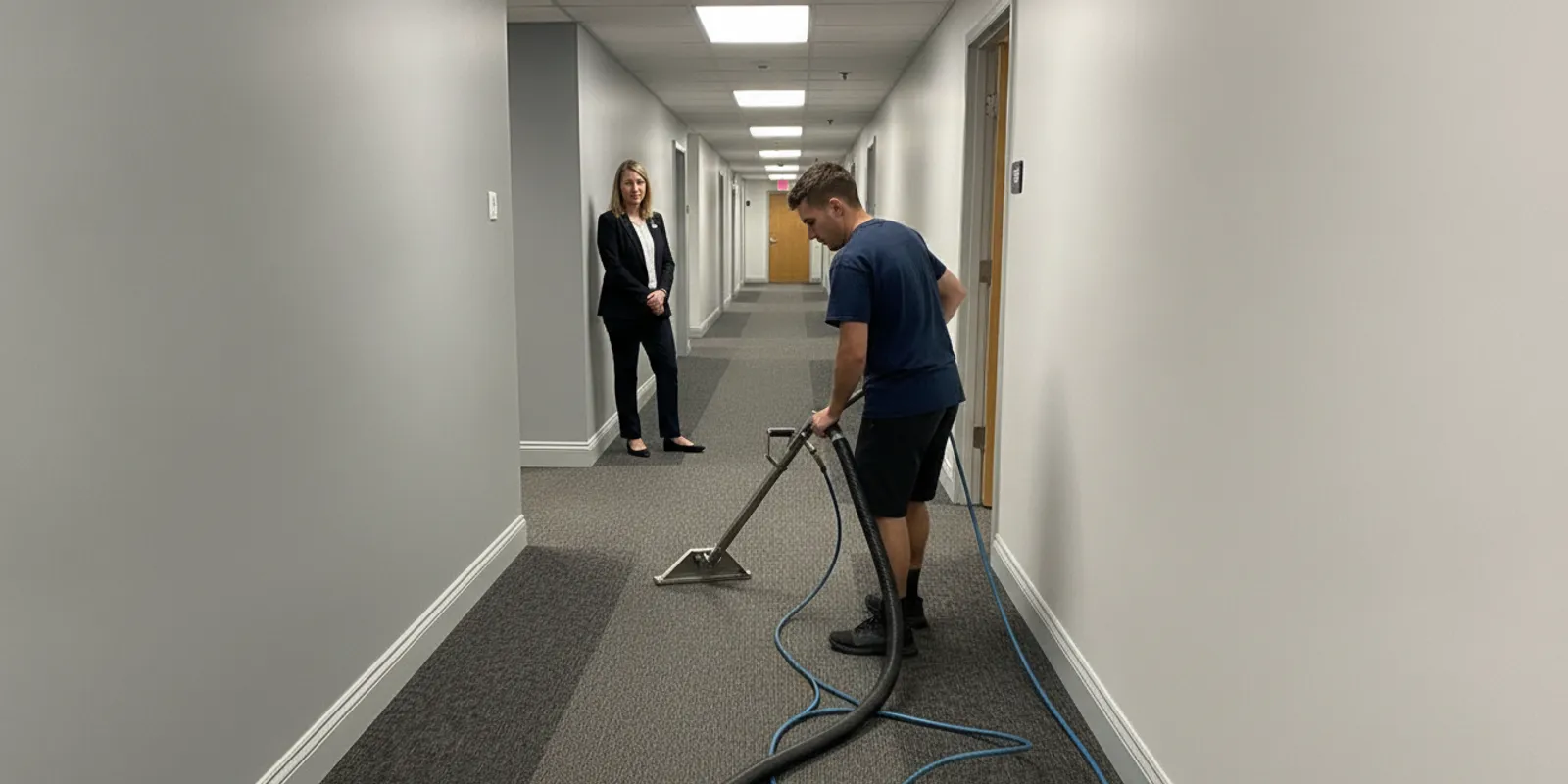
Why hire a commercial cleaning service when your staff can handle day-to-day tidying? For many businesses, the decision is not about replacing routine upkeep. It is about getting the right carpeted areas assessed and cleaned with a plan that fits traffic, building access, and business operations. Here is how to decide whether outside help makes sense and what to clarify before requesting an estimate.
Request a commercial cleaning estimate
What does hiring a commercial cleaner mean?
Commercial cleaning can refer to many different kinds of work. A business might mean routine janitorial tasks, periodic carpet cleaning, care for upholstery, or maintenance of other surfaces. Those are not interchangeable scopes. Before comparing providers, name the surfaces and tasks you want handled.
Cahill's Carpet & Upholstery Cleaning provides commercial cleaning with a focus on commercial carpet cleaning. Its commercial service information also discusses upholstery, hard-surface maintenance, and coordinated facility care. That does not mean every inquiry is a janitorial or clinical-sanitation contract. A useful conversation starts with the actual areas and service requested.
If your priority is carpet, identify which rooms or zones need attention, how the space is used, and any access or timing considerations. You can review the company's commercial carpet cleaning service and then ask about a scope for your facility.
When can outside commercial cleaning be worthwhile?
Hiring a professional cleaner may be worth considering when the job calls for equipment, material assessment, or a planned approach that your employees are not expected to provide. These situations can help clarify the decision.
- Traffic has changed the carpet's appearance. Entrances, corridors, reception areas, and work paths may collect more soil than rooms with light use. A site review can help determine which sections need cleaning and whether the requested work should cover a full room or selected areas.
- Routine vacuuming is no longer enough for the task. Staff upkeep is useful for everyday debris, but it is different from a periodic professional cleaning. If visible soil remains or an area needs more attention than normal maintenance provides, ask for an assessment rather than assuming the same method suits every carpet.
- You need a defined scope for a business facility. A property or facility manager may need to coordinate work across particular rooms, tenants, or operating periods. A provider can discuss the areas, surfaces, condition, and access plan before preparing an estimate.
- You want to plan around business activity. Cleaning can affect access to rooms and furniture. Discuss when the work can be performed, which spaces must stay available, and how the team should enter and move through the site.
- There are several surfaces to consider. A facility may have carpet in offices and corridors alongside upholstered furnishings or hard surfaces. Listing each surface separately helps prevent assumptions about what is included.
These are reasons to evaluate professional service, not guarantees that every carpet can be restored to a particular appearance or that a service will eliminate every mark. Results depend on the material, condition, soil, and treatment that is appropriate for the job.
What can a scoped plan help you manage?
A defined commercial cleaning scope gives the business and cleaner a shared understanding of the work. It can make the estimate easier to review and help you plan practical details before service begins.
Clear surfaces and locations
List the specific carpeted areas rather than asking for a vague “whole building clean.” For example, note the reception area, two corridors, conference rooms, or a particular office suite. If the facility also wants upholstery or a hard surface considered, name it separately. The estimate should reflect the surfaces actually discussed.
Access and timing
Explain business hours, building entry procedures, security requirements, elevator or loading access, and any rooms that cannot be blocked. If work needs to be coordinated around employees, customers, residents, or deliveries, describe those constraints early. Do not assume an after-hours schedule is available until it has been discussed and confirmed.
Condition and priorities
Identify areas with heavier traffic, visible spots, or concerns that need review. If you know what caused a mark, share that information, but avoid applying a product before an assessment if you are unsure how the carpet will respond. A clear description helps the cleaner inspect the right areas and explain what treatment may be suitable.
Furniture and room readiness
Ask how furniture will be handled and identify equipment or items that must remain in place. Cahill's guidance says lightweight pieces may be moved, while heavier items are protected in place. The practical arrangement for a particular business job should be confirmed in advance. Remove small items and personal belongings from the floor where possible, and clarify who will handle computers, sensitive equipment, or business records.
How should you compare an outside cleaner with staff upkeep?
In-house upkeep and professional cleaning serve different purposes. Employees may be responsible for everyday care, while a specialist is engaged for a defined cleaning project. The right comparison is not simply “staff or contractor.” It is whether the required work, equipment, time, and disruption fit the way the business operates.
- Consider the task. Is this routine tidying, regular vacuuming, spot attention, or periodic carpet cleaning? Describe the requested result in terms of the surface and work, rather than using a broad label.
- Consider staff responsibilities. If employees are expected to take on additional care, be clear about the time and tasks involved. Do not assume that staff have the equipment or training to perform a specialized cleaning job.
- Consider the facility's schedule. A cleaning plan should account for rooms in use, access limitations, and the time needed to prepare the space. Ask the provider to discuss the plan; do not rely on an unconfirmed turnaround estimate.
- Consider how you will evaluate the work. Agree on the areas to be addressed and the condition of the material before work. An estimate is not a promise that every stain or odor will be removed.
For managers comparing general commercial cleaning options, start by separating routine building duties from specific carpet or surface work. That distinction helps you ask providers comparable questions and avoid paying attention to labels that do not explain the actual scope.
What should you ask before requesting an estimate?
An estimate is more useful when the cleaner can understand the space and its needs. These questions can help you prepare for an inspection and compare proposals on the same basis.
- Which areas and surfaces are included? Ask for a clear list of rooms, carpeted zones, and any additional surfaces. If some areas are excluded, make that explicit.
- How will the material and condition be assessed? Ask what the inspection will cover and how the proposed method will suit the surface. A method should not be assumed to suit every material.
- What preparation is expected from our team? Confirm how to handle small items, furniture, desks, or rooms that contain sensitive equipment. Clarify what the cleaning team will move and what must remain untouched.
- How will access and timing work? Review building entry, security procedures, work windows, room availability, and any constraints on noise or movement. Confirm scheduling details directly rather than treating a request as a booked appointment.
- What factors affect the estimate? Explain the area, condition, soil, fiber, and treatments you want considered. Cahill's estimates are free and depend on the area, condition, soil, fiber, and treatment. There is no universal price that can be inferred without the job details.
- What should we expect after cleaning? Discuss any post-cleaning guidance and when the space may be used again. The answer depends on the service and site conditions, so avoid making assumptions before the cleaner reviews the job.
Use the company's contact page to request an estimate, and include your facility location, the surfaces, approximate area, condition, access needs, and preferred timing. Cahill's serves business customers in its stated local markets, including Montgomery and Bucks Counties and communities such as Huntingdon Valley, Southampton, Jenkintown, Abington, Willow Grove, Langhorne, and Newtown. Confirm that your specific location and requested scope can be accommodated.
How can you assess qualifications and cleaning methods?
Ask who will review the material and how the proposed cleaning method is selected. A professional should be able to discuss the scope and explain the method being considered in terms you can understand. If certification or specific standards matter to your purchasing process, ask what credentials apply to the people and work involved, and verify the details that your organization requires.
The Institute of Inspection, Cleaning and Restoration Certification provides information about the organization and its standards at IICRC. Treat this as a starting point for understanding the credentialing organization, not as proof that a particular provider or every technician holds a credential. Cahill's identifies IICRC certification as a company statement; ask the company directly about relevant qualifications for the service under consideration.
Also ask how the cleaner will protect furnishings and manage the work area. A suitable plan should take account of the carpet or other surface, the site's contents, and the agreed scope. Avoid choosing a provider based only on a broad claim such as “deep clean”; ask what areas and tasks that phrase means in the estimate.
How can you keep business disruption manageable?
Disruption depends on where the work takes place and how the space is used. A small office with flexible rooms may have different needs from a busy reception area or a corridor people use throughout the day. These steps help prepare without assuming a particular service duration.
- Identify rooms that can be made available and those that must stay open.
- Tell the cleaner about security, access, parking, loading, and sign-in requirements before the work date is arranged.
- Move small objects and clear the floor where practical, while confirming how larger furniture and equipment will be handled.
- Let employees or tenants know which spaces are in scope and who to contact with access questions.
- Ask the provider what to expect during and after the work, including any directions for keeping people away from a treated area.
For recurring needs, discuss the areas and desired maintenance approach each time it is reviewed. A building's traffic and condition can change. Do not rely on one universal cleaning interval for every commercial carpet or facility.
When might hiring a service not be the right next step?
Outside cleaning is not automatically the answer to every building concern. If the task is basic daily tidying, it may belong to an existing staff or janitorial plan rather than a specialty carpet-cleaning request. If the surface is damaged, loose, or affected by a leak, tell the provider; a routine cleaning scope may not address the underlying issue. If you are unsure whether the concern is carpet, upholstery, tile, or another surface, describe it and ask for an assessment before requesting a specific treatment.
Likewise, do not hire based on an assumed result. A professional assessment can explain what work may be suitable, but no estimate should be treated as a guarantee that every stain, odor, or wear pattern will disappear. For significant water damage, use the appropriate restoration inquiry rather than describing it as ordinary commercial carpet maintenance.
How can you compare estimates fairly?
When you receive more than one estimate, first check whether each one describes the same job. A proposal for a reception area and two corridors is not directly comparable to one that includes every carpeted room. Write down the surfaces, approximate areas, and any known condition concerns before contacting providers. Then use the same information for each request.
Look for a clear description of what is included, what is excluded, and any assumptions about furniture or room access. If a provider has not inspected the spaces, ask how the estimate may change after the material and condition are reviewed. An unusually broad scope or a vague phrase such as “all floors” may need clarification. The goal is to understand the work being proposed, not simply to compare a total without context.
Also compare the plan for completing the work. Does the provider understand your building's entry rules? Have you discussed which rooms can be closed, how equipment will reach the work area, and who will prepare the space? These operational details matter to a property manager because they affect whether the work can be carried out as expected. Ask the provider to confirm any assumptions in writing as part of the estimate or follow-up.
For example, imagine a small office has visible soil in its front entrance and a long corridor, while the individual offices appear in better condition. A useful inquiry would identify those high-traffic areas and ask for them to be assessed. It would not assume that the entire building needs identical treatment. If the cleaner recommends adding other rooms after inspection, the manager can consider that recommendation against the facility's priorities and budget process before approving a revised scope.
For a property with several tenants or departments, make a simple room list and note which person can authorize access. Flag areas that contain sensitive equipment or records. You can also ask whether the work can be phased, but do not assume that phasing or a specific work window is available; the provider needs to review the request. A clear scope makes it easier for the facility team to communicate internally and for the cleaner to estimate the actual job.
How do you decide whether to move forward?
Hiring a commercial cleaning service can make sense when your facility needs a clearly defined cleaning task, your staff's routine upkeep does not cover it, and the work can be coordinated with business access and operations. The decision is strongest when you know which surfaces matter, what condition they are in, and what constraints the provider must plan around.
Before approving work, compare the estimate with your written scope. Check that locations, surfaces, preparation, access, and requested timing are understood. If a proposal is unclear, ask for clarification instead of comparing it with another proposal that covers different work.
Talk with Cahill's about your facility's cleaning needs
What should you do before scheduling commercial cleaning?
Write down the rooms and surfaces you want reviewed, the building's access requirements, and the timing constraints that matter to your business. Then request an estimate based on that information and confirm the service scope before work is arranged. A practical conversation with Cahill's Carpet & Upholstery Cleaning can help you determine whether commercial carpet or another offered surface-cleaning service is the right fit for your facility.