
How Long Does Professional Carpet Cleaning Take to Dry? Carpet and Drapery Cleaning
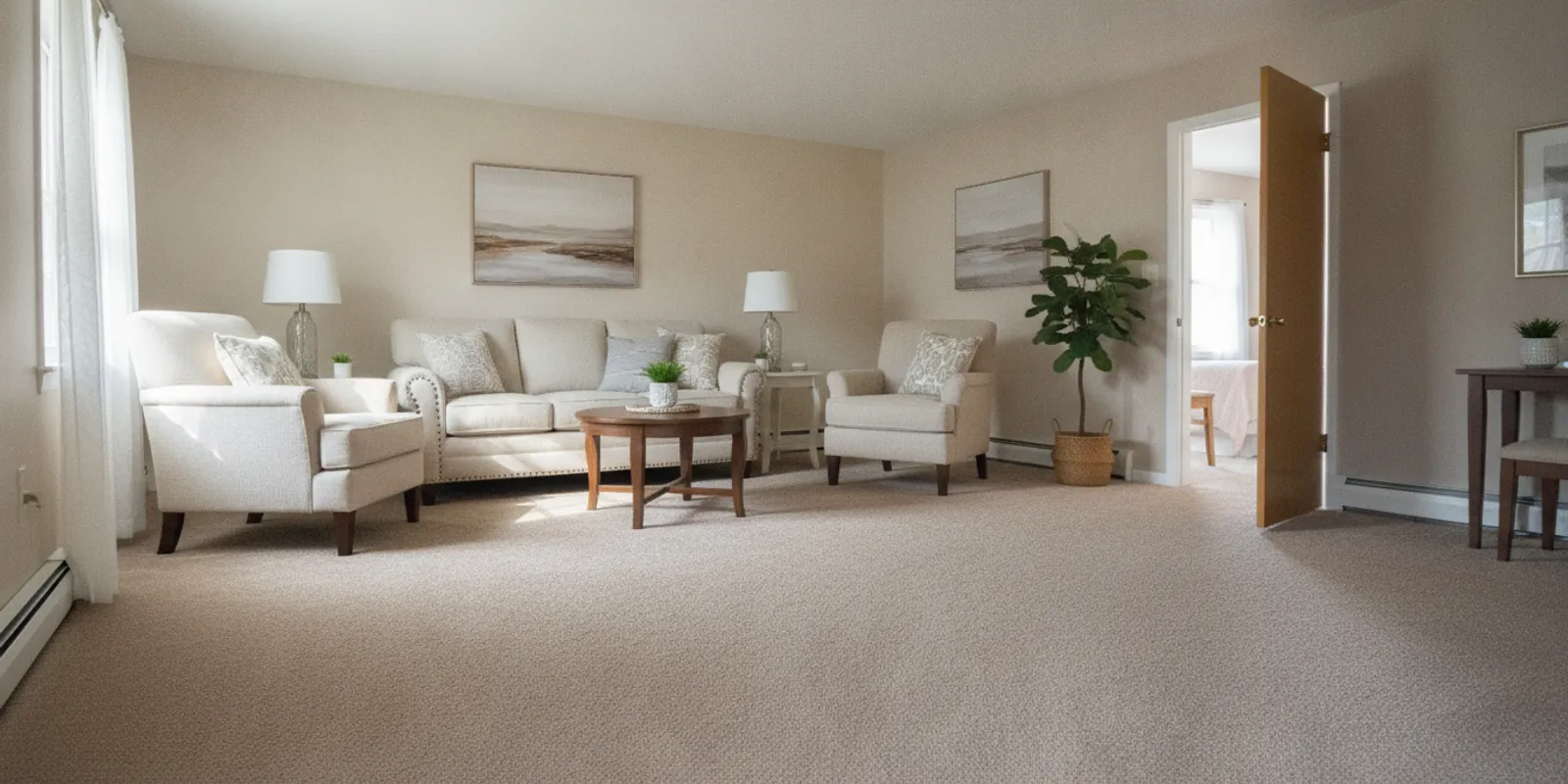
How long does professional carpet cleaning take to dry? There is no single reliable clock for every room. Moisture left in the carpet, its construction, the cleaning method, airflow, temperature, and humidity all matter. This guide focuses on carpet; drapery cleaning is a different service involving different materials and care decisions, so ask about it separately if both are on your list.
Request a carpet cleaning estimate
What does a carpet drying estimate really tell you?
A drying estimate is a planning aid, not a promise that every fiber, backing, or room will feel dry at a precise hour. The surface pile may feel nearly dry while moisture remains deeper in the carpet system. In another room, the carpet can feel slightly cool or damp to the touch even as it is close to ready for ordinary use. Room humidity can also make the whole space feel clammy, which is not the same as checking the carpet itself.
For that reason, it helps to distinguish several practical questions. When can household members walk across the room? When can furniture go back in its usual position? When can children or pets return to normal use of the space? These may not all have the same answer. Ask the technician for guidance based on the material and the work performed, rather than relying on a neighbor's experience or a time estimate from a different method.
Professional carpet cleaning is not simply about adding water. A cleaner evaluates the carpet and the soil, selects an appropriate process, and removes soil and moisture as part of the work. Cahill's describes hot-water extraction and steam cleaning among its carpet-care methods. The proposed scope should still be explained for the rooms and conditions at hand. The carpet cleaning service information is a useful starting point, while an estimate can clarify what is included for your home or facility.
Which factors can change how long carpet takes to dry?
How much moisture remains in the carpet?
Drying depends in part on how much moisture is left after the cleaning process. Carpet pile, backing, and the layer beneath it do not all behave alike. A dense, plush carpet can feel different from a low-pile surface. The carpet's age and condition may also affect how it responds. The amount of soil and the work needed to address it can influence the cleaning plan, so two rooms cleaned on the same day may not have identical drying experiences.
Tell the cleaner if the carpet has been wet before, if there was a leak, or if you know of an issue below the surface. Routine cleaning and water-damage restoration are different scopes. A normal carpet-cleaning estimate should not be assumed to include diagnosing or correcting an underlying moisture problem. If water came from a leak or flooding, explain the source and extent before arranging service so the appropriate next step can be discussed.
How do airflow and ventilation affect drying?
Air moving across a damp surface can support evaporation. A closed room with still air may dry differently from a room where air can circulate. Interior doors, open pathways, and fans may help move air, when appropriate for the household and conditions. Airflow is not a substitute for professional extraction, and pointing a strong heat source at a carpet is not a safe shortcut to recommend without knowing the material and equipment involved.
Ventilation choices depend on the outdoor conditions as well as the indoor ones. Opening windows may be helpful on a dry day, but it may not improve things when outdoor air is humid or rain is coming in. Heating, ventilation, and air-conditioning systems may circulate air, but their effect will depend on the home and weather. Ask the cleaner what is suitable on the day of service rather than following a blanket instruction that ignores the season.
What role do temperature and humidity play?
Warmth and humidity affect how quickly moisture evaporates and how comfortable a room feels. Weather around Montgomery and Bucks Counties changes over the year; a damp summer day and a cool, dry winter day are different settings. Indoor temperature and ventilation vary from home to home, too. That is one reason a drying experience from a previous visit may not be a reliable prediction for another season or another room.
It is usually more useful to ask what conditions could slow drying than to seek a fixed number. Tell the technician if the room has limited ventilation, if windows cannot be opened, or if you need to keep a door closed. That context can help set realistic expectations and identify which after-care steps are practical in your home.
Does carpet material or construction matter?
Yes. Carpet fibers and construction affect which cleaning approach is suitable and how a damp surface feels afterward. One material may tolerate a process that is not appropriate for another. If you have a manufacturer care guide, a label, or information from a prior installation, share it. If you do not know the fiber, describe the texture, age, and any special concerns instead of guessing.
The same principle applies to rugs and other household textiles. A carpet method should not automatically be applied to a delicate rug, upholstered furniture, or window coverings. If you are planning drapery cleaning along with carpet work, ask how that service is assessed and handled on its own merits; the fabrics, construction, and access requirements differ. A qualified estimate should identify the actual surfaces under discussion instead of treating every textile as interchangeable.
Can the cleaning scope change the drying experience?
A single lightly soiled room is not necessarily comparable to several rooms with heavy traffic, concentrated spots, or more involved treatment. Furniture, room layout, access, and the carpet's condition may all affect the work plan. If there is an area that concerns you, point it out before work begins. Do not assume that a visible mark or odor can always be removed completely; results depend on the material and the source and history of the issue.
Scope also matters when you compare estimates. A quick drying estimate alone does not explain which rooms will be treated, what preparation is included, or what the cleaner expects you to do afterward. Cahill's provides free estimates based on factors such as area, condition, soil, fiber, and treatment. There is no universal rate or drying guarantee to apply to every home. Ask providers to describe comparable work before weighing one estimate against another.
What does drying look like in common situations?
Examples can help with planning, as long as they are treated as illustrations rather than timing promises. Imagine one modest bedroom with a low-pile carpet, clear access, and a window that can be opened on a dry day. The room may be easier to ventilate than a large, closed family room with dense carpet and furniture that cannot be moved. Even then, the technician's assessment and the actual indoor conditions matter more than the room label.
Consider a household with several connected rooms and a busy hallway. More carpeted area, different traffic levels, and the route people need to take can make the job and the after-care plan more involved. The practical issue may not be only whether the first room feels dry. The household needs to know which paths can be used, whether there is an alternate route, and which rooms should remain closed until advised. Ask for room-by-room instructions if the work is being completed in stages.
A facility manager may have a different planning problem. The question could be how to keep a reception path open while a meeting room or work area is treated. Rather than assuming the whole floor can be cleaned and immediately reopened, ask whether areas can be handled in sequence and what access restrictions each section requires. Discuss this before work begins so the estimate and the operating plan reflect the same spaces and timing constraints.
Finally, imagine a room where someone reports a musty smell or a carpet that was wet before the appointment. That is not simply a more difficult version of ordinary drying. The earlier moisture may point to a separate condition that needs to be explained and assessed. Be direct about the history. It is better to pause and clarify the scope than to rely on general advice intended for routine carpet cleaning.
How can you tell whether the room is ready for its next use?
There is no single touch test that answers every question, so start with the technician's direction. Ask separately about walking, furniture placement, and children or pets returning. If the guidance includes a waiting period or a specific sign to look for, follow that instruction. Do not equate a dry-looking surface at the doorway with the condition of carpet throughout a larger room.
Notice whether conditions are changing in a reasonable way, but do not attempt to diagnose the carpet system yourself. If one area remains noticeably wetter than the rest, tell the provider where it is and when you first noticed it. Mention if airflow is restricted or if the room has been closed. A useful report gives the cleaner enough context to decide whether additional advice is needed.
Furniture readiness is its own decision. Even if a surface seems ready for light foot traffic, that does not necessarily mean heavy furniture should be put back immediately. Ask about the type of furniture, any pads or protective material, and whether the items were moved or protected during the service. Follow the response for the specific pieces rather than using one rule for every table, sofa, or cabinet.
For a business, readiness also includes the people who use the space. Decide who will communicate that an area is restricted and who will reopen it after the cleaner's instructions are met. A simple sign or internal message can prevent a visitor from walking across an area that is still being managed. These are practical access steps, not a claim that a particular room will be available at a fixed hour.
How should you think about cleaning methods and drying?
People often compare a cleaning method by the name they have heard, but the label alone does not answer how a particular carpet will be treated or how quickly it will dry. Ask what approach is proposed for your carpet, why it is appropriate, and what post-cleaning care follows. A technician should consider the fiber, construction, soil, and requested work rather than applying a generic promise to every room.
Cahill's describes hot-water extraction and steam cleaning among its carpet-care methods. Those terms do not tell you all the details of a job or establish one drying time for all carpets. Ask the cleaner to explain the expected process and the factors that could make the room differ from a typical case. If a label or manufacturer instruction is available, mention it before the work is approved.
Be cautious about comparing one provider's drying statement with another's without comparing the scope and conditions too. One provider may be discussing a lightly used room; another may be asked to handle heavier soil, additional treatment, or multiple connected rooms. Likewise, the home's humidity and ventilation may not match the conditions assumed by a general estimate. Compare the explanation, the work included, and the after-care plan—not just a short phrase about speed.
If a provider suggests an unusual step or asks you to use equipment after the visit, ask for specific instructions and confirm that the step is suitable for your carpet and household. Avoid improvising with intense heat or additional products. Clear instructions make it easier to support drying without introducing a separate issue or misunderstanding the agreed scope.
How can you support drying after service?
Start with the technician's instructions. They can account for the cleaning process and carpet type actually involved. The following are practical discussion points, not a replacement for material-specific guidance:
- Keep air moving when conditions allow. If appropriate, use a fan to circulate room air or open an interior doorway to improve airflow. Avoid placing a heater or other intense heat source close to the carpet unless the technician specifically advises a suitable method.
- Choose ventilation based on the weather. Opening windows can help when outdoor air is favorable. If it is humid, raining, or otherwise likely to bring damp air indoors, ask whether keeping windows closed and circulating indoor air is preferable.
- Limit unnecessary foot traffic. Keep the room quiet while the carpet is damp when you can. If you need to cross it, follow the cleaner's guidance about access and footwear. This also helps reduce the chance of tracking soil onto a newly cleaned surface.
- Plan for children and pets. Use another route or room until the technician says normal access is appropriate. Keep children from playing on a damp surface and prevent pets from returning before the recommended time.
- Wait for guidance before moving furniture. Lightweight items may be moved, while heavier pieces may be protected in place. Ask when and how to reposition each item. Use the recommended protection and avoid setting furniture directly onto a damp carpet unless the technician says it is appropriate.
- Do not add a second product. Household cleaners, powders, or other treatments can leave residue or complicate later care. Do not apply something to speed drying or address a spot without first checking with the cleaner.
These actions are intentionally modest. You do not need to turn the room into a construction site or run equipment without knowing whether it suits the material. The goal is to follow the specific after-care instructions, provide reasonable airflow, and avoid using the surface in ways that create a new soil or furniture issue while it is still damp.
What should you avoid while the carpet is damp?
Avoid assuming that a surface that feels dry in one corner is ready for every use throughout the room. Check with the technician if you are unsure about returning furniture, letting pets back in, or using a frequently traveled path. Do not pull up carpet or move heavy furniture to inspect beneath it unless a qualified professional has instructed you to do so. Disturbing the carpet can create a separate problem and is not a dependable way to judge moisture.
Do not use a household chemical, a rental machine, or a second spot treatment simply because a stain is still visible or the room has an odor. A mark may have a source below the visible pile, or it may need a treatment suited to that fiber. Applying more product can leave residue or make the area harder to assess. Describe what you see and ask the service provider for a reasonable next step instead.
Also avoid making a firm event plan around an assumed drying deadline. If a room must be ready for guests, work, or a business opening at a specific time, explain that before the estimate is approved. The cleaner can discuss the proposed approach and limits, and you can decide whether the timing is workable. An estimate of expected care is more useful than a promise that ignores the carpet and the room conditions.
How should you plan room access before cleaning?
Start by deciding which areas need to remain usable. For a home, identify an alternate path between rooms and think through where children, pets, and household members can spend time. Move small personal items and breakables out of the work area if you can do so safely. Ask what furniture the cleaning team expects to move and what should remain in place. Cahill's published guidance distinguishes lightweight furniture from heavier pieces that are protected in place, but confirm how that applies to your rooms.
For an office or other facility, make a simple room-by-room plan. Identify the carpeted areas, entrances, workstations, and pathways that staff or visitors need to use. Ask whether the work can be organized in sections so unaffected spaces remain available. Discuss access, operating hours, furniture, and the order of rooms before approving the scope. Commercial carpet cleaning is not automatically a janitorial or clinical-sanitation contract; name the surfaces and the specific cleaning work you need.
A practical schedule should include more than the time the technician is in the building. Allow for preparation, work, restricted access, and the drying guidance you receive. If you are coordinating a meeting or business operation, tell the provider the immovable time constraints in advance. Avoid promising other occupants that the room will be ready at a particular hour until you have discussed the job and received an estimate of what to expect.
How can you make an estimate request more useful?
A clear description helps the cleaner understand the scope before work begins. Prepare the following details when you request an estimate:
- List the rooms. Include which spaces have carpet, their approximate size if known, and whether there are stairs, narrow access points, or rooms with limited ventilation.
- Describe the condition. Mention traffic lanes, general soil, spills, pet-related concerns, recurring spots, or odor concerns. Share when an issue happened and any treatments already tried.
- Share material information. Provide a label or care instructions if available. If the fiber is unknown, say so; do not guess and ask the cleaner to assess it.
- Explain furniture needs. Identify items you can move safely, pieces that should remain in place, and any concerns about access or protection.
- State the timing constraint. Explain when the room must be back in use, but treat the drying estimate as a practical expectation rather than a guarantee.
- Ask what is included. Confirm the rooms, treatment, preparation, after-care guidance, and any condition that might require a separate discussion or estimate.
Describe marks and concerns without promising yourself a particular result. A stain's source, the time it has been present, prior cleaning attempts, and the fiber all affect what can reasonably be discussed. The cleaner should be able to explain what is planned and where uncertainty remains before the work proceeds. Estimates are free, but they depend on the actual area, condition, soil, fiber, and treatment rather than a one-size-fits-all public price.
How can homeowners and facility managers compare cleaning plans?
Use the same questions for each provider you are considering. A comparison is fairer when the areas and expectations are similar. A lower or faster-sounding estimate may not describe the same scope, and a broad assurance about drying does not tell you how the specific material will be handled.
- Which rooms, stairs, or other carpeted areas are included?
- What information about the carpet or its condition could change the proposed approach?
- How will furniture and room access be handled?
- What care instructions should occupants follow after the work?
- What should happen if the carpet remains unusually damp or a concern persists?
- Are any requested services or surfaces outside the estimate being discussed?
When the provider responds, look for a clear scope, realistic expectations, and a willingness to discuss material and room conditions before work begins. In the local market, Cahill's serves homeowners and property or facility managers in Huntingdon Valley, Southampton, Jenkintown, Abington, Willow Grove, Langhorne, Newtown, and Montgomery and Bucks Counties. Confirm service availability for your specific address when you request an estimate.
For general industry context, the Institute of Inspection, Cleaning and Restoration Certification (IICRC) describes its work in developing standards for inspection, cleaning, and restoration. That is a useful reason to ask how a proposed process relates to the carpet and the work being quoted; it is not a substitute for the cleaner's assessment or a guarantee about drying time. The carpet cleaning FAQs can also help you prepare questions for a local estimate.
When should you contact the cleaner after service?
Ask for guidance if the carpet seems excessively wet, the drying seems to have stalled, or you are unsure whether normal use can resume. Describe which room is affected, when the cleaning took place, what the carpet feels like, and what steps you have taken. If the room is humid or has limited airflow, mention that too. A clear description is more useful than repeatedly applying products or moving furniture to investigate.
If the moisture came from a leak, appliance failure, or flooding rather than routine cleaning, tell the provider the source and extent promptly. Water-damage restoration involves a different situation from ordinary carpet cleaning. Do not assume that routine cleaning includes extraction or drying of building materials after a loss. Cahill's offers water-damage restoration as a separate service; emergency coverage applies to restoration emergencies, not routine carpet-cleaning appointments.
A lingering spot or odor is also worth describing, especially if it returns after cleaning or changes over time. The cause may be more than surface soil, and a particular outcome should not be assumed. Explain the history, any products used, and whether the affected area has been wet before. This helps the provider discuss whether another assessment or a separate scope is appropriate.
What should you do before scheduling carpet cleaning?
Before you request an estimate, make a short list of the rooms, the concerns you want addressed, your preferred timing, and any information you have about the carpet. Ask about preparation and what access the technician will need. If you have other textile needs, such as drapery cleaning, identify them separately so they can be assessed as their own service rather than assumed to be part of the carpet scope.
Set aside a route around the rooms being cleaned and arrange a place for pets or children to stay while access is limited. In a business, tell staff or occupants which areas may be unavailable and what alternative paths they can use. Build flexibility into the plan in case weather or room conditions differ from what you expected. These small preparations make it easier to focus on the work and understand the after-care instructions when the service is complete.
To learn more about the business and its services, visit About Cahill's Carpet & Upholstery Cleaning. The relevant service scope and estimate should be confirmed for your particular rooms and concerns.
Ask about carpet cleaning for your home or facility
Drying is easiest to plan when the scope is clear, the carpet's characteristics are considered, and after-care advice reflects the conditions in your room. Discuss your timing needs before work begins, follow the technician's instructions, and allow the carpet to return to use based on that guidance rather than a universal clock.