
Drapery Cleaning Cost: What Affects an Estimate?
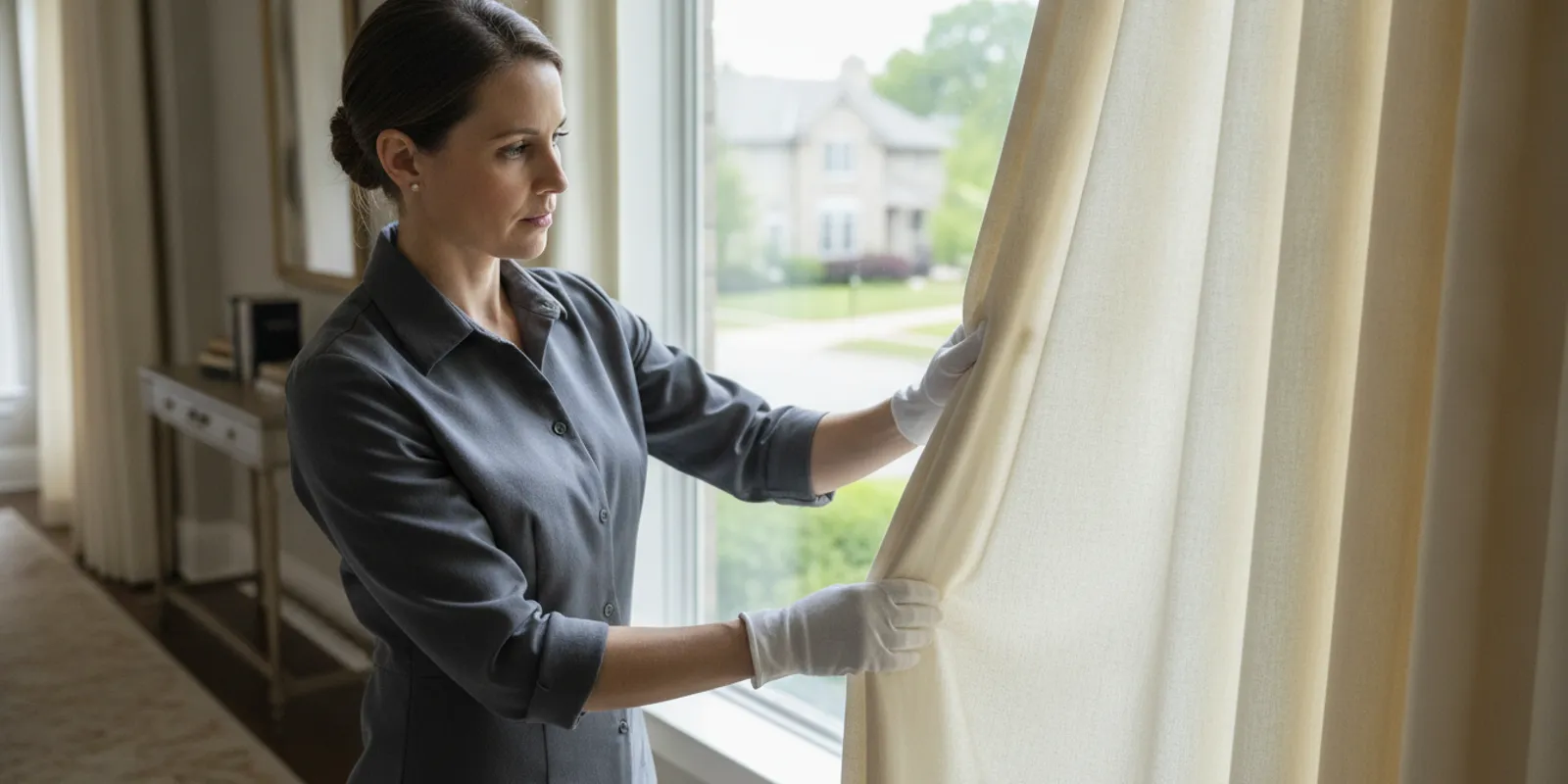
Drapery cleaning cost depends on more than the number of panels. Fabric, construction, condition, access, and the treatment being considered all affect the work. If you are comparing options in Huntingdon Valley or nearby Montgomery and Bucks County communities, understanding these factors can help you describe your window coverings and ask for a useful estimate.
Request a drapery cleaning estimate
Why can drapery cleaning estimates vary?
Draperies are made in many different ways. A pair of lightweight, unlined panels is not the same job as full-length, lined curtains with pleats, trim, and delicate fabric. The appropriate cleaning approach depends on the item itself, including its fibers, dyes, construction, and condition. An estimate should reflect the work needed for the specific drapery, not a universal rate based only on the window or panel count.
It helps to think of the estimate as a scope discussion. The cleaner needs to identify which items are included, what needs to be assessed, what access is available, and which treatment is appropriate. If a detail is uncertain, a description or photo can start the conversation, but it may not replace an in-person review.
Which details shape the estimate?
Fabric and fiber sensitivity
Different fibers may react differently to moisture, cleaning solutions, and handling. Natural, synthetic, blended, and delicate fabrics can require different evaluation. A care label or known fiber content is useful information, but it does not by itself establish that every cleaning method is suitable. Share the label or any fabric information you have and ask how it will inform the proposed approach.
Do not assume that a method used on carpet or furniture is automatically right for window treatments. Cahill's describes its upholstery and drapery service as material-sensitive. You can review the upholstery and drapery cleaning information and ask how your particular fabric will be assessed.
Construction, lining, and decorative details
Panel size is only one part of the job. Pleats, fullness, lining, interlining, trims, and attached decorative details can affect handling and the time needed to assess the treatment. Two panels with similar dimensions may call for different work if one is unlined and the other has multiple layers or delicate trim.
Describe how the drapes are assembled if you know. Mention whether the lining is attached, whether there are tassels or fringe, and whether the fabric has a special finish. Ask whether removal, reinstallation, or other handling arrangements are part of the proposed scope rather than assuming they are included.
Condition, spots, and odors
The kind and extent of soiling matter. General dust, everyday soil, a localized spot, smoke residue, cooking residue, and an odor concern are different issues to assess. Tell the cleaner what you notice and where it appears. If someone has already tried a household product or spot treatment, identify it if possible; previous treatment can be relevant when evaluating the fabric.
Be specific without expecting a guaranteed result. For example, say that one panel has a small mark near the hem or that several panels have a noticeable odor. A cleaner can then explain what can be evaluated and whether any additional treatment needs to be discussed. Cleaning should not be described as a promise that every spot or odor will disappear.
Window height and access
Access can affect the plan. High ceilings, furniture close to a window, limited working space, or difficult-to-reach hardware may require extra planning or handling. The type of rod or track can also matter when discussing whether the panels can be cleaned in place or need another arrangement.
When requesting an estimate, note the approximate height and any obstacles. A clear photo of the full window and a closer image of the fabric can help explain the setup. Photos are useful context, but the cleaner may still need to inspect the drapery before confirming an appropriate scope.
Number of items and treatment scope
Be clear about which rooms, windows, and panels you want assessed. A request for two panels in one room is not the same scope as every window treatment throughout a home. If only selected pieces need attention, identify them. If you are also considering upholstery cleaning, mention that separately so the estimate can distinguish the window treatments from the furniture.
The International Institute of Inspection, Cleaning and Restoration Certification (IICRC) provides professional standards and resources for the cleaning and restoration industry; see its official site for information. For any specific drapery, the proposed method still needs to be considered in light of that item's material and construction.
What should you gather before asking for an estimate?
A few practical notes make the first discussion more useful. Before contacting a cleaner, gather what you can from this list:
- The number of windows and panels, plus approximate panel dimensions.
- Any known fabric content or care-label information.
- Whether the panels are lined, pleated, trimmed, or especially delicate.
- What you see on the fabric, including the location and approximate size of marks.
- Any odor concerns or prior spot treatments.
- Window height, hardware type, and access limits, such as nearby furniture.
- Whether you want drapery assessed alone or alongside upholstery.
You do not need to diagnose the fabric or choose a treatment yourself. The purpose of these details is to help the cleaner understand what is being assessed. If you are unsure whether a label or feature matters, share it and ask. The cleaning FAQs are another place to review general service questions before discussing your particular items.
What should a useful estimate explain?
A useful estimate should make the proposed scope understandable. Check that it identifies the items being considered and explains the cleaning approach under discussion. Ask whether removal or rehanging is included if relevant, how difficult access will be handled, and whether extra treatment is part of the estimate or would be discussed separately.
It is also reasonable to ask what happens if inspection or testing indicates that the proposed treatment is not appropriate. Find out whether the cleaner will pause to discuss a change in scope, and whether any limitations are known before work begins. Estimates are not guarantees about the outcome of a particular spot, odor, or delicate finish.
Cahill's Carpet & Upholstery Cleaning offers free estimates, with the amount depending on factors such as the area, condition, fiber, and treatment. No universal panel rate can account for every fabric and setup, so share the details and ask what needs to be reviewed before the scope is confirmed.
How can you compare estimates fairly?
Compare the scope, not just the bottom-line figure. One estimate may cover only selected panels while another covers all the drapery in a room. One may include additional handling or assessment that another leaves out. Before comparing, check the number of items, fabric and condition assumptions, proposed treatment, access requirements, and any exclusions.
For example, imagine two proposals for the same room. The first covers two unlined panels with straightforward access. The second includes four lined panels, decorative trim, and a high window. Those are different jobs even though they are in the same room. Ask each cleaner to clarify what is included and what needs further assessment. This gives you a more meaningful comparison than treating the two estimates as equivalent.
If a proposal is unclear, ask direct questions: Are all the panels included? Is the lining part of the assessment? Does the scope include removal or rehanging? How will the cleaner handle restricted access? What will happen if inspection points to another treatment? Clear answers help you understand the work being proposed without relying on a one-size-fits-all assumption.
Request an estimate for your drapery
When you contact Cahill's, share the number of panels, fabric and construction details, visible concerns, and access conditions. The company serves homeowners and property managers in Huntingdon Valley and named communities across Montgomery and Bucks Counties, including Abington, Jenkintown, Willow Grove, Southampton, Langhorne, and Newtown. An estimate can then be discussed around the window treatments and scope you actually want reviewed.
Ask about your drapery cleaning estimate
With the fabric, construction, condition, access, and requested scope explained up front, you can have a clearer conversation about the care your drapery needs.