
How to Clean Grout Safely at Home
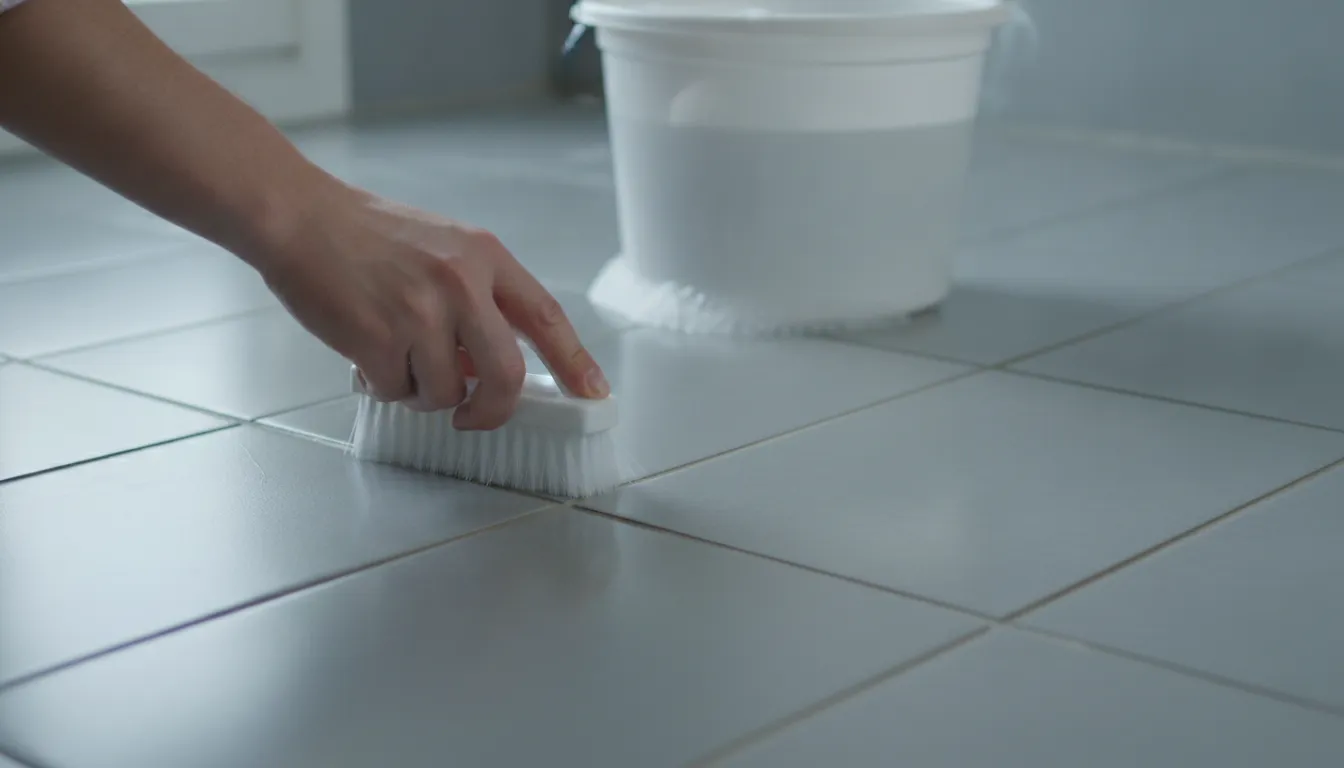
Grout looks dirty long before the tile does. The line is porous, so soil, soap, and spills sit in it while the tile face still looks fine. If you want to know how to clean grout without turning a dull line into a damaged one, start by naming the grout and the tile, then pick a method that matches both.
Request a tile and grout estimate
Many kitchen and bath floors in Huntingdon Valley, Southampton, and nearby Montgomery and Bucks County homes may use cement grout between ceramic or porcelain. That is the only case this guide treats as a homeowner job. Natural stone, epoxy grout, and grout that is already cracked or powdery need a different plan.
Know the Grout Before You Clean It
Cement grout is the common sanded or unsanded joint in older and many newer floors. It drinks stains because the cement body is full of tiny pores. A drop of water darkens it and then lightens as it dries. Epoxy grout is denser, often smoother, and does not darken the same way when it gets wet. Premixed grouts sit somewhere in between and can be damaged by the wrong cleaner.
The tile matters as much as the joint. Glazed ceramic and glazed porcelain shrug off a short contact with a mild cleaner. Marble, travertine, limestone, and slate do not tolerate acid or a hard pad. Acid etches those stones, and a scrub pad can dull the polished face. If you are not sure what you have, stop and test nothing stronger than a damp cloth.
Look at the line itself before you mix anything:
- Even gray or tan film usually means soil sitting in the pores.
- A dark line only in the kitchen traffic path often means grease and detergent.
- Pink, black, or green spots in a wet shower can be mildew on the surface, or growth in a joint that stays damp.
- Crumbling, pinholes, or grout that brushes out as powder is damage, not dirt.
TEC, a grout maker, tells owners to wipe spills quickly, use a pH-neutral cleaner for routine care, and rinse so cleaner does not sit in the joint. It also says not to use vinegar, bleach, ammonia, or lemon cleaners as an everyday habit, because acids and harsh chemicals break cement grout down over time. That guidance is the spine of a safe method. A deeper treatment is occasional, and only after a test spot dries clean. Everyday care should stay mild enough to repeat.
How to Clean Grout on Ceramic and Porcelain
Use this sequence only on cement grout between glazed ceramic or glazed porcelain. Skip it on natural stone, and skip it if a previous sealer's label says otherwise. Work a hidden corner first, wait until it dries, and only then do the rest of the floor.
Set up so you do not grind dirt back in
Sweep or vacuum the lines so loose grit is gone before any water hits the floor. Grit under a brush acts like sandpaper on the joint edge. Open a window if you will use peroxide later. Keep pets and kids off the wet floor until it is fully dry.
Have two buckets, one for the cleaning mix and one with clean rinse water. A soft grout brush or an old toothbrush is enough for this job. Skip steel wool and powdered cleanser, which cut into the joint.
Clean the everyday film first
- Mix a few drops of mild dish soap into warm water. That is a stand-in for the pH-neutral wash TEC recommends for routine care.
- Mop the tile, then run the soft brush along the joint with light pressure.
- Do not flood the floor, because extra water just carries soil deeper.
- Rinse with clean water twice.
- Dry with a towel so dirty water does not settle back into the pores.
Many lines lighten at this step alone. If the color comes back, stop there, because you do not need a stronger mix.
Spot-treat a line that is still dark
For cement grout that is still dingy after the soap wash, use a small amount of 3% hydrogen peroxide from the brown bottle. Pour a little into a cup, dip the brush, and work one line. Let it sit for about ten minutes, scrub gently, then rinse and dry. Peroxide can lighten surface soil and mildew staining on cement joints. It can also bleach colored grout, so the hidden-corner test is not optional.
Do not mix peroxide with vinegar, and do not mix it with bleach. Either combination can release an irritating gas in a small bathroom. Do not switch to straight bleach because a video said it whitens grout. Bleach can weaken cement joints, and it does not belong on a weekly cleaning list.
Leave these mixes for someone who has tested the surface
A baking-soda paste is a mild abrasive. It can help a small grease spot on cement grout, and it can also scratch a soft tile face if you bear down. Vinegar and water show up in a lot of hardware-store advice. Acid is a poor daily cleaner for cement grout, and it is the wrong cleaner entirely next to marble, travertine, limestone, or slate. If a sealer is already on the floor, follow that sealer's own cleaning note instead of improvising.
Match the Cleaner to the Soil
The right cleaner depends on what is in the joint, not on which bottle is under the sink. Use this as a stop-and-think chart, not as permission to try every row.
| What you see | Safer first step | Leave it alone when |
|---|---|---|
| Even gray film on cement grout between ceramic or porcelain. | Mild soap and warm water, a soft brush, then a full rinse and dry. | The tile is natural stone, or you do not know the grout type. |
| Grease darkening in a kitchen path. | The same soap wash, repeated, with very little water. | The line stays dark after two gentle washes. |
| Small mildew spots in a shower joint. | 3% peroxide on a test spot of cement grout only, then rinse. | Spots cover a large wet area, or the caulk is soft and black. |
| Hard-water crust or white mineral rings. | Stop. Acid cleaners that cut mineral also etch stone and can damage grout. | Always stop until a technician has identified the tile. |
| Colored grout that looks blotchy. | Soap and water only, after a hidden test. | You are about to use peroxide, bleach, or a whitening paste. |
| Cracked, missing, or powdery grout. | Do not scrub. Cleaning will not rebuild the joint. | The joint is already failing. |
People also ask whether hydrogen peroxide or vinegar is better, whether a pink cleaning paste works, whether a steam mop is safe, and whether Dawn on tile is fine. Peroxide is the gentler spot treatment of the two for cement grout, and only after a test. Vinegar is the one to retire for routine care. A popular paste is still an abrasive, so it can scratch. A steam mop forces heat and water into a porous joint and under loose tile edges. Diluted dish soap is fine as the everyday wash. A puddle of undiluted soap is how sticky film starts.
Shower Grout Needs a Different Habit
Floor grout in a kitchen gets dirty from shoes and cooking spills. Shower grout stays wet for hours after every use. Those are different problems, and the shower is where homeowners do the most harm by soaking the wall.
After the last shower, run the fan or crack a window, and squeegee the walls so the joints can dry. That single habit does more than a monthly hard scrub. For the joint, use the same mild soap wash, a soft brush, and a real rinse. Then dry the lines with a towel instead of leaving them to air dry. Standing cleaner in a shower joint is how residue and new soil bind together.
Pink or black specks on the surface of cement grout can respond to the peroxide spot treatment above. If the color is inside a soft, crumbling joint, or if caulk along the tub has pulled away, scrubbing will not fix the water path. A large damp area needs the moisture fixed first. Another bottle of cleaner will not solve a joint that stays wet. TEC's grout cleaning bulletin is the source for the mild-wash and no-acid habit in this guide. Read it before you try a stronger product.
Skip acid shower sprays as a weekly habit. They feel strong because they etch mineral film, and they also wear down cement joints and any stone threshold or niche. If the shower has marble or another stone accent, do not experiment on a visible wall. Ask for a look before you treat one corner and regret the rest of the stall.
When to Stop and How to Clean Grout Next Time
A safe clean has a stopping point. Past it, more scrubbing removes grout rather than soil.
- Confirm the tile is glazed ceramic or porcelain, not stone, and that the joint is hard cement grout.
- Dry-brush or vacuum the lines so you are not grinding grit.
- Wash with a few drops of dish soap in warm water and a soft brush.
- Rinse twice with clean water and dry the lines with a towel.
- If a line is still dark, test 3% peroxide in a hidden spot, wait for it to dry, and check the color.
- Treat only the spots that passed the test, rinse, and dry again.
- Wait a full day before you judge the result. If the line looks the same as before you started, the soil is deeper than a brush can reach, or the color is in the grout itself.
Call for an inspection instead of a third pass when the joint is cracked, hollow, or powdery. Do the same when black staining runs the length of a wet wall, when the tile is natural stone, or when a cleaner has already bleached colored grout. Professional cleaning can lift embedded soil that a household brush never reaches. It cannot rebuild missing grout. Badly stained or failing joints sometimes need replacement, and that is a separate decision from a cleaning visit.
Cahill's Carpet & Upholstery Cleaning inspects the surface first and matches the method to the material. The visit covers ceramic, porcelain, and natural stone in homes around Huntingdon Valley, Abington, Jenkintown, Willow Grove, Langhorne, and Newtown. An estimate is free and depends on the area, the soil, and the grout condition. There is no flat rate to quote from a photo alone.
If the lines come clean, keep the daily care simple and repeatable. A sealer is not a cleaner, and coating a soiled joint locks the soil in place, so any sealing decision belongs with the product maker or a separate trade after the floor is already clean. Cahill's visit is for cleaning, not for sealing. The tile and grout cleaning page is the right place to request a cleaning look.
Sweep grit off the floor, wipe spills the same day, and use a pH-neutral wash only when the tile actually needs it. Acidic drinks, wine, and tomato sauces can mark cement grout if they sit, which is why a quick wipe beats a strong cleaner later. Rinse the mop, wring it hard, and change the water as soon as it turns gray. A dirty mop is how a clean floor picks up a new film by the next morning.
If the lines stay dark after a careful wash, or the tile is stone, call Cahill's Carpet & Upholstery Cleaning at (215) 355-5388 or ask for an estimate. A technician will inspect the surface and tell you what cleaning can and cannot do.
Frequently Asked Questions
How do I clean grout without scratching the tile?
Use a soft brush, not a scouring pad, and do not use powdered cleanser on the face of the tile. Take loose grit up before you add any water. Press only hard enough to move the brush along the joint. If the tile face dulls in your test spot, stop immediately. That factory shine does not come back once a pad has cut it.
Is hydrogen peroxide safe on every grout?
No, it is not safe on every grout. A short test of 3% peroxide is reasonable on cement grout between glazed ceramic or porcelain. It can lighten colored grout, and it is the wrong experiment on natural stone or on a joint you cannot identify. Never mix it with vinegar or with bleach in the same bowl.
Can I use vinegar or a steam mop on grout?
Do not use vinegar as a regular grout cleaner. Grout makers warn that acids break cement joints down, and vinegar etches marble and other acid-sensitive stone. A steam mop pushes heat and moisture into the joint and under loose tile edges. Neither vinegar nor steam is the gentle option for a routine clean.
Why does grout look dirty again a week after I clean it?
The joint is porous, and leftover cleaner or rinse water gives new soil a place to stick. Rinse twice with clean water and dry the lines before anyone walks on them. If you used a lot of soap, the film itself is the dirt you are seeing. A light pH-neutral wash beats a sink full of heavy suds.
When should I stop and ask for a professional cleaning?
Stop when the test spot looks worse, when the grout is cracked or powdery, when staining covers a wet shower wall, or when the tile is natural stone. Request an estimate and describe the room, the tile, and what you have already tried. Cleaning has limits, and a look is cheaper than a damaged floor.