
How to Do Air Duct Cleaning at Home
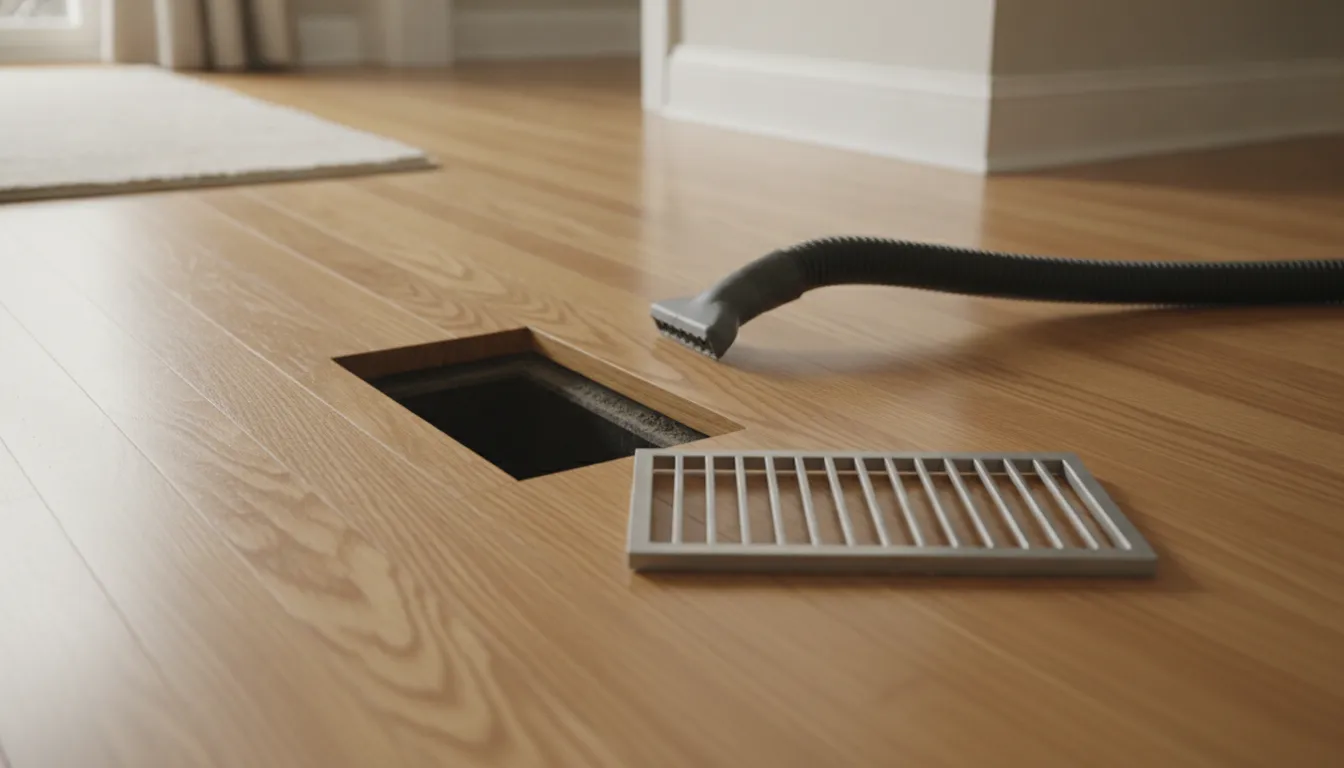
How to do air duct cleaning at home starts and stops at parts you can see. Wash the supply and return grilles, vacuum the short metal boot behind each one, and put in a fresh filter. That is useful upkeep. It is not a whole-system cleaning. Trunk lines, the blower, coils, and anything past the first bend need a negative-pressure vacuum and tools made for ductwork.
Schedule a duct inspection if dust is blowing from a register, or if you see mold or signs of pests.
What Does How to Do Air Duct Cleaning Cover?
Homeowners searching this phrase usually want a Saturday project. The useful version is small. You can clean the grille and the first few inches of the register boot. You cannot scrub every branch and then call the system clean.
The U.S. Environmental Protection Agency describes duct cleaning as work on the whole forced-air system. That includes supply and return ducts, registers, the heat exchanger, coils, the drain pan, the fan, and the air-handler housing.
The EPA's air duct cleaning guide also says a light film of household dust in ducts has not been shown to be a health risk. EPA does not recommend cleaning ducts on a routine schedule. It says to consider cleaning when there is substantial visible mold, vermin, or ducts so clogged that particles come out of the supply registers.
A household vacuum does not meet that scope. It also cannot hold the system under continuous negative pressure, which is what keeps loosened dust from blowing back into rooms. If the goal is a full cleaning, use the duct cleaning service and ask what accessible parts the visit will include.
How to Do Air Duct Cleaning on Reachable Vents
Turn the system off at the thermostat before you open anything. If the air handler has a service switch, switch that off too. You do not want the blower to start while a cover is off.
Lay down a towel. Floor registers sit in traffic, and the dust behind them is often grit from shoes as much as duct dirt. Keep a bowl for the screws so they do not roll under the fridge.
Work one vent at a time, and only on grilles you can remove with a screwdriver. Skip any cover that is painted shut, bent, or screwed into a spot you cannot reach without standing on a ladder and leaning.
- Lift the grille off and note which side faced the room. Wash it in warm water with a little dish soap, rinse it, and let it dry fully before it goes back.
- Vacuum only the visible metal boot, using a brush attachment. Stop at the first bend. If the hose will not sit flat, do not force it.
- Wipe the rim where the grille sits. Leave the duct walls alone if they are lined with insulation. Fiberglass lining tears easily and should not be scrubbed.
- Put the dry grille back in the same direction. Then move to the next vent.
- Open the filter slot, slide the old filter out, and vacuum loose dust in that slot only. Match the arrow and size on the new filter. Do not open the blower compartment.
Return grilles collect more lint than supply grilles, so they are worth doing first. A return is where the system pulls room air in. Pet hair and dust gather on that face before they ever reach a trunk line.
If a boot is full of drywall dust, pet hair packed into a mat, or debris you cannot identify, stop on that vent. Bag what you already vacuumed and leave the rest for an inspection. Do not keep fishing with a longer wand just because the hose almost fits.
Ceiling vents are a different reach problem. If you cannot hold the grille with one hand while the screws come out, leave it. A dropped metal cover will mark a floor, and a loose screw inside a boot becomes a rattle the next time the blower starts.
Do not push a brush on a drill into the branch. Do not aim a leaf blower or compressed air down a duct. Both move dust into the next room and deeper into the system. Do not spray disinfectant, bleach, or a store biocide into the opening.
The EPA says chemical treatments in ducts are not a substitute for removing visible dust. They are not a do-it-yourself step. If a company later suggests a biocide, ask them to show the contamination first and to name the product.
When Should You Stop DIY Air Duct Cleaning?
Some clues mean the job is no longer a vent wipe. Use this split before you buy an extra hose or a duct brush for a Saturday project.
| What you see | Safe at home | Stop and call |
|---|---|---|
| Dust on the grille face. | Wash the grille and vacuum the boot. | Not unless dust returns the same day. |
| Lint in the filter slot. | Replace the filter and vacuum the slot. | Not for ordinary lint. |
| Debris past the first bend. | Leave that debris in place. | Yes, a household vacuum cannot collect it. |
| Musty odor or visible growth. | Do not scrub or spray the spot. | Yes, ask to see the growth first. |
| Droppings, nesting, or insects. | Do not vacuum them through the house. | Yes, the cause has to be fixed first. |
| Dust puffing from a register. | Turn the system off and leave it. | Yes, particles are leaving the registers. |
| Renovation dust in the boots. | Wipe the grille and stop there. | Yes, construction dust often reached the trunk. |
The National Air Duct Cleaners Association says the whole HVAC system should be cleaned, not a few branches. Its proper cleaning methods call for agitation tools plus continuous negative pressure, and access through existing openings when possible. Cutting a hole in ductwork, then closing it, is a craft skill. A bad patch leaks air and can rattle.
NADCA also lists coils, the drain pan, the blower, the heat exchanger, and the plenum as part of a complete cleaning. Cleaning one supply run and leaving a dirty return can put dust right back into the rooms you just wiped.
Cahill's inspects coils, drain pans, and filters and recommends next steps. Full coil cleaning or a new filter is not automatically part of every visit. Confirm the scope when you ask for an estimate, and ask which openings the crew expects to use.
Mold and pests are stop points even if the grille looks easy to wash. The EPA notes that many sections cannot be seen from a register. A spot that looks like mold may need a lab check before anyone calls it mold.
If insulation inside a duct is wet, cleaning it in place does not fix it. The moisture source has to be corrected or growth can return. That judgment belongs in an on-site inspection, not a phone guess from a photo of one vent.
Renovation dust is its own stop. Sanding, drywall, and demolition throw fine particles into any return that was left open. Wiping the grille hides the clue without clearing the trunk. An inspection can tell you whether the debris stayed in the boot or traveled.
How Can You Keep Dust Out of Air Ducts?
After the grilles are clean, the useful habit is keeping new dust out. None of this replaces a professional cleaning when the table above says to stop.
Check the filter every month and change it when it looks gray and packed. A filter left in too long can bow and let air sneak around the frame. Write the date on the cardboard edge so the next check is obvious.
Homes in Huntingdon Valley, Southampton, Jenkintown, and Abington run the system hard in humid summers and in the heating months. Nearby Montgomery and Bucks County towns do the same. One season can load a filter faster than the last, especially with pets or a recent painting project.
Vacuum return grilles when you vacuum the room. Keep furniture and drapes from blocking a return. If a return is behind a door, leave that door cracked while the system runs. A blocked return makes the blower pull harder and can draw dust from places you just cleaned.
Fix leaks you can see around a boot with the tape made for ducts, not cloth duct tape, which dries out and falls off. Press the tape onto clean metal. Dusty metal will not hold it, and a loose flap becomes another rattle.
Watch for water near the air handler. A clogged condensate line or a drain pan that overflows can wet nearby ductwork. Shut the cooling off if you find standing water, and get that leak looked at before anyone cleans ducts.
Cleaning a wet system spreads the moisture problem instead of ending it. A musty smell that gets stronger when the fan starts is a reason to book an inspection, not a reason to pour cleaner into a floor vent.
Dryer exhaust is a different pipe. Lint in a dryer vent is a fire concern and is not cleaned with the same steps as HVAC ducts. Use the dryer vent cleaning page for that scope, and do not shove a duct brush into a dryer line while you are doing floor vents.
What Does Professional Air Duct Cleaning Include?
A proper visit starts with an inspection of access, contamination, and any damage. The technician should be able to show you why cleaning is justified. If the ducts look lightly dusty and nothing is blowing from the registers, you may not need the service that day.
Older houses in this area often mix metal trunk lines with flexible runs added during a renovation. Flexible duct crushes if someone stands on it or yanks a brush through it. That is another reason to keep household tools out of anything you cannot see in a straight line.
When cleaning is justified, the crew seals openings, puts the system under negative pressure, and loosens debris so the vacuum carries it out of the house. Registers and grilles are cleaned one by one so dust does not sit in a cover and blow back later. Access holes, if any are required, are cut and closed as part of the work.
You should not have to leave the house for a normal visit, but stay out of the rooms being sealed. Pets should be in another room so they are not near hoses or open boots. Ask the crew where they will stage the vacuum before they start, especially in a finished basement with a low ceiling.
Sanitizing is not automatic. It is considered only after the visible debris is removed, and only when the system condition calls for it. Ask what product would be used and why. Do not accept a health promise. The EPA says duct cleaning has not been shown to prevent health problems, and that dirty ducts are only one source of particles in a house.
Cooking, pets, outdoor air, and ordinary foot traffic can matter more than a light film inside a duct. Cleaning the grilles still helps the house look and feel kept up. It just does not replace those other sources.
Price depends on the house, the duct layout, how dirty the system is, and any extra work. Cahill's does not publish a flat duct-cleaning rate. The estimate is free and comes after someone looks at the system. For a business system, start with commercial cleaning so the scope matches the building rather than a single-family home.
If you want a frequency rule of thumb, read how often ducts should be cleaned. There is no single interval for every home. Condition, pets, and recent construction matter more than a calendar date, and an inspection is what decides the next visit.
Call (215) 355-5388 to request an estimate. Office hours are Monday through Saturday, 8:00 AM to 8:00 PM. This is not a 24-hour duct-cleaning line.
Frequently Asked Questions
Can I clean air ducts myself with a shop vacuum?
You can vacuum the visible register boot and wash the grille. A shop vacuum does not reach trunk lines, and it does not keep the rest of the house under negative pressure. Stop at the first bend.
Should I use a leaf blower or a drill brush in the ducts?
No. A blower pushes dust into other rooms. A drill brush can tear internal lining or punch a hole in lightweight duct. Those tools are not a home method.
Does washing the vents improve indoor air?
It removes dust sitting on the grille and in the boot. It does not mean the whole system is clean, and it is not an allergen treatment. If someone in the home is ill, talk with a doctor rather than treating duct cleaning as the cause.
When should I skip DIY and book an inspection?
Book an inspection for visible growth, a musty smell from the system, pests, renovation dust inside the ducts, or particles blowing out of supply registers. Also call if you would have to cut an access hole to go further.
Is the dryer vent part of air duct cleaning?
No. The dryer exhaust is a separate line. Cleaning floor and ceiling HVAC registers does not clear dryer lint, and the two services should be quoted on their own.