

Carpet replacement is one of the most expensive home improvement projects a Philadelphia-area homeowner faces. Depending on the square footage and material, replacing carpet in a typical Bucks County or Montgomery County home can run several thousand dollars — and most homeowners end up replacing carpet well before its potential lifespan because of damage that was entirely preventable.
I’ve been in the carpet cleaning business since 1980. In that time, I’ve walked through thousands of homes throughout Philadelphia, Bucks County, and Montgomery County and seen firsthand what determines whether a carpet lasts 8 years or 20+ years. The difference almost never comes down to carpet quality alone. It comes down to a handful of consistent habits — and one or two critical mistakes that cut carpet life in half.
We have customers who have been with Cahill’s for 35 years. One shared this recently: “My current home, I just recently replaced my carpets after 20 years and they actually still looked great — definitely a credit to Cahill for doing a great job keeping them clean and in great condition.” Twenty years. That’s not luck. That’s the result of doing a few things right, consistently.
Here’s what four and a half decades of professional carpet cleaning has taught us about making carpet last.
What You’ll Learn
- The single biggest cause of premature carpet wear — and how to stop it
- Why the way you vacuum matters as much as how often you vacuum
- The spill response that saves carpet fibers versus the one that destroys them
- What professional cleaning does that home maintenance cannot replicate
- The carpet care schedule that our longest-tenured customers follow
- Frequently asked questions from Philadelphia, Bucks County, and Montgomery County homeowners
The Problem: Most Carpet Dies Early — and It Doesn’t Have To
The average carpet lifespan in American homes is 8–10 years. Quality carpet, properly maintained, should last 15–20 years or more. That gap — up to a decade of additional life — represents thousands of dollars in deferred replacement cost for most families.
The signs of a carpet aging faster than it should:
- Matted, flat pile in traffic lanes that no longer recovers even after vacuuming
- Permanent-looking gray or brown discoloration in high-use areas despite regular cleaning
- Frayed or broken fiber tips visible in entryways, hallways, and in front of frequently used seating
- Stains that were “cleaned” but keep reappearing, sometimes darker than before
- A dull, dingy overall appearance that makes a room look tired regardless of how recently the carpet was vacuumed
- Persistent odor that surface treatments temporarily mask but never eliminate
Every one of these outcomes is either preventable or significantly delayable with the right habits. In our 45+ years serving Bucks County, Montgomery County, and Philadelphia families, we’ve identified the patterns that separate carpets that last from carpets that don’t.
What Actually Kills Carpet Prematurely: The Real Causes
After cleaning tens of thousands of carpets throughout the Philadelphia area, here’s what we’ve consistently found shortens carpet life far more than foot traffic or age alone.
1. Dry Soil Left to Accumulate Between Cleanings
This is the leading cause of premature carpet fiber damage — and it’s almost entirely invisible until the damage is done. Fine dry soil particles — sand, grit, dust, and microscopic debris tracked in from outside — work their way down through the pile to the base of the carpet fibers and the backing. There, foot traffic causes those particles to shift and grind against the fiber walls with every step.
Think of it as an internal abrasive working on your carpet from the bottom up. Over months and years, this grinding cuts into fiber walls, weakens the structure, and permanently damages the pile’s ability to stand upright. The matted, flat-looking traffic lanes you see in heavily used carpet are largely a result of this sub-surface abrasion — not just compression.
Vacuuming removes surface soil but cannot extract embedded particles from the fiber base. This is why regular professional cleaning — which uses high-pressure hot water extraction to flush the carpet backing — is not optional maintenance. It’s the only way to remove the abrasive material before it does permanent damage.
2. Delayed Spill Response and Improper Spot Cleaning
In our 45+ years, we’ve removed thousands of stains from Bucks County and Montgomery County homes. The ones we can’t fully remove share a common history: they were either left too long before treatment, or they were treated with the wrong product.
Liquid spills that are blotted immediately — within the first minute or two — before they wick into the carpet backing are almost always fully removable. The same spill left for an hour, or rubbed rather than blotted, may be permanent. Rubbing spreads the spill laterally and forces it deeper into the fiber structure simultaneously. It’s the single most common spill response mistake we see.
Consumer stain removers present a different problem. Many contain soap-based surfactants that leave a sticky residue in carpet fibers. That residue attracts and holds new soil faster than the surrounding carpet, creating the familiar “stain that keeps coming back” effect — which is actually a re-soiling pattern, not a recurring stain. Over multiple spot-cleaning cycles, treated areas accumulate layers of sticky residue that progressively darken and become harder to reverse.
3. Waiting Too Long Between Professional Cleanings
The industry standard recommendation is professional cleaning every 12–18 months. In our experience, many homeowners stretch this to every two to three years — or clean only when the carpet “looks dirty.” By the time a carpet looks dirty, it has already accumulated significant sub-surface contamination and abrasive soil buildup. You’re cleaning reactively rather than protectively.
The relationship between cleaning interval and carpet lifespan is not linear — it’s compounding. A carpet cleaned annually retains structural integrity significantly longer than one cleaned every three years, because the abrasive damage accumulates and becomes irreversible faster when left unchecked. This is the math behind our customers whose carpets last 20+ years: they clean regularly, before damage compounds.
4. Inadequate or Incorrect Vacuuming
Vacuuming frequency matters, but technique matters just as much. Several common vacuuming mistakes accelerate carpet wear rather than preventing it:
- Moving too fast: a single slow pass extracts significantly more soil than three rapid passes. The vacuum’s suction needs dwell time to lift embedded particles.
- Vacuuming only in one direction: cross-directional passes lift pile and extract more embedded soil than unidirectional vacuuming.
- Skipping edges and corners: soil accumulates heavily along baseboards and in corners where foot traffic deposits it. These areas are often left dirty despite regular vacuuming of open areas.
- Using the wrong height setting: a vacuum set too low compresses and abrades pile; too high and suction never reaches the fiber base.
- Vacuuming over heavily soiled areas without pre-loosening the soil: for high-traffic areas, a dry pass with the vacuum off (or a dry carpet rake) loosens compacted soil before vacuuming improves extraction.
What 48 Years Taught Us: The Carpet Care Habits That Actually Work
The homeowners with the longest-lasting carpets we’ve served throughout Philadelphia, Bucks County, and Montgomery County share a consistent set of habits. None of them are complicated. All of them are consistent.
Habit 1: Vacuum Frequently and Correctly
Vacuum high-traffic areas two to three times per week. Lower-traffic areas once a week. Use slow, overlapping passes with cross-directional strokes in main traffic lanes. Check your vacuum’s height setting for your specific carpet pile height, and clean or replace filters regularly to maintain consistent suction power.
For homes with pets, vacuum high-contact areas daily if possible. Pet hair that sits and gets walked into the fiber base requires professional extraction to remove fully — daily vacuuming keeps the surface load manageable and slows the rate at which hair embeds.
Habit 2: Respond to Spills Within the First Two Minutes
The two-minute window is not an exaggeration. Liquid spills begin wicking into carpet backing almost immediately on most residential carpet. Here’s the correct response:
- Blot immediately with a clean white cloth — never rub. Press firmly and lift straight up, working from the outer edge of the spill inward.
- Apply cold water sparingly to dilute the remaining residue, then blot again.
- Use a pH-neutral carpet spotter for residual staining — avoid soap-based consumer products.
- Place a stack of paper towels over the area with a heavy book on top and leave for 30 minutes to wick remaining moisture upward.
- If the stain persists after this process, call Cahill’s at (215) 355-5388. Do not continue applying product — you risk creating a harder-to-remove residue layer.
Habit 3: Use Entry Mats — Inside and Outside Every Entrance
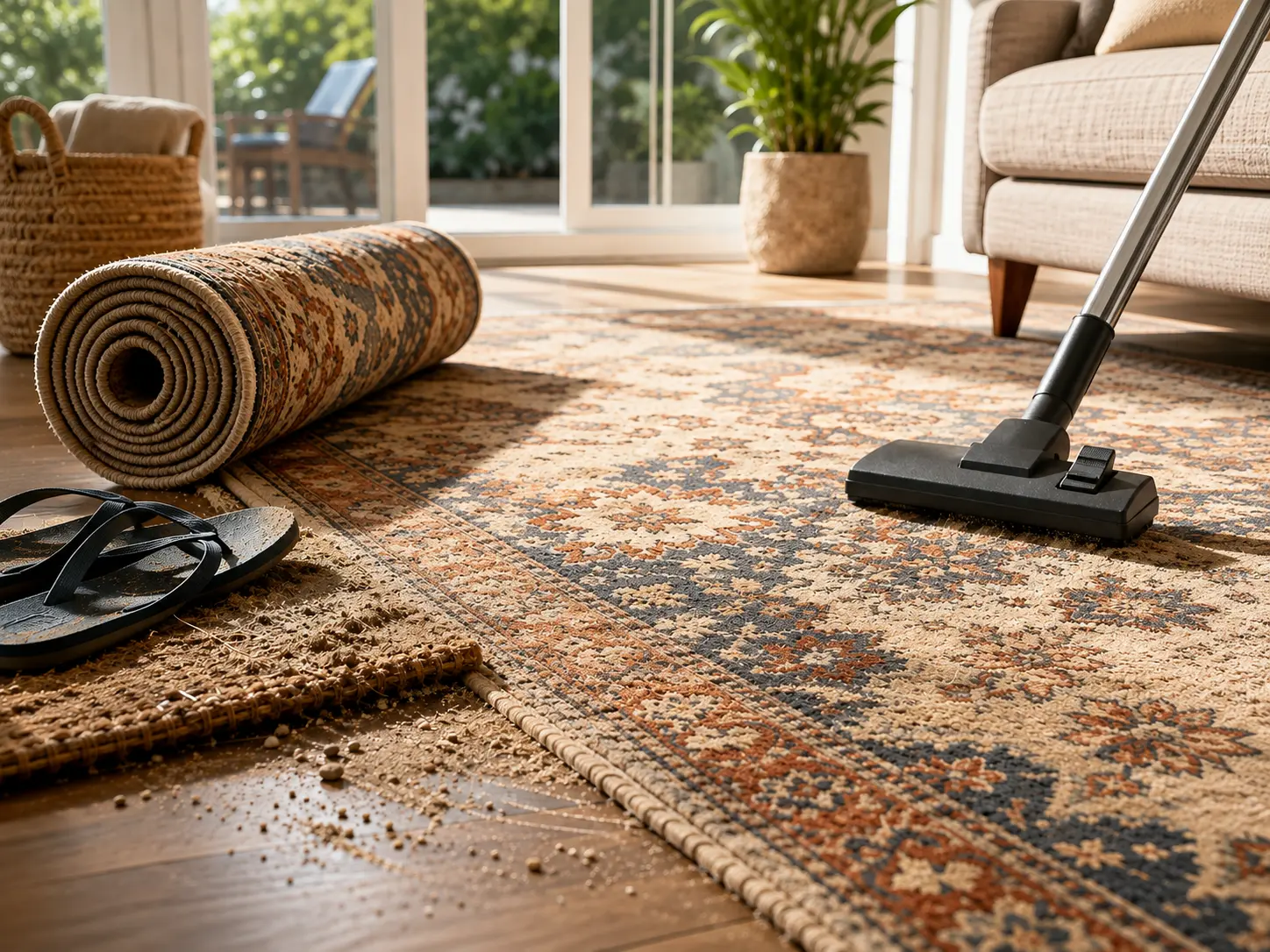
Studies consistently show that 80% of the soil in a home enters on the soles of shoes. An exterior mat that scrapes loose soil from shoes before entry, combined with an interior mat that captures remaining particles and moisture, can reduce the dry soil load reaching your carpet by a significant margin.
For Bucks County and Montgomery County homes, this is especially important during the fall and winter months when road salt, sand, and mud are tracked in with every trip through the door. The soil accumulation difference between homes with and without quality entry matting is visible in the carpet condition — we see it consistently throughout our service area.
Habit 4: Professional Cleaning Every 12–18 Months — Not When It “Looks Dirty”
This is the non-negotiable in carpet longevity. Here is the schedule our longest-tenured customers follow:
- Homes without pets, light to moderate traffic: professional cleaning every 12–18 months
- Homes with one or two pets: every 9–12 months
- Homes with multiple pets, young children, or allergy sufferers: every 6–9 months
- High-traffic commercial areas: every 3–6 months depending on use
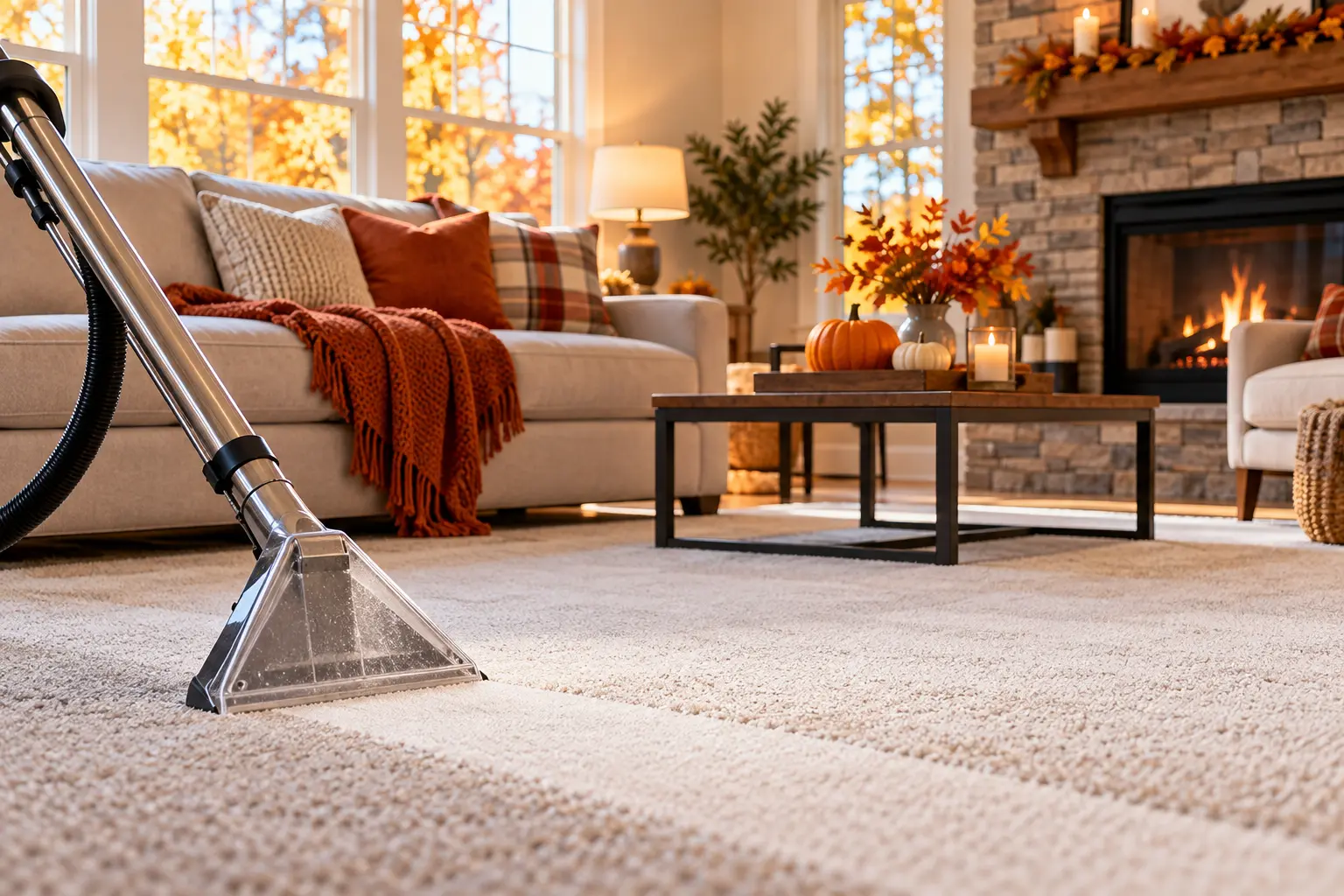
Professional hot water extraction by our IICRC-certified technicians does what no home maintenance routine can: it flushes the carpet backing, extracts embedded dry soil and biological contamination, removes residue buildup, and restores pile structure. It resets the clock on abrasive damage before that damage becomes irreversible.
Habit 5: Rearrange Furniture Periodically and Use Protective Pads
Traffic lanes form where people walk — and those lanes are determined largely by furniture placement. Shifting furniture arrangement every year or two changes where traffic concentrates, distributing wear more evenly across the carpet surface. It also allows pile that has been compressed under furniture legs to recover.
Heavy furniture without protective pads creates permanent indentations in carpet pile over time. Furniture coasters or felt pads distribute weight over a larger surface area and allow air circulation at the carpet surface, reducing compression damage. Our technicians always place protective blocks and tabs under furniture after professional cleaning as a standard part of every Cahill’s service visit.
Why Philadelphia-Area Homeowners Have Trusted Cahill’s Since 1980
When Bill Cahill started this company with a single truck 45+ years ago, the goal was straightforward: deliver professional results that earn long-term customer relationships. Today, the majority of our business still comes from referrals and repeat customers — many of whom have been with us for 20, 25, even 35 years.
Those long-term relationships are the best evidence of what consistent professional cleaning does for carpet longevity. We’ve watched their carpet age — and age well.
- IICRC-certified technicians with an average of 11 years experience each
- Truck-mounted hot water extraction equipment delivering professional-grade pressure and extraction
- Furniture protection with blocks and tabs included with every cleaning — no extra charge
- Complimentary bottle of spot remover for every customer
- 6-truck fleet covering all of Bucks County, Montgomery County, and Philadelphia
- 2023 Community’s Choice Award Winner, Nextdoor Neighborhood Favorite (multiple years)
- 5-star ratings on Google, Yelp, Angi, and Nextdoor
- BBB A+ rated and accredited since 2011
- 24/7 answering service for emergencies
Frequently Asked Questions
How long should carpet realistically last?
Quality residential carpet is manufactured to last 15–20 years or more under normal use with proper maintenance. The national average is 8–10 years, largely because most homeowners don’t follow a consistent professional cleaning schedule. We have Bucks County and Montgomery County customers whose carpets have lasted 20–25 years — a direct result of regular professional cleaning combined with proper home maintenance.
How often should I have my carpet professionally cleaned?
Most Philadelphia-area households benefit from professional cleaning every 12–18 months. Homes with pets should clean every 9–12 months; households with multiple pets, young children, or allergy sufferers should consider every 6–9 months. The key principle: clean before the carpet looks dirty. By the time it looks dirty, sub-surface abrasive damage is already accumulating.
Why do carpet stains keep coming back after I clean them?
Recurring stains are almost always one of two things: wicking or residue re-soiling. Wicking happens when a spill soaked into the carpet backing and wasn’t fully extracted — as the carpet dries, the residual contaminant migrates back up the fiber to the surface. Residue re-soiling happens when a soap-based cleaner left a sticky film that attracts new soil. Both require professional hot water extraction to fully resolve, not additional spot treatment.
Does professional cleaning shorten carpet life?
No — this is a persistent myth. Professional hot water extraction using IICRC-standard methods removes the embedded dry soil that is the primary cause of fiber abrasion and premature wear. Properly performed professional cleaning — including adequate extraction to prevent over-wetting — extends carpet life significantly. The damage concern is legitimate for over-wetting without proper extraction, which is why professional equipment and trained technicians matter.
What’s the best thing I can do right now to extend my carpet’s life?
If your carpet hasn’t been professionally cleaned in more than 18 months, schedule a cleaning now — before the embedded dry soil accumulation has more time to abrade fibers. Pair that with quality entry mats at every entrance and a consistent vacuuming schedule. Those three habits — entry mats, regular vacuuming, and annual professional cleaning — account for the majority of the difference between carpets that last a decade and carpets that last two.
Is steam cleaning really using steam?
“Steam cleaning” is an industry term for hot water extraction — not literal steam. Our truck-mounted system heats water to the appropriate temperature for your carpet type, injects it under pressure into the carpet fibers, and simultaneously extracts it along with the dislodged soil and contamination. The process removes approximately 95% of the moisture immediately, which is why professionally cleaned carpets typically dry in 6–12 hours rather than remaining wet for days.
How much does professional carpet cleaning cost in Bucks County?
Cost varies based on square footage, number of rooms, carpet condition, and whether additional treatments such as pet odor removal or protector application are needed. Cahill’s provides free estimates for most jobs over the phone at (215) 355-5388. When weighed against the cost of carpet replacement, professional cleaning on an annual schedule is one of the highest-return maintenance investments a homeowner can make.
Do you serve all of Bucks County and Montgomery County?
Yes. Cahill’s 6-truck fleet covers all of Bucks County — including Doylestown, Warminster, Newtown, Richboro, Southampton, Langhorne, Yardley, and Holland — and all of Montgomery County, including Jenkintown, Abington, Willow Grove, Glenside, Horsham, Ambler, Fort Washington, Lansdale, and Hatboro, plus all Philadelphia neighborhoods and parts of New Jersey. Call (215) 355-5388 to confirm service to your location.
Next Steps: Start the Habits That Keep Carpet Lasting
The difference between carpet that lasts 10 years and carpet that lasts 20 comes down to a few consistent habits — and one professional cleaning visit per year that resets the clock on embedded damage. Here’s where to start:
- If it’s been more than 18 months since your last professional cleaning, call Cahill’s at (215) 355-5388 to schedule — free estimates available for most jobs over the phone
- Check your entry mats: exterior mat at every door for scraping, interior mat for final capture — the highest-impact low-cost investment in carpet longevity
- Review your vacuuming technique: slow passes, cross-directional strokes in traffic lanes, consistent frequency
- For spills, keep a pH-neutral spotter accessible and respond within the first two minutes — blot, never rub
- Mark your calendar: annual professional cleaning is a maintenance appointment, not an emergency response
Cahill’s Carpet & Upholstery Cleaning | (215) 355-5388 | cahillscarpetcleaning.com
Serving Philadelphia, Bucks County, and Montgomery County since 1980. Trusted Since 1980 — Family-Owned Excellence.
About the Author
Bill Cahill founded Cahill’s Carpet & Upholstery Cleaning in 1980 with a single truck and a commitment to professional service. Over 45+ years later, he leads a team of IICRC-certified technicians — averaging 11 years experience each — serving Philadelphia, Bucks County, and Montgomery County. Cahill’s was recognized as the 2023 Community’s Choice Award Winner and maintains 5-star ratings across Google, Yelp, Angi, and Nextdoor.