
Why Professional Restoration Is Crucial for Water Damage
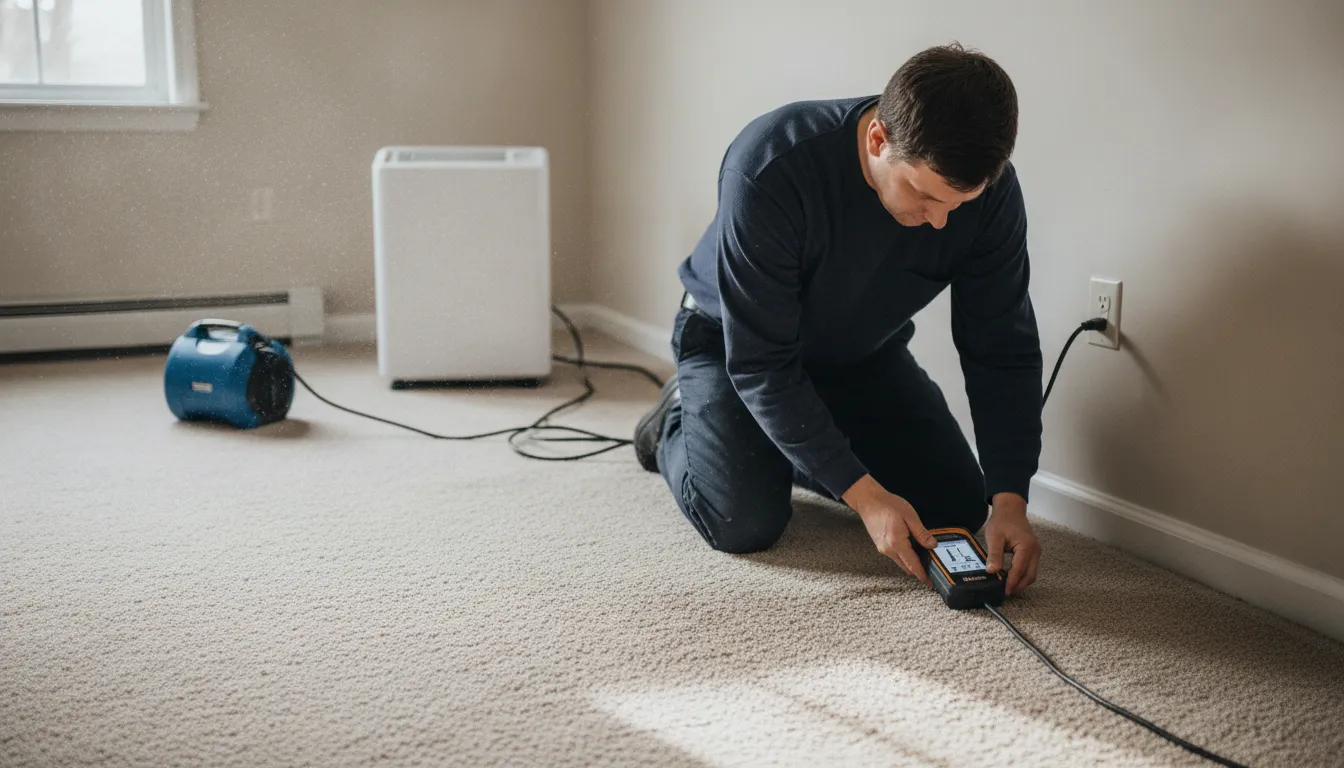
A wet carpet can look manageable after a pipe leak or a storm. Towels pull up the puddle, a fan moves the air, and the room smells better by evening. That surface check is why professional restoration is crucial for water damage. Moisture left in padding, subfloor, and wall cavities keeps working after the room looks dry. Homeowners in Huntingdon Valley, Southampton, Jenkintown, Abington, and nearby Bucks and Montgomery County towns often find the hard part is not the first cleanup. It is knowing what is still wet, drying it in a controlled way, and recording what was found.
Request a water damage restoration estimate
Cahill's Carpet & Upholstery Cleaning handles water-damage restoration as an emergency service, separate from routine carpet or upholstery cleaning. The EPA's brief guide to mold and moisture says mold can grow on damp materials such as wood, drywall, carpet, and furniture. Drying water-damaged areas within 24 to 48 hours is an important part of moisture control. That window is a reason to act. It is not a promise that every home will avoid mold. Scope, materials, and how long the water sat all change the job.
Why professional restoration is crucial for water damage after the puddle is gone
Standing water is the part you can see. The damage that is harder to judge sits under carpet, behind baseboards, and inside the cushion or pad. A shop vacuum and household fans can improve the room you are standing in. They do not map hidden moisture. They also do not tell you whether the floor assembly is still holding water a day later.
Floodwater and a clean supply-line leak are not the same job. The EPA treats large flood cleanup differently from a pipe leak or rainwater intrusion. Floodwater can carry bacteria, chemicals, and other hazards, and it usually affects more of the house. A burst supply line in a Huntingdon Valley living room is still urgent. The materials, the safety steps, and what can be saved differ from a basement that took in storm water. Guessing which category you are in is how a small leak turns into a wider repair.
Professional restoration matters because the work is a sequence, not a single machine rental. Someone has to find the wet area, remove the water that can be removed, dry what should stay, and write down what was wet. Each of those steps is difficult to finish well without equipment most homes do not keep on hand.
A towel test feels decisive because the carpet face changes color as it dries. That color shift does not reach the pad, the tack strip, or the subfloor seam. In a split-level in Willow Grove or a ranch in Langhorne, water follows the lowest joint, not the outline of the puddle you photographed. This is why professional restoration is crucial for water damage even when the room looks acceptable the next morning.
What a moisture assessment has to find
The first useful step is not "start drying everything." It is finding where the water went. Carpet face can feel damp while the pad underneath is saturated. Vinyl or tile can look fine while the subfloor beneath is wet. Drywall can wick water above the visible line, especially on an exterior wall that already runs cool in a Pennsylvania winter.
A handheld moisture meter reads relative moisture in materials instead of relying on touch. Pin meters and pinless meters answer different questions, so a single reading on the carpet face is not a map of the room. Thermal imaging can show temperature differences that suggest wet insulation or a wet wall cavity. A cool spot still needs a moisture reading before anyone opens a wall. Hygrometers track the air so the drying setup can be adjusted instead of left running on a guess.
That assessment is also how the job stays scoped. A leak under a sink may stay in one cabinet and a short run of flooring. A washing-machine overflow in Abington or Willow Grove may reach the hallway, the pad, and the bottom of the drywall. Writing down those boundaries before demolition or heavy drying starts keeps the work matched to the loss. Cahill's restoration work begins with that inspection, then an estimate, rather than a one-size cleanup.
Hidden wet spots are common at the edges people skip. Toe-kicks under cabinets, the back of a closet that shares a wet wall, and the transition between carpet and hard floor all hold water after the open floor feels better. A meter reading at the middle of the room, taken once, does not clear those edges. The assessment has to walk the perimeter and the floor below, when there is one.
Older homes around Jenkintown and Huntingdon Valley add another variable. Plaster over wood lath does not show a waterline the way new drywall does. A finished basement with layered flooring can hide a wet subfloor under vinyl that looks untouched. None of that means every wall gets opened. It means the reading comes before the demolition, so the opened area matches the wet area.
Why professional restoration is crucial for water damage extraction and drying
Once the wet area is mapped, extraction and drying are the steps most people try to improvise. They are also the steps where household tools run out. The goal is to remove free water, then dry the materials that can be saved, while watching the readings instead of the clock.
- Stop the source and make the area safe. Shut off the supply if you can do it without stepping into standing water or an unsafe electrical area. Fuel-powered generators stay outside, well away from the building, because they produce carbon monoxide. Do not mix cleaning products.
- Remove free water you can reach. Truck-mounted extractors, portable extractors, and pumps pull water out of carpet and exposed floors faster than towels. Padding that stays soaked often has to come up so the subfloor can dry. What gets lifted depends on the material and how long it was wet.
- Read moisture before you decide what stays. Meters check carpet, pad, subfloor, and the bottom of the drywall. A dry surface with a wet core is still a wet assembly. Those readings decide whether to lift carpet, remove baseboard, or open a small section of wall.
- Set air movers and dehumidifiers to the room, not the calendar. Air movers push air across wet surfaces. Dehumidifiers pull moisture out of that air so it does not just move to another wall. Placement follows the moisture map. A single box fan in a doorway does not replace that layout. There is no fixed number of days that fits every house.
- Recheck and record until the materials are actually dry. Daily readings show whether the setup is working. If a closet or a toe-kick stays high, the equipment moves. Drying is finished when the readings say so, not when the carpet feels better underfoot.
Renting one dehumidifier for the weekend is a weak substitute. You still need the moisture map, enough airflow for the size of the loss, and a way to know the pad and subfloor caught up with the carpet face. The same limit applies to "it smells fine now." Odor is not a moisture reading.
Equipment size has to match the space. A small dehumidifier in a closed bedroom may help after a limited overflow. The same unit in an open basement with wet pad still down mostly reheats damp air. Air movers aimed at one wet wall do little for a soaked closet around the corner. Placement is the work, not the brand name on the machine. Cahill's sets that layout after the inspection, then adjusts it when the next set of readings says a spot is lagging.
Extraction also has a material limit. Berber and plush carpet release water differently. A wool area rug that can be lifted is a different decision from wall-to-wall carpet glued to a pad. Upholstery that was splashed may be cleanable in place. A cushion that soaked up dirty water may not. Those calls belong in the estimate, after someone has seen the piece, not in a blanket rule for every home.
What household tools miss compared with a restoration setup
People ask whether they can bridge the gap with what is already in the house. Sometimes they can limit the spread. They rarely can finish the sequence. The difference is measurement and capacity, not effort.
| Step. | What a household setup can do. | What is hard without restoration equipment. |
|---|---|---|
| Find the wet area. | Look, touch, and smell the open floor. | Meter readings through pad, subfloor, and the base of the wall. |
| Remove free water. | Towels and a wet/dry vacuum on the surface. | Extraction that reaches the pad, plus pumps when water is deep. |
| Dry the assembly. | A box fan and an open window. | Air movers and dehumidifiers placed to the moisture map. |
| Know when it is dry. | The carpet feels better underfoot. | Repeat readings until the hidden layers come down. |
| Record the loss. | A few phone photos of the puddle. | Dated notes of rooms, materials, readings, and equipment placed. |
The table is a boundary, not a rule that every leak needs every machine. A cup of water on a sealed hard floor is not a restoration project. A supply line that ran for hours into carpet and down a wall usually is. If you are unsure which one you have, the inspection is the cheaper unknown to resolve. The water damage restoration page describes the service itself. This article stays on why the steps are difficult to finish alone.
Documentation is part of the repair, not paperwork after it
Photos of the puddle help. They do not show a moisture gradient in the subfloor or which rooms were included in drying. Insurers and property managers usually want a record of the source, the affected materials, the readings, and what was removed or cleaned. That record is hard to rebuild from memory a week later.
Useful notes stay factual. They name the room, the material, the reading, and the date. They do not promise that mold will not appear, that every stain will leave, or that a crew reaches the house in a set number of minutes. Water-damage calls are the emergency line at Cahill's. Routine carpet, rug, and upholstery appointments are not an around-the-clock service. An emergency call is still an inspection and an estimate, not a booked arrival time.
A simple log is enough if it is specific. "Living room wet" is a weak note. A better one names the north wall, the carpet and pad two feet out, damp drywall at the base, and the morning after the supply line failed. That note is what an adjuster or a property manager can compare with the drying record. If a closet was added on day two because the readings stayed high, that belongs in the log too.
If you are comparing who should keep that record, the hiring questions belong in a separate conversation. Scope, drying method, and how a company writes down the loss are selection issues. This page stays on why those steps are difficult without the equipment and the log. For flooded carpet specifically, extraction is only the first move. The pad and the floor underneath still have to be checked before anyone calls the room dry.
What you can do before a technician arrives
You can protect people and limit extra damage without pretending to finish the restoration. If the ceiling is sagging, the power is in the water, or you smell gas, leave the area and call for emergency help first. For a contained leak, move small furniture off the wet zone if it is light enough to lift safely. Leave heavy pieces in place rather than dragging them across soaked carpet.
Skip the urge to turn the heat all the way up and close the room. Heat without dehumidification can push moisture into cooler walls. Do not lay towels down and then stack them wet in a closed hamper inside the same room. If sewage or obvious flood contamination is involved, keep children and pets out. Do not treat it like a tap-water spill. The EPA's flood cleanup guidance is the right outside reference for that larger, dirtier loss. A supply-line leak is usually narrower. It still needs the same idea: dry what got wet, and do not assume the surface tells the whole story.
Homes across Montgomery County and Bucks County do not dry on one schedule. A stone basement in Jenkintown, a slab ranch in Langhorne, and a second-floor bedroom in Huntingdon Valley lose water at different speeds. That is another reason the job is an inspection first. Cahill's can also clean carpet and upholstery that stayed in place, when those materials can be cleaned rather than removed. Cleaning a textile is not the same as drying the structure under it.
If you manage a rental or a small commercial space, the same sequence applies, with one extra constraint. Tenants and staff need a clear note about which rooms are off limits while equipment is running. Air movers and dehumidifiers draw power and need a path through the room. Blocking them with stored goods, or turning them off overnight because they are loud, stalls the readings. Say that plainly in the first call so the estimate includes access, not just the wet floor.
Towns such as Southampton, Newtown, Horsham, and Willow Grove sit in the same weather, not the same building stock. A garden apartment over a slab and a two-story colonial with a crawl space will not lose the same leak the same way. Naming the town does not set a timetable. The inspection does. If the loss is on a lower level that also holds the air handler or stored rugs, mention that when you call so those materials are looked at with the structure, not after the fact.
How the days after a leak usually unfold
Day one is source control, safety, and the moisture map. If the water is still coming in, drying equipment is premature. If the power is unsafe, nobody should be placing cords in the water. Once the area is safe, extraction removes what will come up, and the first readings set the baseline. That baseline is what later readings are compared with. Without it, "it seems drier" is the only update anyone can give.
The next visits are about the lagging spots. A hallway may come down while a closet stays high. A lifted section of pad may show a subfloor that still needs airflow. Equipment gets moved, not just left where it was plugged in. Some materials are cleaned in place. Others are removed because they cannot be dried as an assembly. Those choices should be written down when they happen, with the reason tied to a reading or a material limit, not to a hunch.
The close of the drying phase is a comparison, not a feeling. Readings at the same spots as the baseline should show the materials have come down to a dry range for that assembly. Then, and only then, does it make sense to talk about cleaning the surviving carpet or upholstery, or about repairs a builder would handle. Restoration drying is not a remodeling contract. Cahill's scope is the water, the affected materials the team can dry or clean, and the record of that work.
None of this requires a single timetable. A small supply-line leak found quickly may need a short drying setup. A basement that took storm water, or a leak that ran all weekend, may need more. Promising a day count before the readings exist is how expectations get set wrong. The useful question on the first call is what is wet, what is at risk, and whether anyone is still standing in water.
Frequently asked questions
Does a dry-looking carpet mean the water damage is over?
No. The face of the carpet can feel fine while the pad, tack strip, or subfloor is still wet. A moisture reading is what separates a dry surface from a dry assembly. If the water ran for more than a few minutes, check the edges and the floor below before you put furniture back.
Can household fans replace professional drying?
Fans move air. They do not measure hidden moisture or pull enough water out of the air in a closed, wet room. Air movers and dehumidifiers are placed to the moisture map, then checked again. A fan can still help while you wait, as long as the power is safe and you are not using a fuel-powered generator indoors.
Will fast drying stop mold from growing?
Drying within the first day or two lowers the chance that mold gets a foothold, which is why the EPA stresses moisture control. It is not a promise. Materials, contamination, and how long the area stayed wet all matter. If the area was already wet for days, say so at the start of the inspection.
What should I photograph before anyone arrives?
Photograph the source if you can see it, the rooms that got wet, and any materials you had to lift. A technician's moisture log, plus a list of equipment placed in each room, is the record that is hard to recreate later. Keep your own photos. They support the log. They do not replace it.
Is every water-damage call an emergency visit with a set arrival time?
Water-damage restoration is the 24/7 emergency service. Call (215) 355-5388. The visit still starts with an inspection and an estimate. It is not a confirmed arrival window, and it is not the same as scheduling ordinary carpet cleaning. If the situation is dangerous, leave and contact emergency services first.
If a leak, overflow, or storm left carpet or a room wet, call Cahill's Carpet & Upholstery Cleaning at (215) 355-5388 or send a note through the contact page. Ask for a water-damage inspection and an estimate before anyone treats the room as finished.